CBP 5H Hold: What Amazon FBA Sellers Need to Know in 2026

US Customs and Border Protection (CBP) has launched a new enforcement program called 5H (Entry Processing Hold) and Amazon sellers importing from China are paying for it. Containers are sitting locked at Los Angeles and Long Beach, with storage, detention, and demurrage fees running into the thousands while CBP works through its review.
CBP built the program to address one specific problem: sellers and freight forwarders deliberately under-declaring the value of goods to reduce tariff payments. The practice became widespread enough to produce a $112 billion gap between declared Chinese export values and actual US arrival data. The CBP 5H hold is the agency's direct response to that gap.
Here is what is happening, why it matters, and what you should do before your next shipment leaves the warehouse.
What Is the CBP 5H Hold, Exactly?
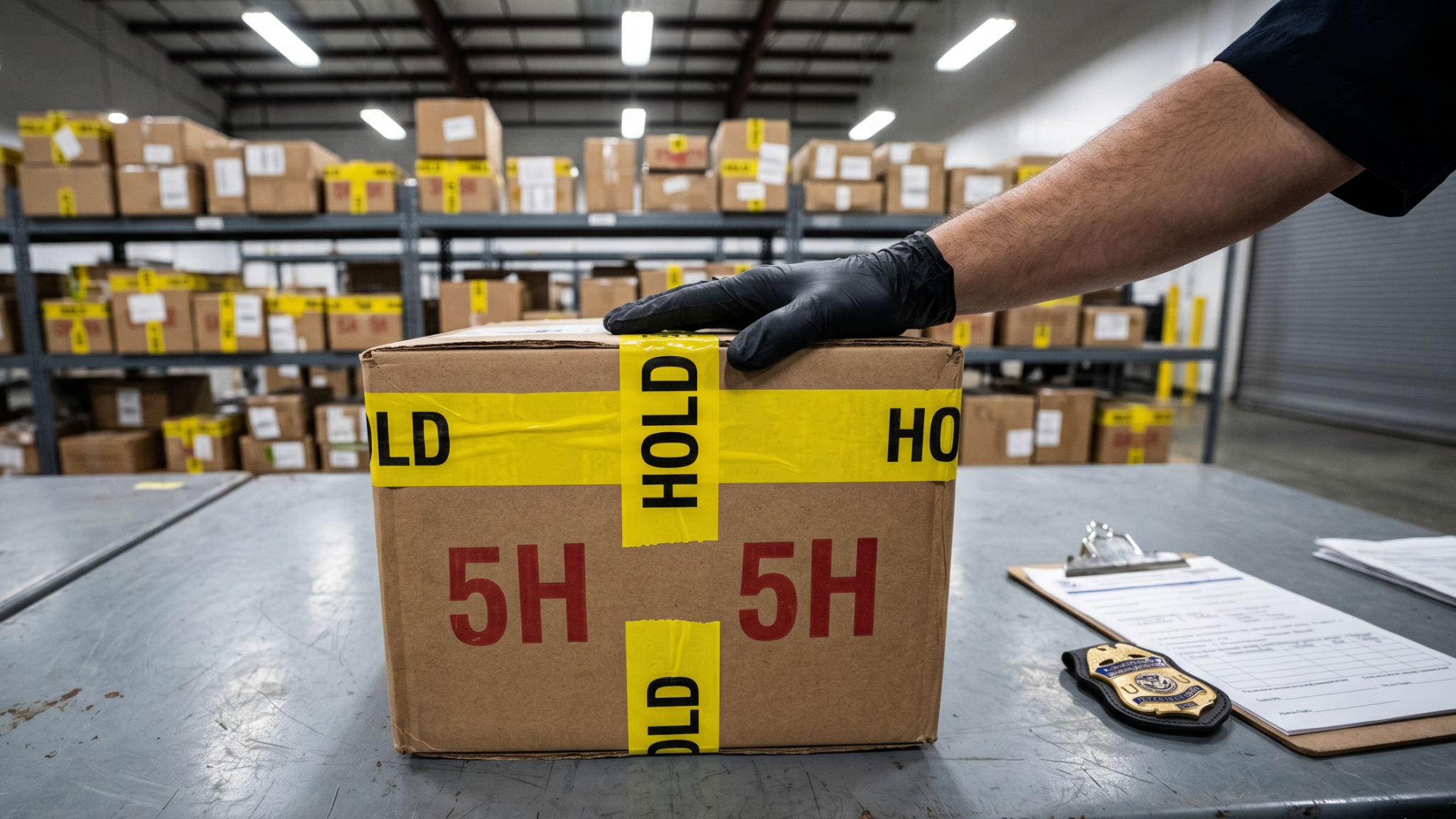
A 5H hold places your cargo in a “document review deferred” state. Nothing moves. No release, no delivery, no timeline. CBP locks the shipment and reviews every document tied to the entry before making any decision.
For most of its history, CBP used physical holds primarily to screen for drugs, contraband, and prohibited materials. The 5H program represents a significant shift from that model. Today, CBP holds shipments for financial and documentation reasons, specifically to verify whether the declared value and product information on your paperwork match what you actually shipped.
CBP made this shift as part of a larger overhaul of how it processes import entries. Back in September 2025, the agency moved away from manual sampling and toward fully automated manifest review. The Automated Commercial Environment (ACE) system now cross-checks your importer history, Importer Security Filing (ISF), Harmonized Tariff Schedule (HTS) codes, cargo descriptions, and declared values in real time. One mismatch is enough to flag your shipment.
Once a 5H hold is triggered, one of three things happens:
- 5I Release. Your documents pass review and CBP clears the cargo.
- Physical inspection. Your documents raise questions and CBP escalates to a hands-on examination at a Container Freight Station.
- Destruction or forced return. Your shipment fails inspection entirely, and you absorb every cost associated with the outcome.
There is almost no room to negotiate once the hold is in place, which is why getting ahead of it matters so much.
Related reading: How to Clear Customs When Importing Goods into the USA and Canada
Why Is This Happening Now?
The rise in 5H holds is not a temporary enforcement wave and will not blow over. This is a permanent change in how CBP approaches China-to-US shipments, and there is a clear reason it accelerated when it did.
Bloomberg reported a $112 billion gap between declared Chinese export values and actual US arrival data. CBP traced a significant portion of this gap to systematic underreporting through shell companies and vague product declarations. The finding gave the agency the justification it needed to build out automated enforcement infrastructure at scale, and you are seeing those results show up at ports right now.
The practice works like this:
A seller ships $50,000 worth of goods but declares the value at $15,000 on the commercial invoice. The freight forwarder files the paperwork at the lower number. CBP assesses duties on $15,000 instead of $50,000, and the seller pockets the difference.
At scale, across thousands of shipments, this adds up to the kind of gap Bloomberg identified.
How Is the CBP Spotting These Sellers?
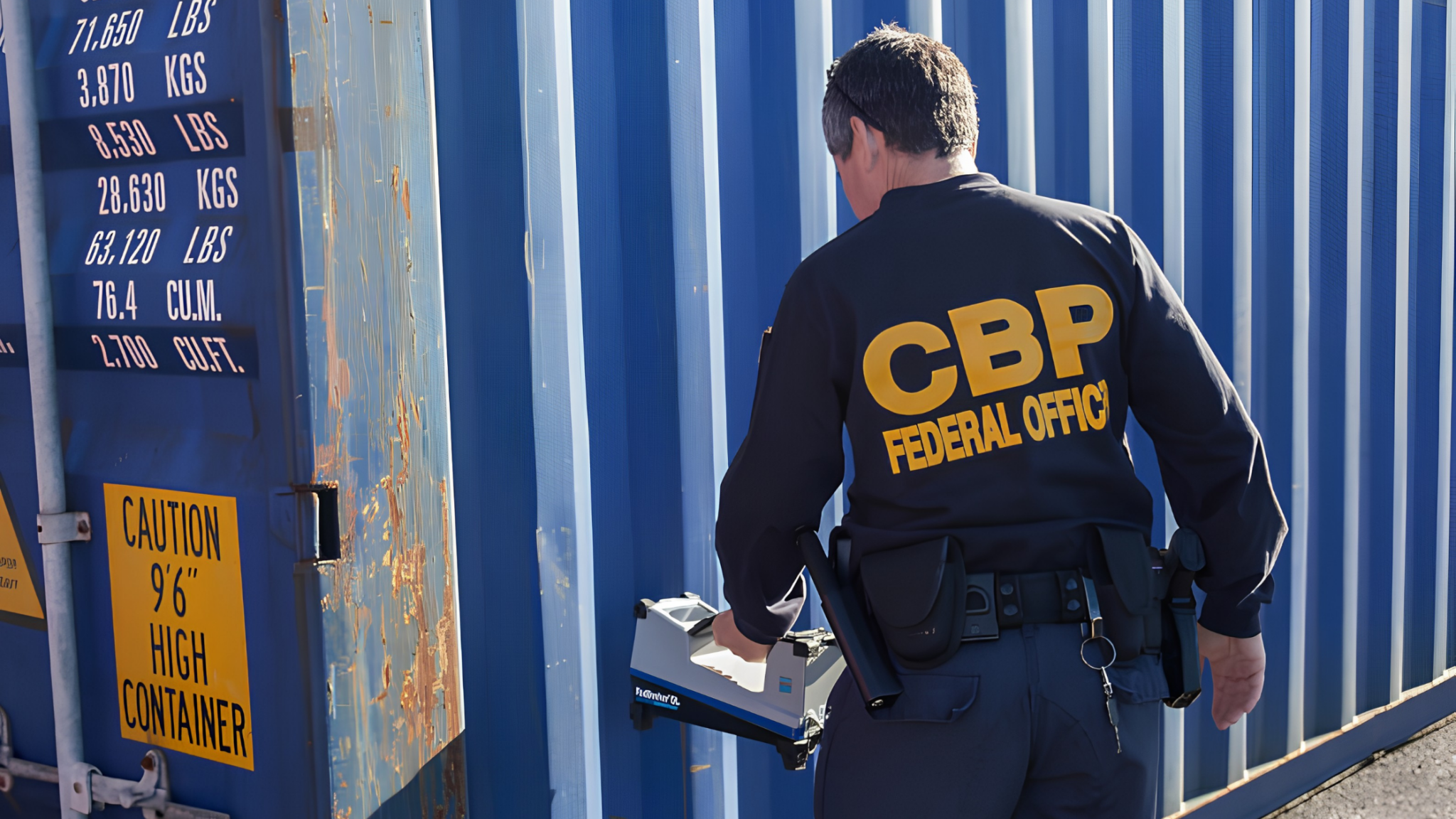
CBP detects this through automated cross-referencing and market data comparison. The ACE system compares your declared value against historical pricing data for the same HTS code, origin country, and product category.
If your declared value sits significantly below the typical range for comparable goods, the system flags it automatically. CBP also cross-references your entry against the exporter's data on the Chinese side, which is how the Bloomberg gap was identified in the first place.
The shipments getting hit hardest are ones using what CBP calls “tax-included” shipping models, where freight forwarders bundle unclear charges, underreport values, and file descriptions vague enough to hide what is in the container. If your logistics setup operates anywhere near this model, your risk is higher than you realize.
The Three Biggest Triggers for a 5H Hold
Most 5H detentions trace back to one of three problems. Know all three, because any single one is enough to get your container locked.
| Trigger | What It Looks Like | Why CBP Flags It |
|---|---|---|
| IOR and bond mismatch | Bond address differs from IOR registration | Signals potential shell company activity |
| Documentation inconsistency | Invoice, packing list, and manifest show different values or descriptions | Suggests concealment of cargo's true nature |
| Importer qualification failure | Missing EIN, invalid CAIN, or expired customs bond | CBP cannot verify the importer as a legitimate entity |
Of the three, documentation inconsistency is the most common trigger and the one sellers have the most direct control over. The rule is simple: your commercial invoice, packing list, and bill of lading must match each other exactly, in every field. Different quantities across documents, a declared value that does not match your manifest, a product description so vague it could describe ten different items — any of these is enough for CBP's ACE system to flag your entry.
The system runs these comparisons automatically on arrival. It does not consider intent, only mismatches.
How to Protect Your Shipments Before You Ship
Most 5H holds are preventable. The key is building compliance into your process before cargo leaves origin, not scrambling to fix problems after CBP flags the entry. These are the steps worth completing before every shipment:
- Verify your IOR setup. Make sure your registered information with CBP is current and accurate. If you are a non-US entity acting as importer, complete CBP Form 5106 and get your CAIN sorted before booking. Your legal entity name, physical address, and signatory details must match exactly across your IOR, customs bond, and power of attorney. Exactly means exactly.
- Audit your customs bond. Check that the bond is active and covers the right estimated duty amount. Your bond must equal at least 10% of your estimated duties, taxes, and fees. The address on the bond also needs to match your current IOR information. An outdated address is one of the most common triggers, and one of the easiest to fix.
- Rewrite vague product descriptions. Generic labels are a red flag for CBP's automated system. Swap them out for descriptions including the material, function, model number, and intended use. “Stainless steel kitchen knife set, 5-piece, food-grade, AISI 304 material” gets through. “Kitchen accessories” does not.
- Run a three-document check. Your commercial invoice, packing list, and manifest need to be identical in value, quantity, product description, and HTS code. The ACE system compares them automatically, and even a small quantity discrepancy is enough to generate a flag.
- Verify your HTS codes. Wrong codes trigger automated alerts and raise questions about whether the misclassification was intentional. Use the US International Trade Commission's HTS search tool to confirm every code before filing.
Who Should Handle Your Customs Clearance
Once you know what CBP is looking for, the next question is who on your team owns the compliance work. This is worth thinking through seriously, because the answer has changed for a lot of sellers over the past year.
There are two main paths sellers take, and both are legitimate depending on your setup.
Some sellers use Amazon Global Logistics (AGL), which includes pre-shipment document review through its customs team before your cargo ships. Through Amazon Customs and Trade (ACT), AGL handles import registration, bond processing, declaration filing, and end-to-end clearance. If you are already routing shipments through AGL, this is a natural fit.
Other sellers prefer working with independent licensed customs brokers, particularly if they want direct, ongoing communication with the person filing their entries. A good broker reviews HTS codes, catches bond mismatches, and gives specific guidance on declaration language before your shipment hits US waters. The key is finding someone with hands-on experience in China-to-US e-commerce, not just general import work.
A Note on Customs Brokers
Your broker files what you give them. A customs broker has no independent way to verify whether the values and descriptions on your documents accurately reflect the goods in your container. If that information is incomplete or inaccurate, the broker files it that way, and the compliance risk stays with you. CBP holds the importer of record responsible for declared values, not the broker.
Here is how the two options stack up on the factors worth paying attention to right now:
| Factor | Amazon Global Logistics (AGL) | Independent Customs Broker |
|---|---|---|
| Pre-shipment document review | Included as part of the service | Depends on the broker; confirm before hiring |
| Bond processing | Handled through ACT | You obtain and manage your own bond |
| Direct communication | Through AGL account tools | Direct access to the broker filing your entries |
| Flexibility | Tied to AGL shipments | Works across any freight forwarder or carrier |
| Best for | Sellers already using AGL's logistics network | Sellers who want more control over their customs process |
Regardless of which route you go, pre-shipment document review is no longer optional. The old model of filing documents after the fact and sorting out problems at the port is exactly what CBP is targeting right now.
If you need to build inventory buffers while getting your compliance setup sorted, pre-stocking through a domestic distribution warehouse is a practical way to reduce exposure during the transition. For urgent replenishment when ocean freight is not moving fast enough, air freight is available at a higher cost but faster transit time.
What to Do If You Already Have a 5H Hold
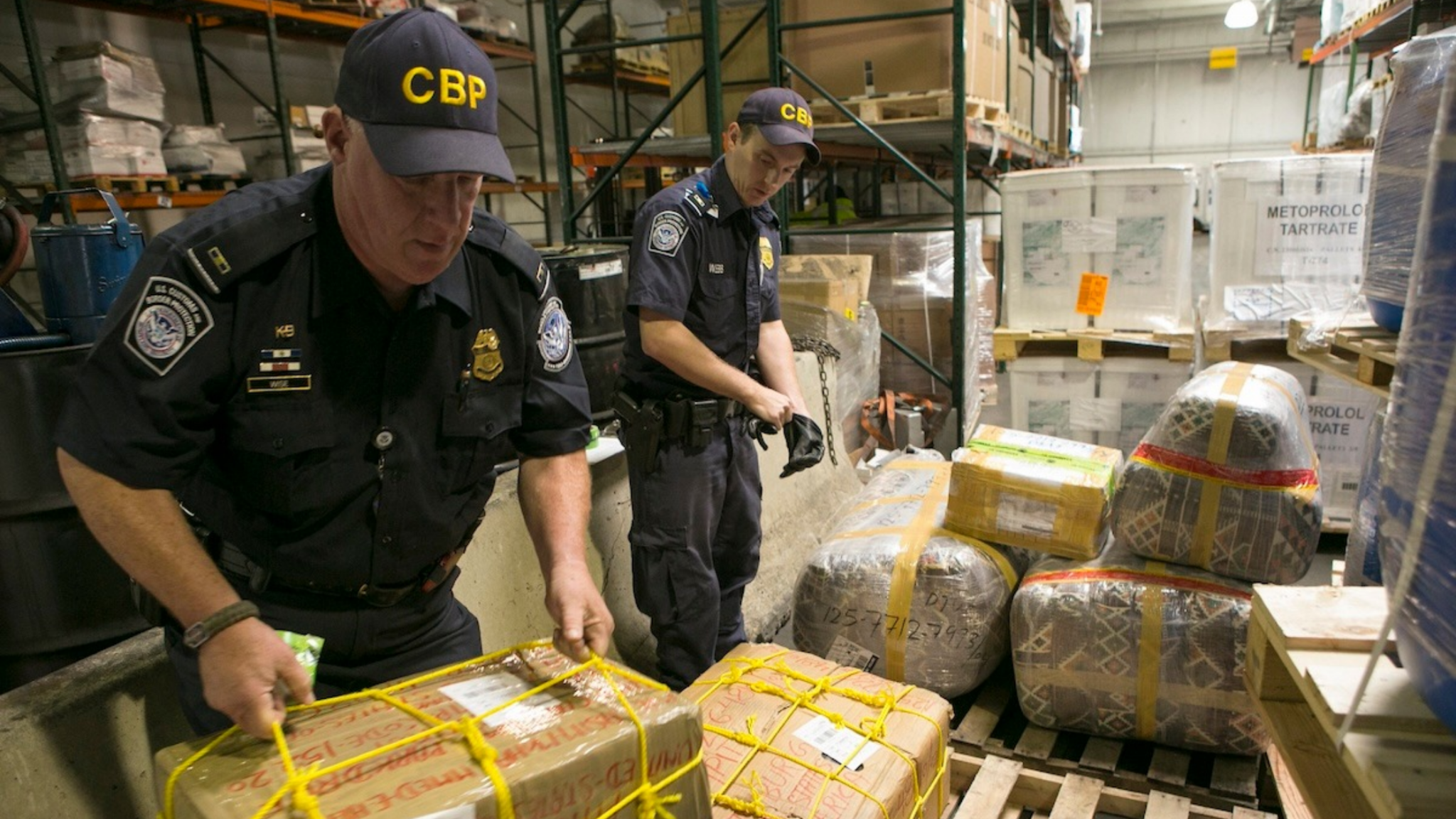
If your shipment is already flagged, do not wait around hoping it resolves itself. Reach out to your customs broker or contact CBP directly to find out the specific reason for the hold.
In many cases, CBP's Fast Doc Review team will send a request for supporting documentation. Your ability to respond quickly and completely determines whether you get a 5I release or get bumped to a full physical inspection.
Pull together this documentation package without delay:
- Original commercial invoice with accurate declared values
- Packing list matching the invoice exactly in quantity and description
- Bill of lading showing carrier, origin, and destination details
- Proof of IOR registration and customs bond validity
- Transaction records supporting your declared value if CBP asks for them
Do not wait on CBP to reach out first. Ask your broker to check the status of your entry in the ACE system proactively. Every day the container sits at the port is another day of storage, detention, and demurrage fees hitting your account.
What a 5H Hold Actually Costs
There are no fixed rates since fees vary by carrier, port, and shipment size. Here is a realistic breakdown of what stacks up during a hold at a busy port like LA/LB.
| Fee Type | What It Covers | Estimated Cost |
|---|---|---|
| Demurrage | Container sitting at the terminal beyond your free time window (typically 4 to 7 days) | $100 to $300 per day, increasing after several days |
| Chassis fee | Daily charge for the equipment holding your container | $30 to $50 per day; higher at congested ports like LA/LB |
| CES inspection fee | Unloading, examining, and reloading at a Container Freight Station | $100 to several thousand dollars depending on shipment size and location |
| Drayage | Trucking the container from the terminal to the CFS and back | $300 to $800+ depending on distance |
| Storage | Daily warehouse fees at the CFS while your goods are held | Varies by facility; adds up quickly beyond the first few days |
| CBP merchandise processing fee | Standard fee assessed on all US imports | 0.3464% of customs value; minimum $33.58, maximum $651.50 per shipment |
A 10-day hold with a full Manual Examination at a major port puts most importers in the $3,000 to $10,000+ range once all fees are combined.
And remember: these charges run whether CBP finds a problem or not.
If things escalate to a physical inspection at a Container Freight Station, you also cover drayage, unloading, reloading, and storage on top of everything already accruing. A full Manual Examination (MET) adds inspection fees on top of everything else.
Bottomline: The Enforcement Is Not Going Away
CBP's move to automated manifest review is a permanent infrastructure upgrade, not a phase. The resources CBP has committed to its detection systems point to sustained enforcement at this level going forward. Sellers who get their IOR structure, bond information, and documentation practices in order now will see far fewer disruptions down the line. The ones who wait for a hold to motivate them will end up paying a much higher price for the same lesson.