How Amazon Quietly Replaced Your Favorite Seller Tools

For years, Amazon sellers relied heavily on third-party software. Seller Central simply didn't give sellers enough tools to manage their pricing, ads, or product launches effectively.
But that isn't the case anymore…
Amazon has been quietly building out Seller Central with features that handle many everyday tasks. These built-in tools aren't as powerful as dedicated software, but they're good enough for basic needs. As a result, many sellers have stopped paying for external tools altogether.
Survey data shows this isn't just a few sellers making different choices. Across repricing, advertising, and product launches, more sellers are using no third-party software at all. The shift suggests sellers are rethinking whether they actually need these tools.
How Our Data Was Collected
The findings in this article are based on EcomCrew's annual Amazon seller software survey. The survey was conducted between December 2025 and January 2026 and collected responses from active Amazon sellers.
Respondents were asked which tools they currently use across several software categories, including repricing, advertising, product launches, keyword research, and reimbursements. Sellers could select one tool per category or choose “Don't use one.”
Seller Central Is Replacing Basic Software
Amazon now handles many tasks that used to require third-party software: keyword research, ad setup, inventory monitoring, reimbursement tracking, and performance reporting. While limited compared to dedicated tools, these features cover everyday needs for many sellers.
Amazon has been aggressively expanding Seller Central's capabilities. In 2024 alone, the platform added QuickBooks integration for financial tracking, AI-powered tools for listing optimization, and the Rufus AI assistant to help customers discover products—all features that previously required third-party software. The platform also introduced Grade and Resell recovery channels and enhanced donation tracking, further reducing the need for external tools.
Seller behavior reflects this shift. In our 2025 software poll, 60% of respondents reported not using any repricing software, compared to 33% in 2021. The share of sellers choosing no repricer nearly doubled in four years.
Advertising tools show the same pattern. In our surveys, 36.7% of sellers used no third-party PPC software at all. This is notable because advertising is one of the most time-consuming and expensive parts of selling on Amazon. Rather than switching tools, many sellers simply rely on Amazon's built-in advertising features.
The trend extends to other categories. For reimbursement tools, 30% of sellers used no software in 2025, up from 13% the year before. Keyword and product research tools remain more popular, but usage has concentrated among a handful of platforms.
The data suggests Seller Central has replaced third-party software for basic tasks. Sellers still do the same work—they just do more of it directly in Amazon's platform.
Product Launch Software Shows the Sharpest Decline
Product launch software declined faster than any other Amazon software category.
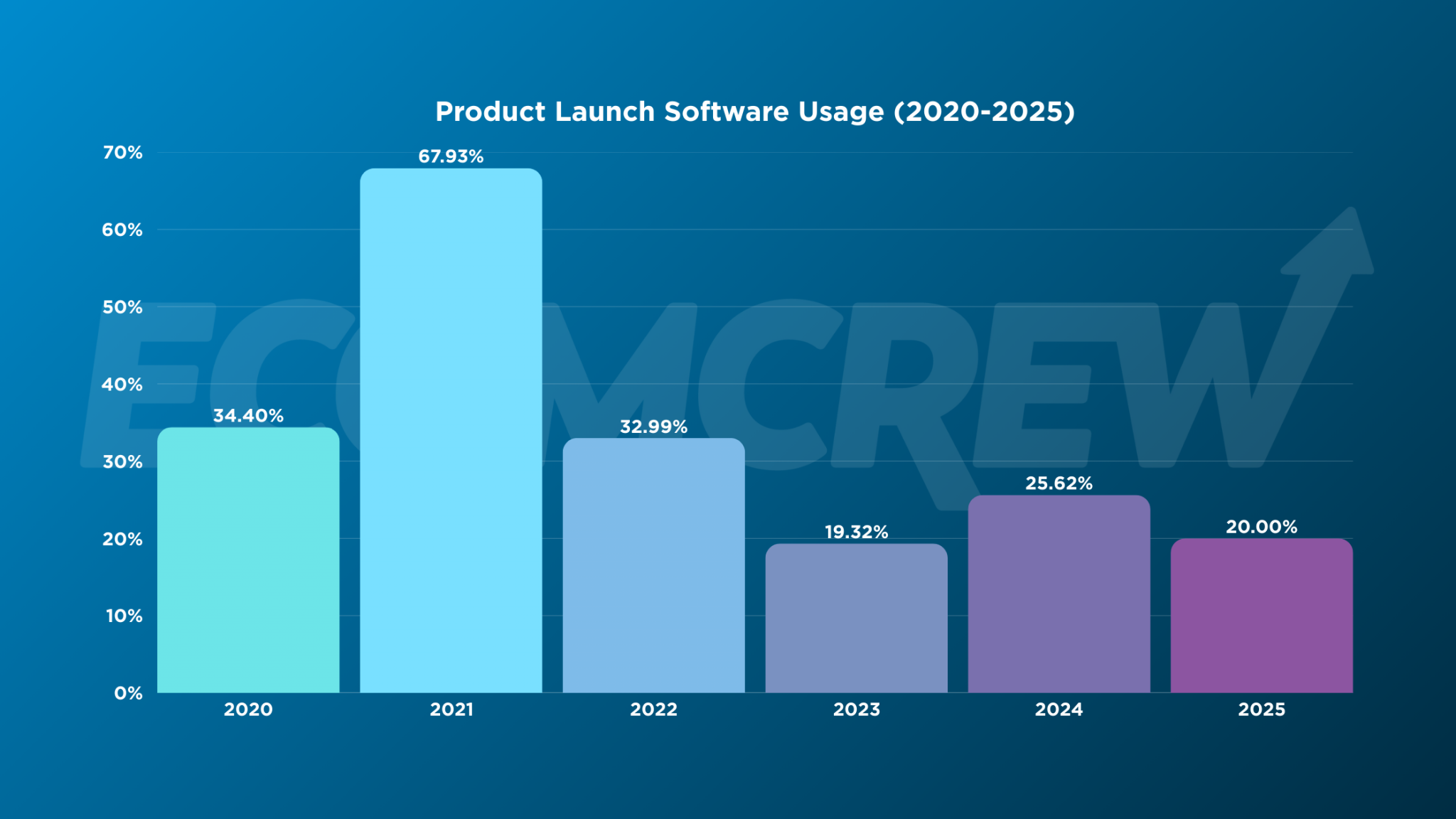
In 2020, these tools were common. Only 65.6% of sellers reported not using a product launch or giveaway tool, meaning more than one in three sellers relied on launch software.
By 2025, usage had collapsed. 80% of sellers used no product launch software at all, making it one of the least adopted categories in the survey.
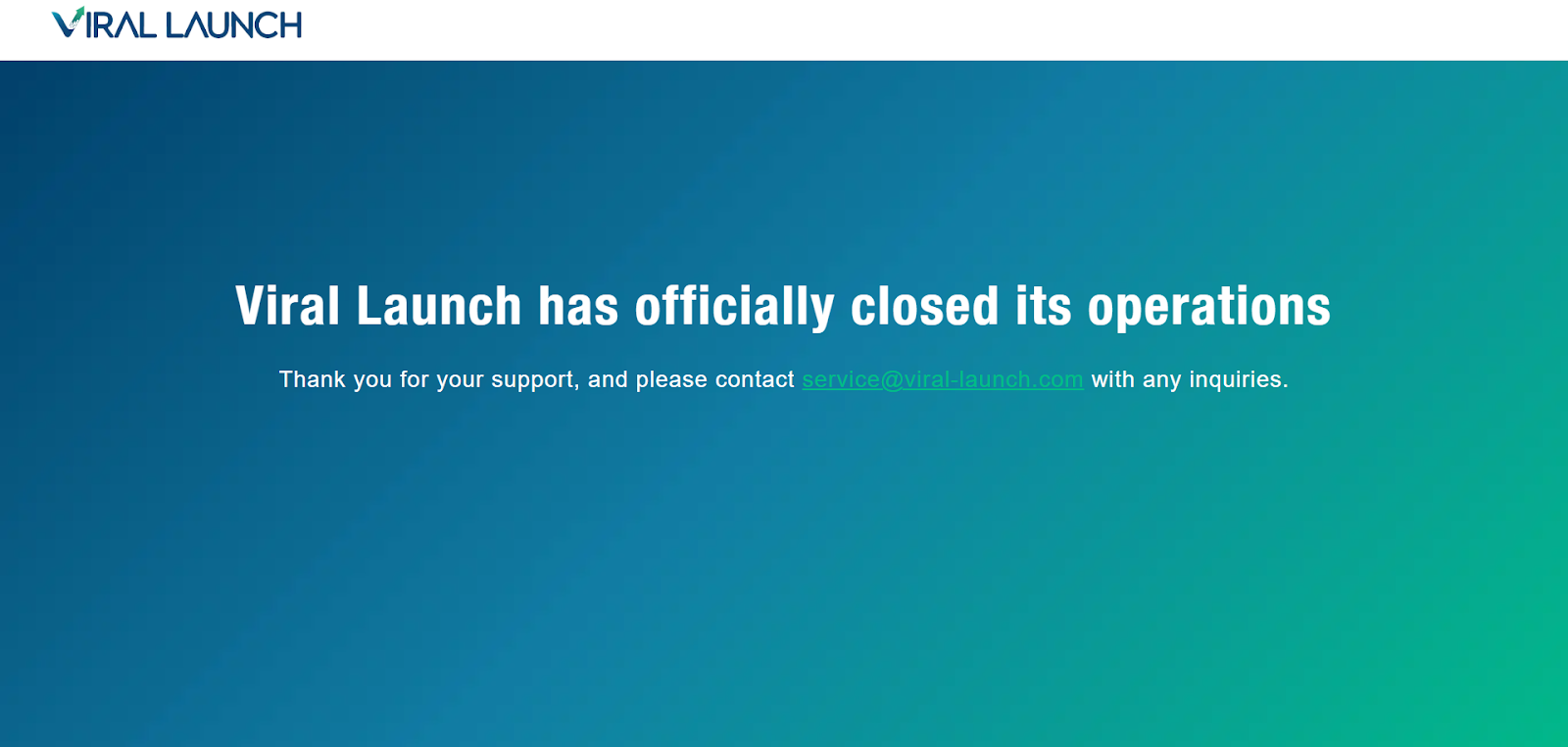
Individual tools show the same collapse. Viral Launch, used by nearly 9% of sellers in 2021, recorded just 1 response (3.3%) in 2025 before shutting down its launch product.
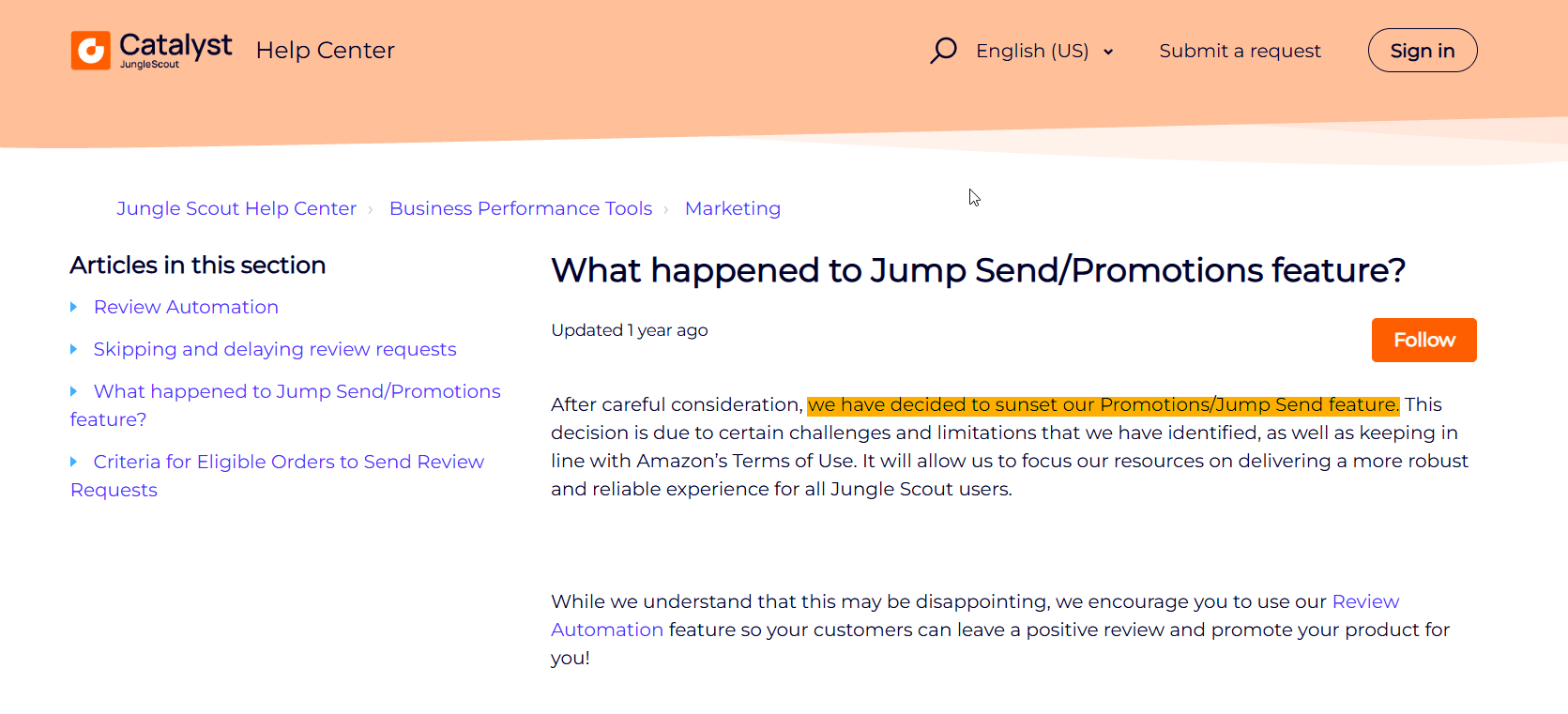
Jump Send, which peaked at over 11% usage in 2022, recorded zero usage by 2024 and was discontinued. RebateKey, used by almost 18% of sellers in 2021, saw usage fall to near zero after 2022. Tools like Zon Blast and Last Launch followed similar paths before being discontinued.
This decline didn't happen because sellers stopped launching products. It happened because Amazon changed how it enforced ranking-driven tactics. Giveaways, rebates, and incentive-based ranking strategies became restricted or risky. Once those tactics were no longer viable, the software built to automate them lost its purpose.
According to Amazon's Community Guidelines, sellers cannot offer compensation for reviews or use promotional tactics that artificially inflate search rankings. This policy shift effectively eliminated the core use case for most launch software.
Repricing, PPC, and Research Tools Are Declining
Unlike product launch software, most other categories haven't collapsed—but adoption is steadily declining.
Repricing tools show this clearly. In 2021, only 33.4% of sellers used no repricing tool. By 2025, that number hit 60%, making “Don't use one” the most common response by far. While tools like BQool, Seller Snap, Feedvisor, and Repricer.com still exist, none show meaningful growth.
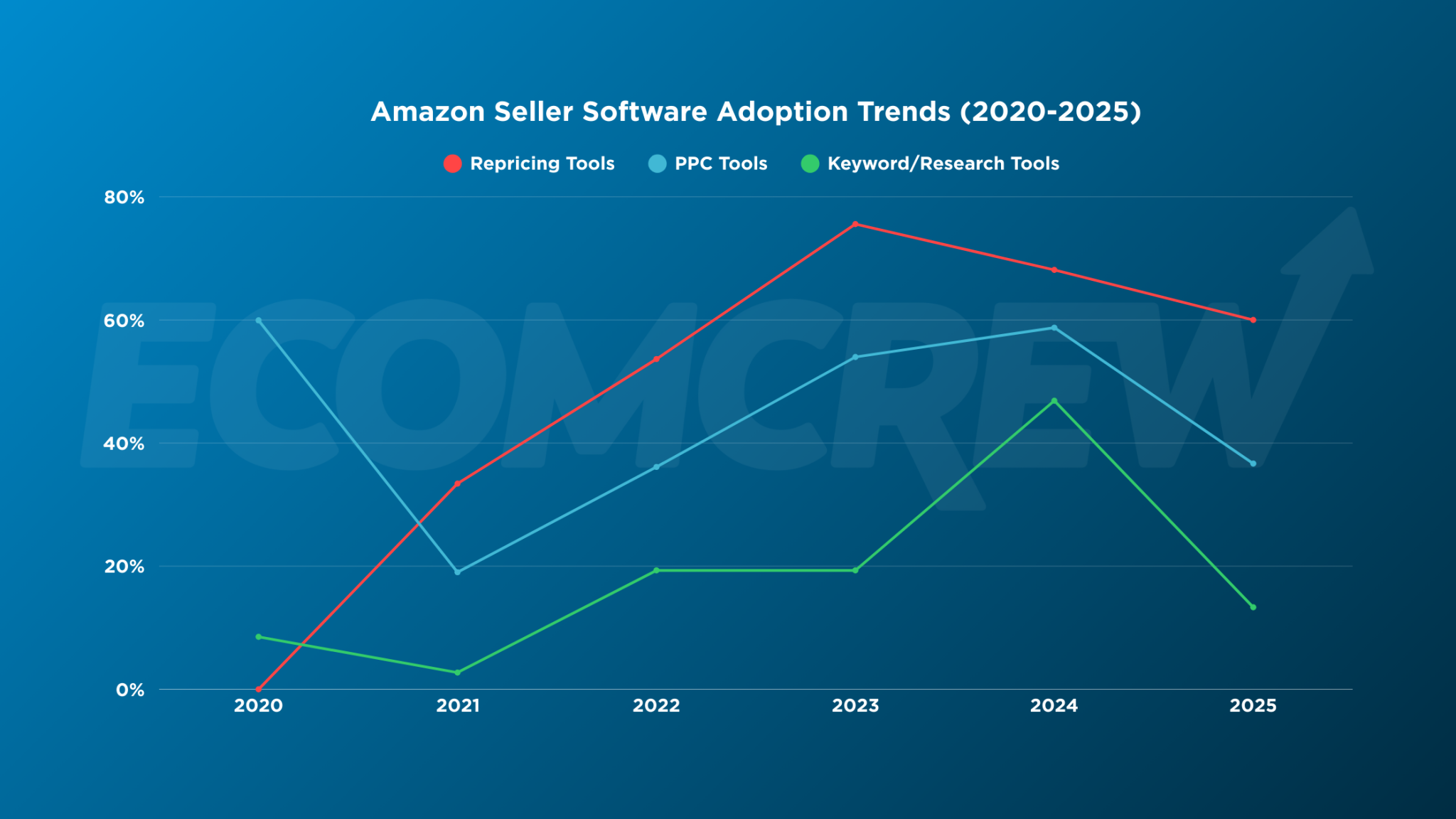
PPC software follows the same pattern. In 2025, 36.7% of sellers used no third-party PPC tool, despite advertising being core to most Amazon businesses. Tools like Helium 10 Adtomic, Perpetua, Teikametrics, and Scale Insights are still used, but adoption is fragmented. Many sellers stick with Amazon's native advertising tools unless their accounts become complex enough to require more.
Keyword and product research tools remain the most resilient category, but consolidation is evident. Helium 10 and Jungle Scout account for most usage, while smaller tools show declining adoption. Still, 46.9% of sellers used no keyword or product research tool in 2024, indicating even this category isn't universal anymore.
Sellers Are Spending More Carefully on Software
Changes in tool usage appear in how sellers report software spending.
In our polls, most respondents said their software spending stayed the same year over year. However, more sellers reported reducing software spend than increasing it, continuing a trend from recent surveys.
Flat spending alone wouldn't be meaningful. But paired with declining adoption across multiple categories, it points to specific behavior: sellers aren't replacing one tool with another. Many are removing tools entirely or delaying new purchases.
This is notable because overall Amazon costs haven't decreased. According to SellerSnooper's analysis of Amazon's quarterly earnings, advertising costs continue to grow at over 20% year-over-year, while third-party seller service fees (FBA fees) have increased steadily. Software is one of the few expense categories where sellers can cut back without immediately affecting daily operations.
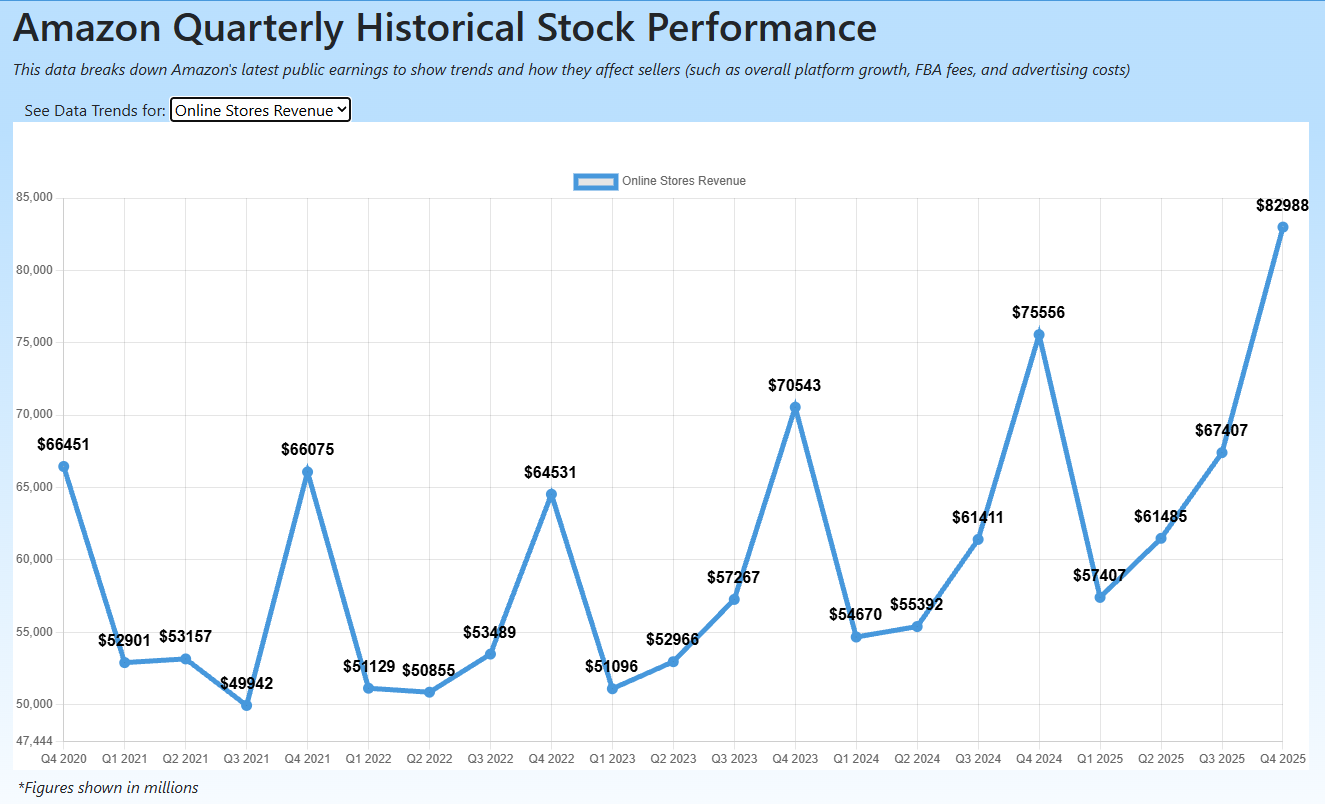
This shift is happening even as Amazon's marketplace continues to grow. According to Threecolts, independent sellers now generate more than 60% of all Amazon sales, with over 55,000 sellers surpassing $1 million in annual sales in 2024. Despite this growth and profitability, sellers are becoming more selective about software investments.
Survey responses suggest sellers have become more selective. Tools that overlap with Seller Central are often dropped first. Software with narrow use cases is less likely to be adopted. New tools are evaluated more cautiously.
Part of this shift reflects broader technology adoption. By early 2024, 34% of Amazon sellers were already using AI tools for listing optimization—features that Amazon has since built directly into Seller Central, further reducing the need for standalone software.
Rather than expanding their software stacks, many sellers are consolidating them. This aligns with the broader pattern: software is no longer a default operating cost, but an optional expense that must justify its value.
What the Data Shows
The survey results point to a clear shift. Across multiple categories, more sellers are choosing to use no tools at all—most dramatically in product launch software, but also in repricing, PPC, and reimbursements.
This doesn't mean sellers are doing less work. Pricing, advertising, and research are still necessary. What's changed is where that work happens. For many sellers, Seller Central now handles basic tasks well enough that third-party software is optional rather than required. As Jungle Scout notes, the rise of Amazon's native tools has forced software companies to focus on advanced features that Amazon doesn't provide.
The data suggests third-party seller software isn't disappearing—it's becoming more conditional. Tools must solve problems Amazon doesn't address or provide clear incremental value. General-purpose tools are used less often, while specialized software is adopted more selectively.
Disclaimer: Limitations of This Data
These findings are based on self-reported survey responses from active Amazon sellers and show directional trends, not precise measurements of the entire seller population. Participation was voluntary, and the respondent group varies year to year. Changes over time should be read as shifts in overall behavior patterns rather than exact comparisons.