How to Deal With Amazon Hijackers: Step-by-Step Seller Guide

Selling on Amazon is hard enough without someone jumping onto your listing and stealing your sales. Amazon hijackers are one of those problems that eventually hit most serious sellers—and when it happens, it feels personal. You’ve invested time and money into product development, branding, and reviews, only to see another seller piggyback on your ASIN with a cheap copy.
The good news is that hijacking is fixable. Below is a practical guide you can follow the same day you spot a hijacker (plus the prevention steps that keep you from living in “whack-a-mole” mode).
What Amazon Hijackers Actually Do
An Amazon hijacker is a seller who jumps onto your existing listing and sells either a counterfeit or an unauthorized version of your product. They take advantage of your photos, reviews, and keyword rankings to make quick sales—often by undercutting your price and stealing the Buy Box.
This isn’t normal competition. Hijackers intentionally piggyback on your ASIN and mislead customers into thinking they’re buying your product. The damage adds up quickly:
- Lost Buy Box and immediate revenue decline
- Negative reviews from low-quality knockoffs
- Increased returns and customer complaints
- Long-term brand damage that’s difficult to reverse
Even a short hijack can permanently weaken a strong listing.
How to Remove Amazon Hijackers (Step by Step)
When you spot a hijacker, speed matters. The longer they stay live, the more sales and reviews they can burn. Here’s the playbook that works for most sellers.
Step 1: Confirm It’s Actually a Hijacker
Before contacting Amazon, confirm you’re dealing with a true hijack—not a variation issue, duplicate ASIN, or legitimate reseller.
How to check:
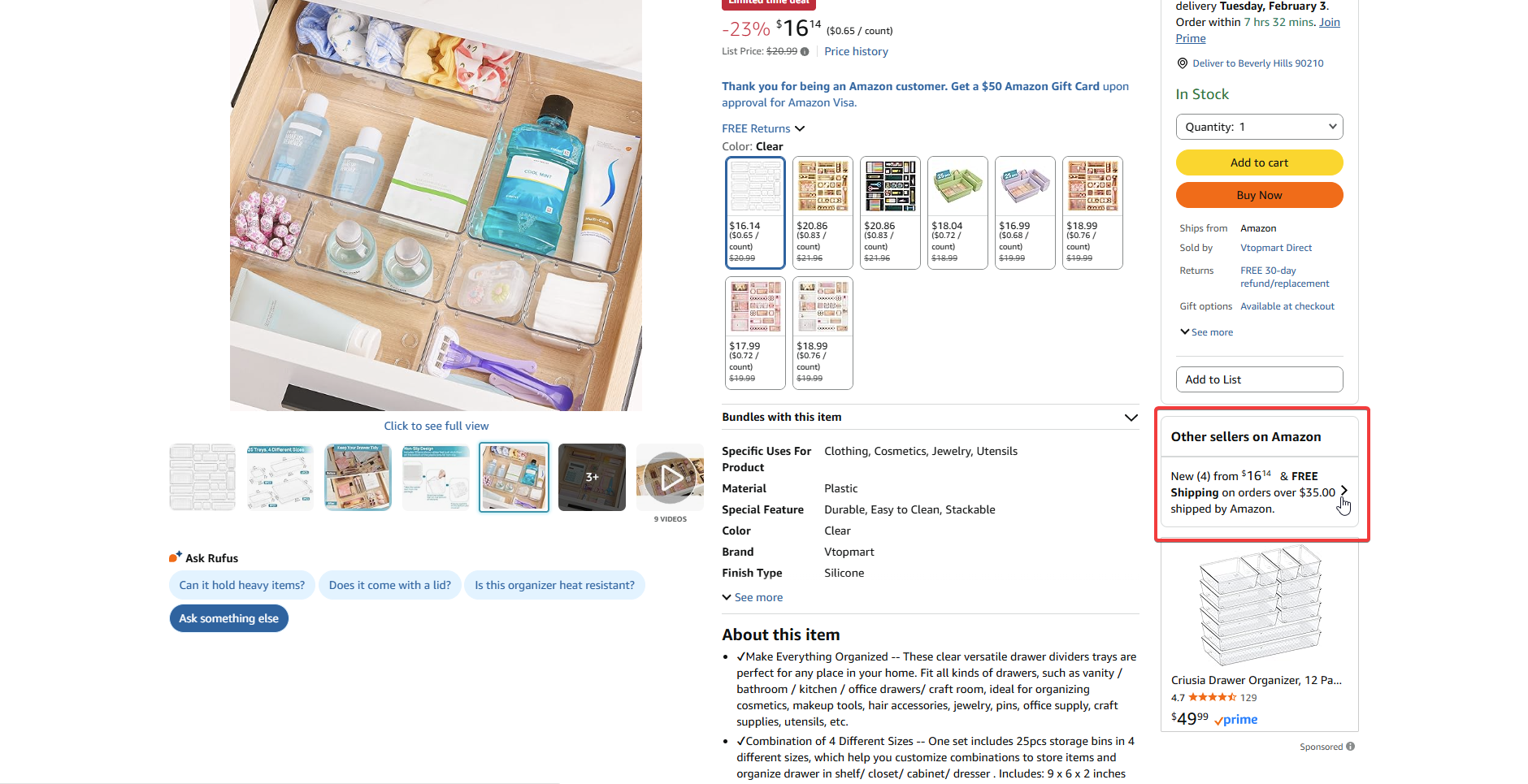
- Open your listing in an incognito window.
- Click “Other Sellers on Amazon.”
Review:
- Seller names
- Pricing differences
- Fulfillment method (FBA vs FBM)
- Shipping origin and delivery timelines
Common hijacker red flags:
- A sudden new seller at a much lower price
- Generic storefront details with no brand presence
- Long delivery times from unexpected countries
- Reviews or Q&A mentioning “fake,” “different,” or “not as described”
If the seller appears to be offering your actual product, you may be dealing with unauthorized resale instead of counterfeiting, which requires a different approach.
Step 2: Place a Test Buy (This Is Mandatory)
A test buy creates the evidence Amazon relies on. Without an order ID tied to a real customer transaction, most hijacker cases fail.
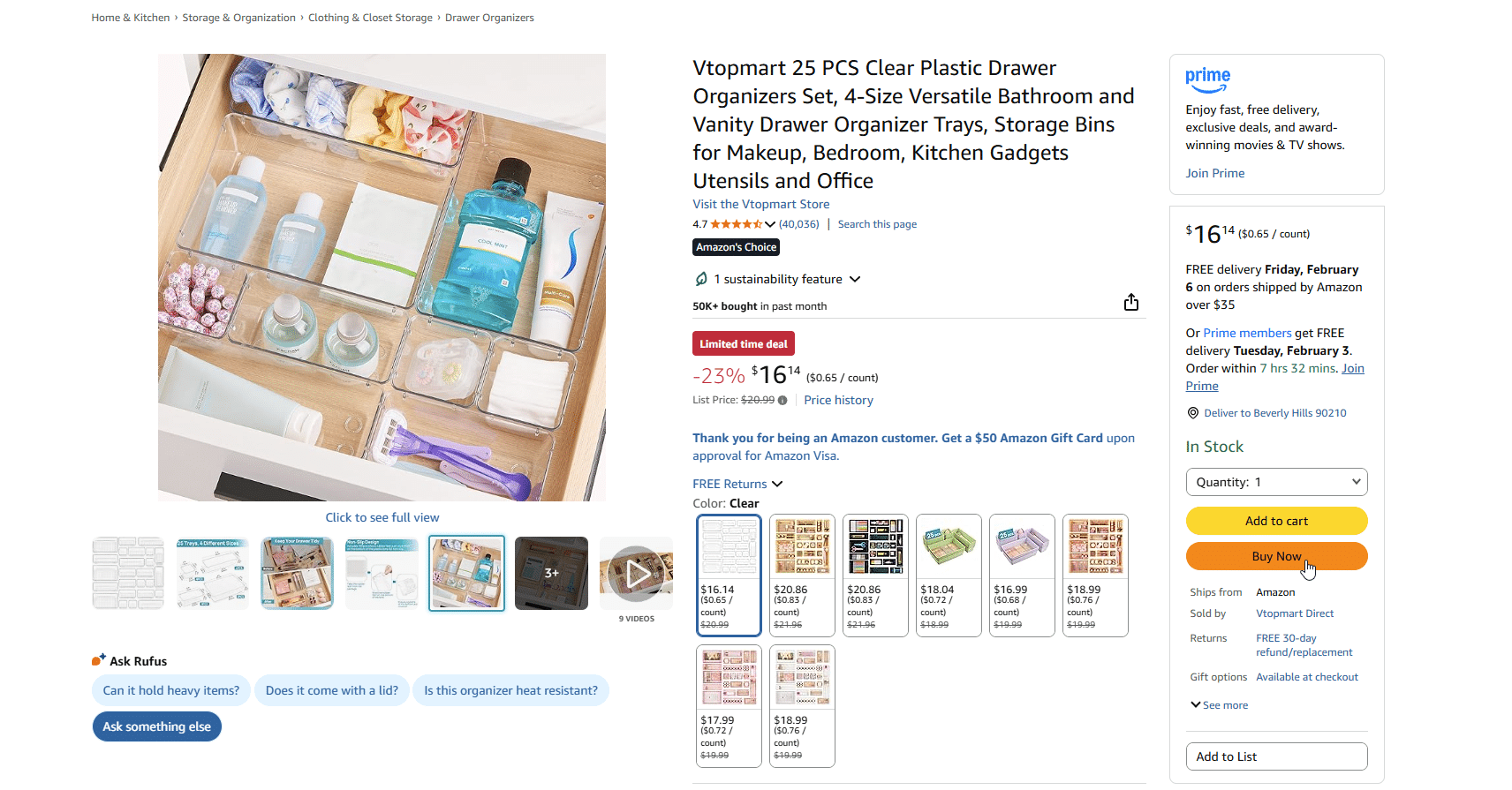
How to do it correctly:
- Use a separate consumer Amazon account, not your seller account
- Purchase one unit from the hijacker’s offer
- Start with the seller who has the Buy Box or lowest price
Document immediately:
- Screenshot the hijacker’s offer on the listing
- Screenshot the “Other Sellers” section
- Save the ASIN and product URL
- Keep the order confirmation email and order ID
Do not contact the seller yet. You want clear, uncontested evidence.
Step 3: Inspect the Product and Prepare Your Evidence
When the test buy arrives, compare it directly to your authentic product. Your goal is to show clear, objective differences that Amazon reviewers can understand quickly.
Compare side by side:
- Packaging quality and print clarity
- Inserts (manuals, warranty cards, missing accessories)
- Labels, barcodes, and FNSKU placement
- Materials, weight, finish, and build quality
- Branding details (logos, molds, embossing)
- Product functionality or performance
Best evidence to capture:
- Photos of both products in the same frame
- Close-ups of differences
- Shipping label and box contents
- Anything showing the product is “materially different”
Organize all files in a single folder so they’re easy to upload and reference.
Step 4A: Report the Hijacker (Brand Owner / Brand Registry Path)
If you are the brand owner and enrolled in Brand Registry, this is your primary enforcement route.
Where to go:
- Seller Central → Brand Registry
- Open the Report a Violation tool
What to submit:
- ASIN and product title
- Hijacker seller name and storefront link
- Test buy order ID
- Trademark information
- Photos and documentation showing counterfeit or material differences
Brand Registry reports are reviewed by IP enforcement teams with the authority to remove sellers quickly when evidence is clear. Seller Support should only be used as a backup or escalation path for brand owners.
Step 4B: Report the Hijacker (Seller-Only Path Using Seller Support)
If you are not the brand owner, you cannot file IP or trademark claims. Your report must focus on customer impact and listing accuracy.
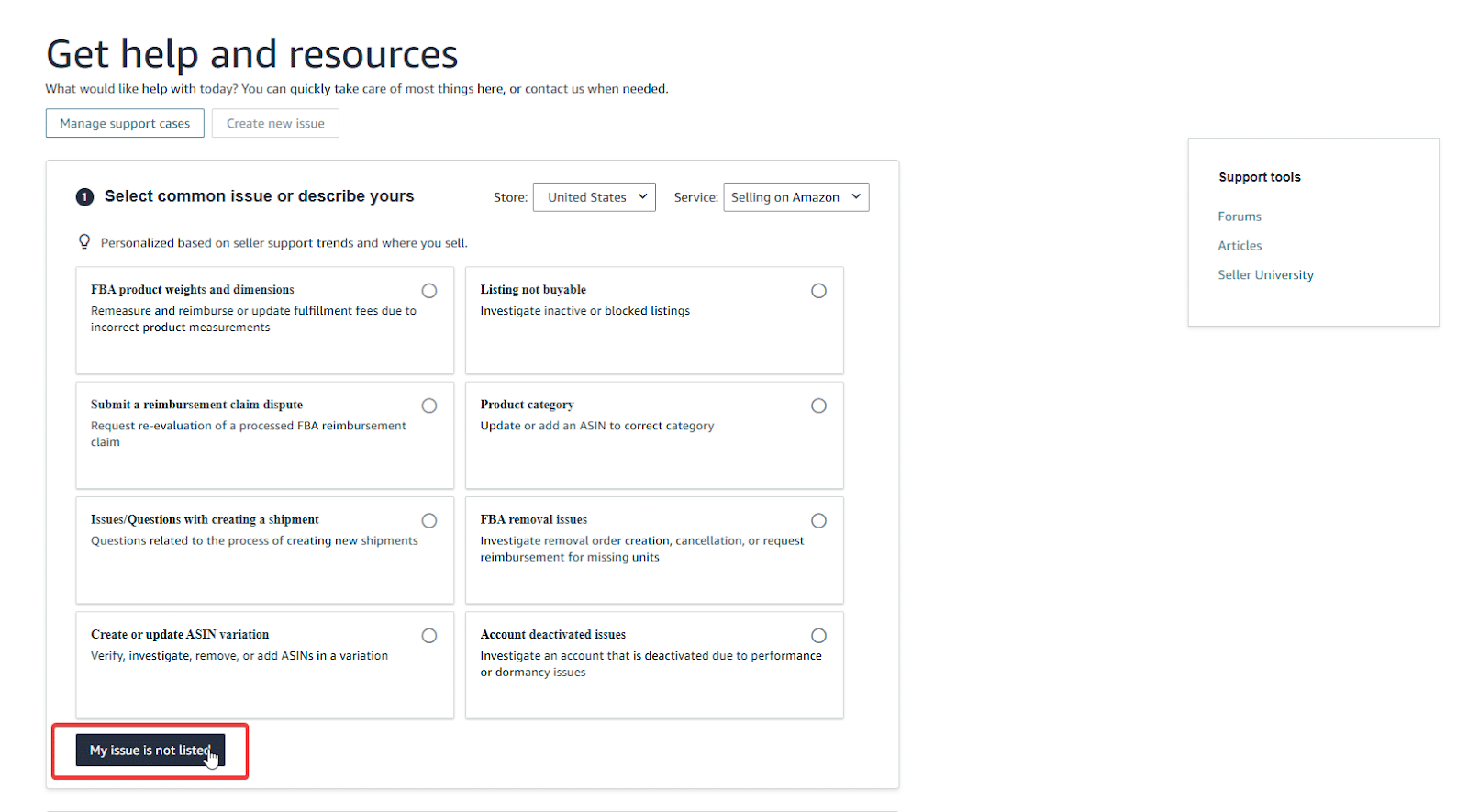
Exact Seller Central click path (current UI):
Seller Central → Help

Select “Manage support cases”
Click Create new issue

On the next page, choose “My issue is not listed”
How to frame the case:
- State: “Test buy confirms product is materially different from listing.”
Include:
- ASIN and product title
- Hijacker seller name and storefront link
- Test buy order ID
- Bullet list of differences
- Photos and screenshots
NOTE: Avoid trademark language. Stick to “not as described” and “materially different.”
Step 5: File a Customer-Side Report From the Buyer Account
This step significantly increases success rates and applies to both brand owners and sellers.
How to do it:
- Log into your consumer account used for the test buy
- Go to Your Orders
- Select the order and choose an option like:
- “Item not as described”
- “Suspected counterfeit”
- Upload photos and briefly describe the differences
Amazon prioritizes customer trust issues, and these reports often trigger faster internal review.
Step 6: Send a Cease and Desist Letter (Optional)
A cease and desist letter won’t always work, but it’s low effort and sometimes effective, especially with smaller hijackers.
Best practices:
- Keep it short and professional
- State that the seller is offering an unauthorized or counterfeit product
- Reference the test buy
- Request removal from the listing
Do not threaten or exaggerate. The goal is compliance, not confrontation.
Step 7: Follow Up and Escalate Correctly
If Amazon doesn’t act immediately, persistence matters. Here’s what to do:
- Reply within the same support case to keep context intact
- Reattach evidence instead of rewriting everything
- Ask for escalation to the internal counterfeit or review team
- If needed, open a new case and reference the prior case ID
Consistency and documentation outperform emotion every time.
How to Prevent Future Hijackings
Reactively removing hijackers is stressful and time-consuming; building defenses that reduce how often it happens is what experienced operators focus on. Here are a few steps you can take to prevent future hijackings from affecting your store/brand:
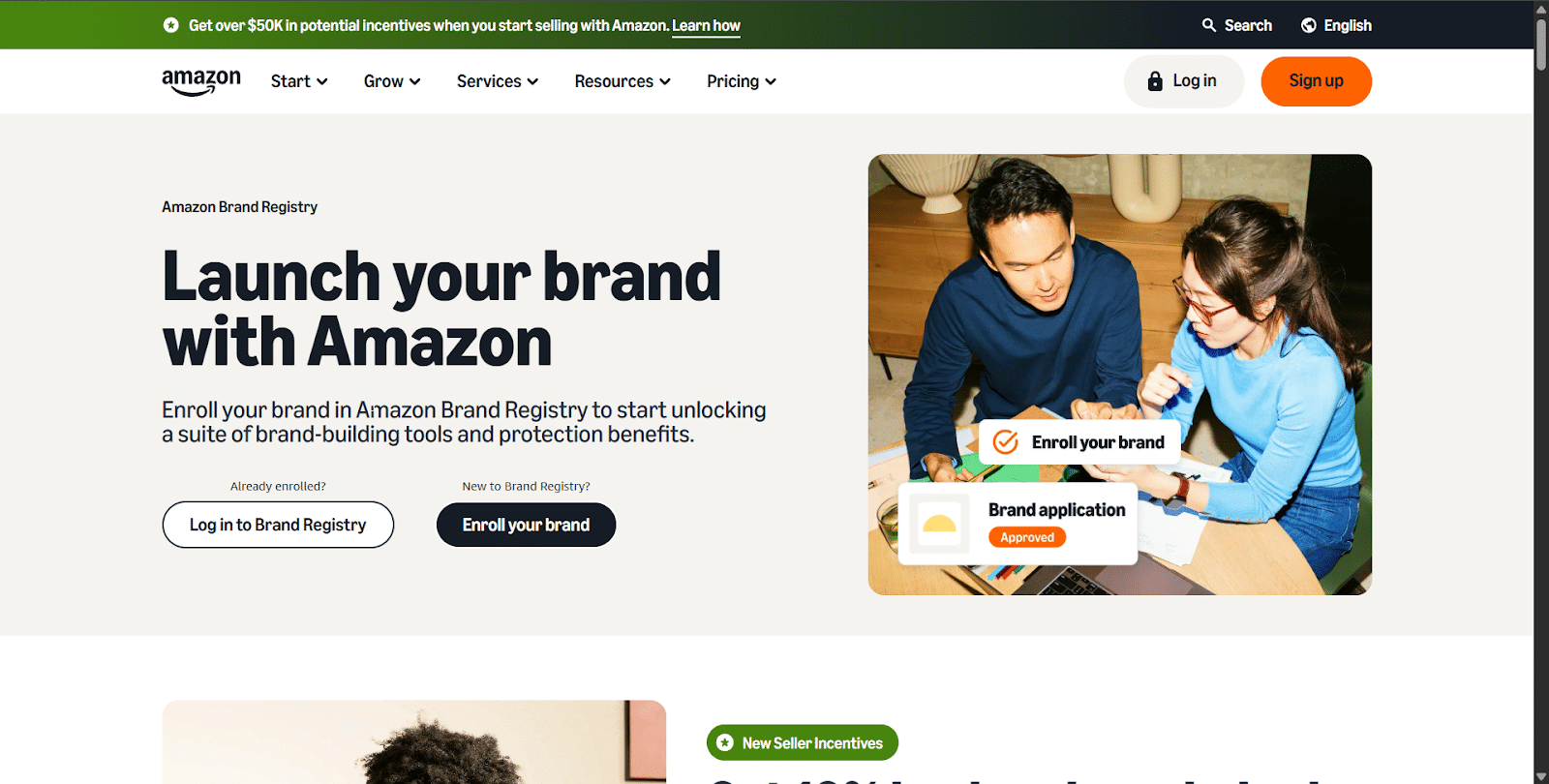
Enroll in Amazon Brand Registry as Early as Possible
If you plan to build a real brand on Amazon, Brand Registry is foundational.
Being registered gives you:
- Control over your product detail pages
- Access to brand-only enforcement tools
- Faster, more authoritative review of counterfeit claims
Without Brand Registry, Amazon does not see you as the rights owner. That single fact dramatically weakens your ability to remove hijackers quickly, even with strong evidence.
How to implement properly:
- Secure a registered trademark (word mark or design mark)
- Enroll the brand through Amazon’s Brand Registry portal
- Make sure your Seller Central account is added as a brand user with full permissions
This is the difference between playing defense and actually having leverage.
Keep Inventory in Stock to Avoid Buy Box Gaps
One of the most common hijacker entry points is an out-of-stock listing.
Hijackers actively watch strong listings and jump in when:
- The Buy Box disappears
- The primary seller goes out of stock
- Demand stays high but supply pauses
When your inventory hits zero, Amazon is more willing to award the Buy Box to a new seller—even one with limited history.
How to reduce risk:
- Monitor sell-through rates closely
- Build buffer inventory for top ASINs
- Avoid letting listings sit inactive for extended periods
- Restock before you hit zero, not after
Staying in stock doesn’t eliminate hijackers, but it removes one of their easiest openings.
Add Subtle Product Differentiators That Are Hard to Copy
Most sellers think of differentiation only as a marketing concept. On Amazon, it’s also a defensive tool.
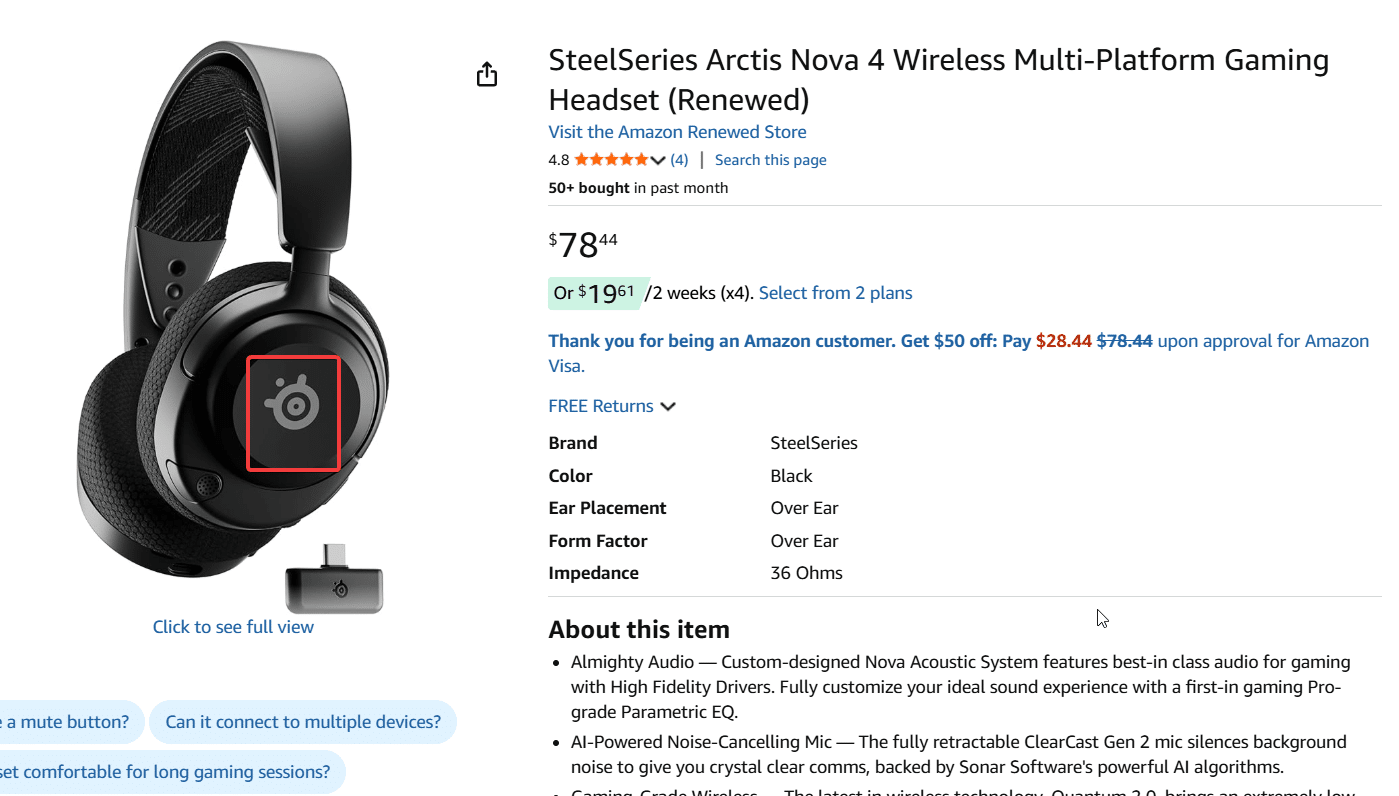
Small, intentional product differences make counterfeit claims much easier to prove.
Examples of effective differentiators:
- Molded logos or embossed markings
- Unique internal components or fittings
- Custom packaging layouts or inserts
- Slightly modified dimensions or finishes
When you place a test buy, Amazon reviewers need to see clear, objective differences. The easier you make that comparison, the faster enforcement happens.
As a bonus, customers also learn to recognize your authentic product more easily.
Lock Down Your Supply Chain to Prevent Inventory Leaks
Not all hijackers are sourcing knockoffs. Many are selling your real product that leaked from somewhere upstream.
Common leak points include:
- Factories selling overruns
- Freight forwarders diverting units
- Distributors breaking channel agreements
- Liquidation or returns being resold
If hijackers are selling genuine inventory, removal becomes significantly harder, especially without clear reseller restrictions.
How to tighten control:
- Limit who has access to sellable inventory
- Audit manufacturers and partners regularly
- Track production quantities carefully
- Avoid sending excess inventory to uncontrolled third parties
Most persistent hijacking problems trace back to supply chain exposure.
Clearly Define Authorized Sellers and Warranty Coverage
Amazon doesn’t enforce “authorized seller” policies on its own, but you can, if they’re structured correctly.
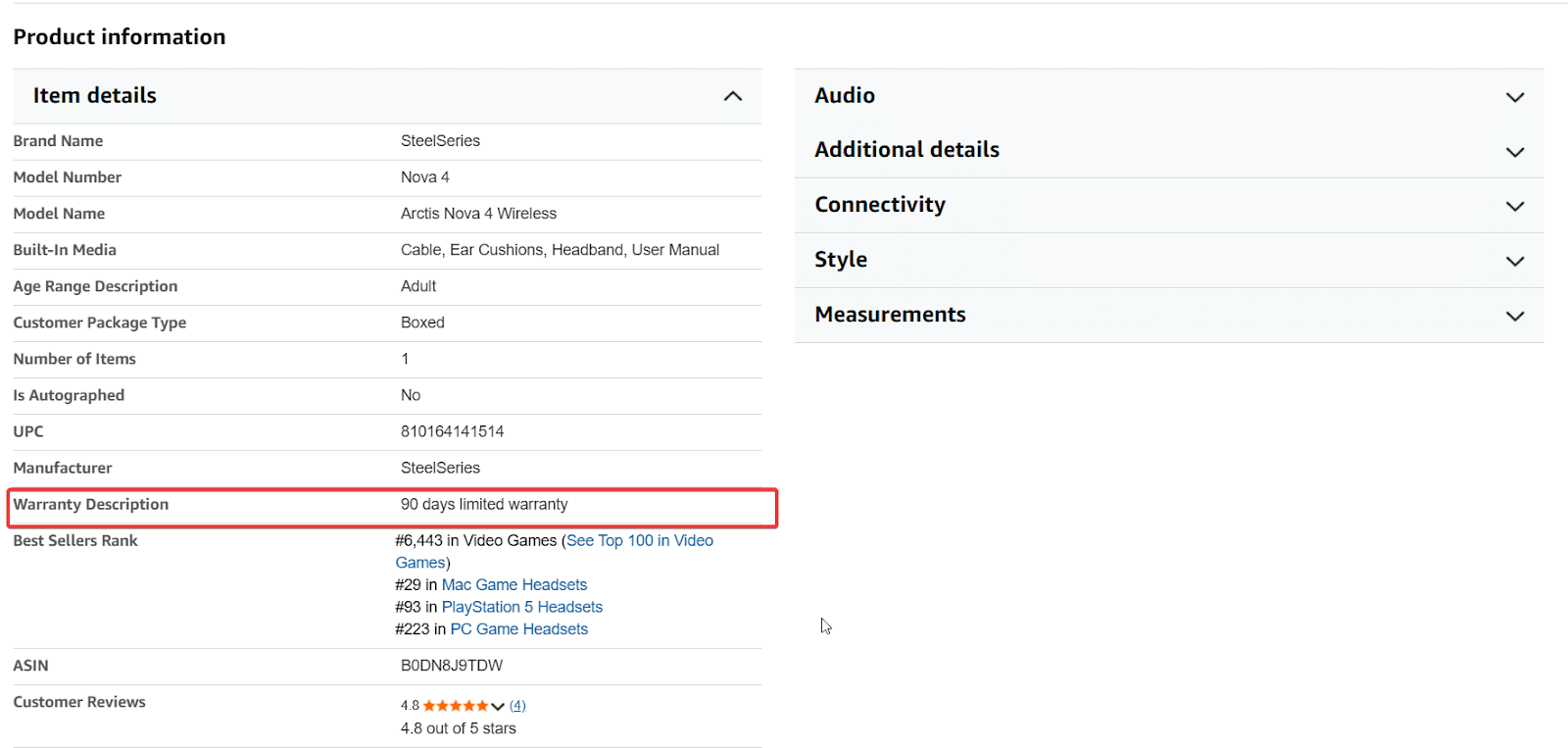
A clear authorized reseller policy allows you to argue that unauthorized sellers are offering a “materially different” product (for example, no warranty coverage).
Best practices:
- Create written reseller agreements
- Publicly state that warranties apply only to authorized sellers
- Include warranty or authenticity language in packaging or inserts
- Enforce consistently (not selectively)
This turns policy into enforceable leverage instead of empty language.
Use Amazon Transparency for Unit-Level Protection
Amazon Transparency adds a unique scannable code to every unit you produce. Amazon verifies the code before the product ships to customers.
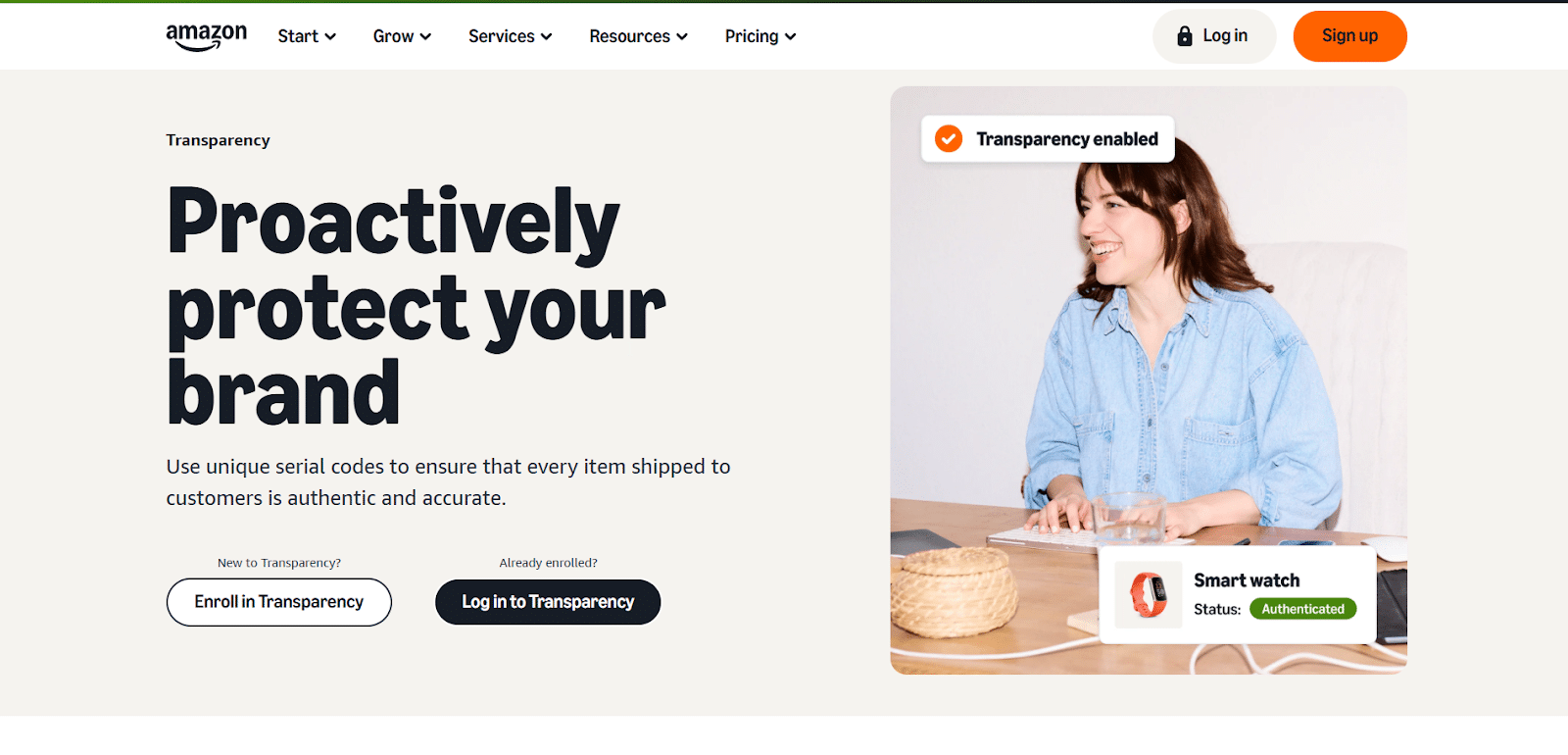
Unauthorized sellers cannot list units without valid Transparency codes, even if they try to use your ASIN.
How to use it effectively:
- Enroll eligible ASINs in Transparency
- Apply codes at the manufacturing or packaging stage
- Ensure all inbound inventory is properly labeled
Transparency works best for brands with consistent production and higher-risk SKUs.
Use Amazon Project Zero for Faster Takedowns
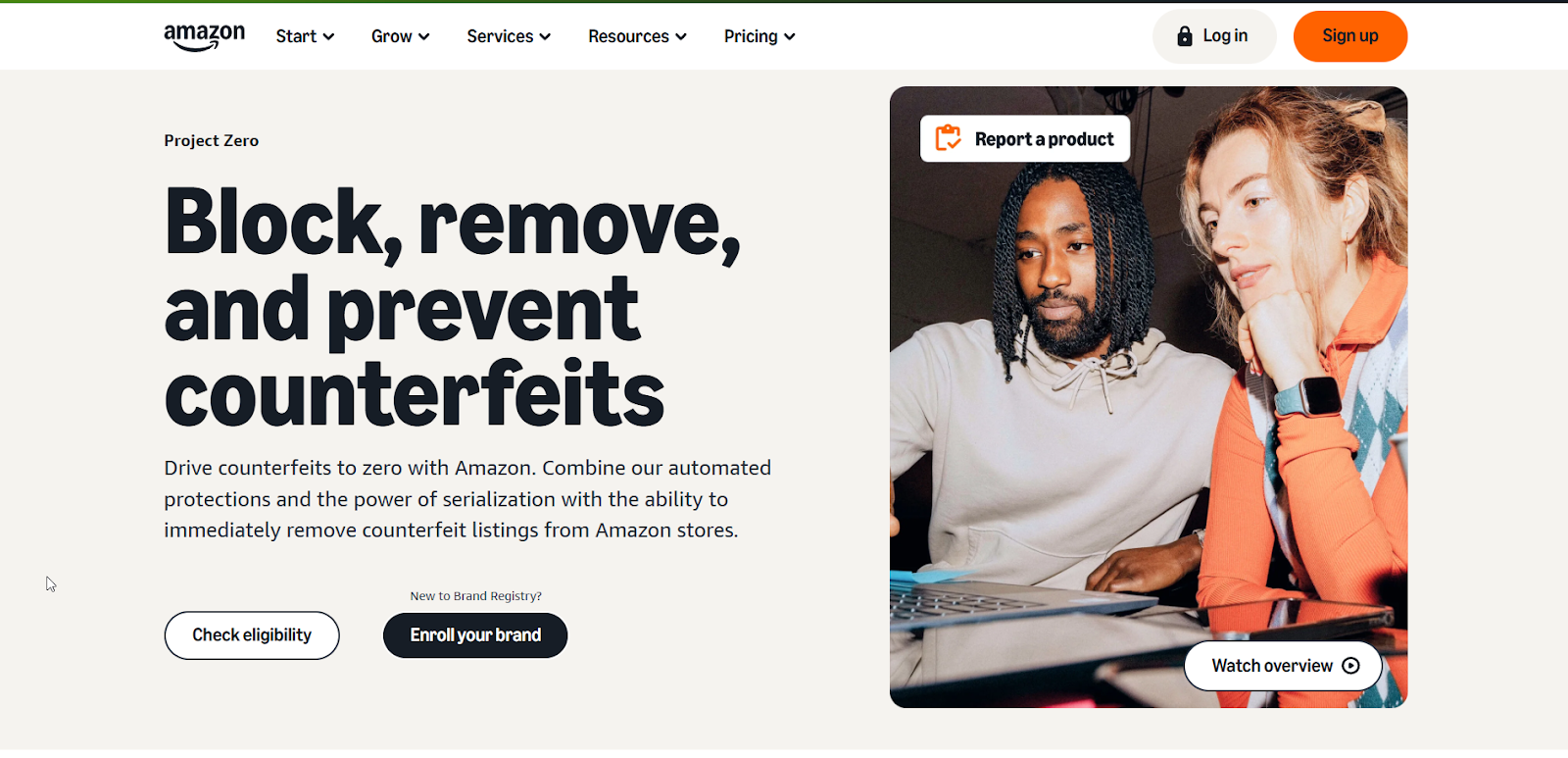
Amazon Project Zero is designed for brands with frequent counterfeit issues and a proven enforcement history. This program:
- Allows brands to remove counterfeit listings themselves
- Reduces reliance on Seller Support timelines
- Uses machine learning plus brand reports
However, there are a few trade-offs to consider:
- Requires ongoing accuracy and compliance
- Works best for experienced operators
- Not ideal for brands without internal processes
When used responsibly, Project Zero dramatically shortens response times.
When Amazon Still Won’t Remove Hijackers
Sometimes, even when you do everything right, cases stall. Support responses can be slow or inconsistent, especially for high-volume listings.
If hijacking is persistent and materially impacting your business, working with an Amazon-focused brand protection agency or legal professional can make sense. Just be selective; results matter more than promises.
Final Thoughts
If you’re dealing with hijackers right now, take a breath—you’re not doing anything wrong. Almost every brand hits this at some point. The first time is the worst, but once you know the process, it gets manageable fast. You’ll tighten your systems, protect your brand better, and move on. Hijackers are annoying, but they don’t get to decide how far your business goes. Good luck!