SHEIN’s Big Bet on American Retail: What Eddie Bauer’s Bankruptcy Reveals

When SHEIN acquired a one-third stake in SPARC Group back in August 2023, the deal was announced with all the usual corporate optimism—talk of “complementary platforms,” “customer-focused experiences,” and making “fashion more accessible to all.” Fast forward to 2026, and one of the retailers under that partnership umbrella, Eddie Bauer, has just declared bankruptcy.
It's a development worth examining, not just for what it says about Eddie Bauer, but for what it reveals about SHEIN's ambitious—and potentially precarious—foray into traditional American retail.
The Deal That Was
The 2023 partnership was structured as a mutual investment: SHEIN took approximately a one-third interest in SPARC Group (a joint venture between Authentic Brands Group and Simon Property Group), while SPARC became a minority shareholder in SHEIN. On paper, it made sense. SHEIN brought its massive e-commerce platform—serving 150 million users at the time—and its pioneering on-demand production model. SPARC brought retail expertise and a portfolio of established American brands.
The initial focus was on Forever 21, with plans for shop-in-shops, streamlined returns, and expanded distribution through SHEIN's platform. But SPARC Group's portfolio extended beyond Forever 21 to include other legacy American retailers—Eddie Bauer among them.
The Eddie Bauer Problem
Eddie Bauer's bankruptcy filing illustrates the fundamental challenge facing traditional retailers in 2026: the business models that worked for decades simply don't anymore. The outdoor apparel company, founded in 1920, couldn't compete in an era where consumers expect ultra-fast fashion cycles, rock-bottom prices, and seamless online experiences—all areas where SHEIN excels.
But here's the irony: SHEIN's investment in SPARC Group was supposed to help prevent exactly this kind of outcome. The partnership promised to leverage SHEIN's e-commerce expertise and on-demand production to revitalize struggling brands. So what went wrong?
When Fast Fashion Meets Legacy Retail
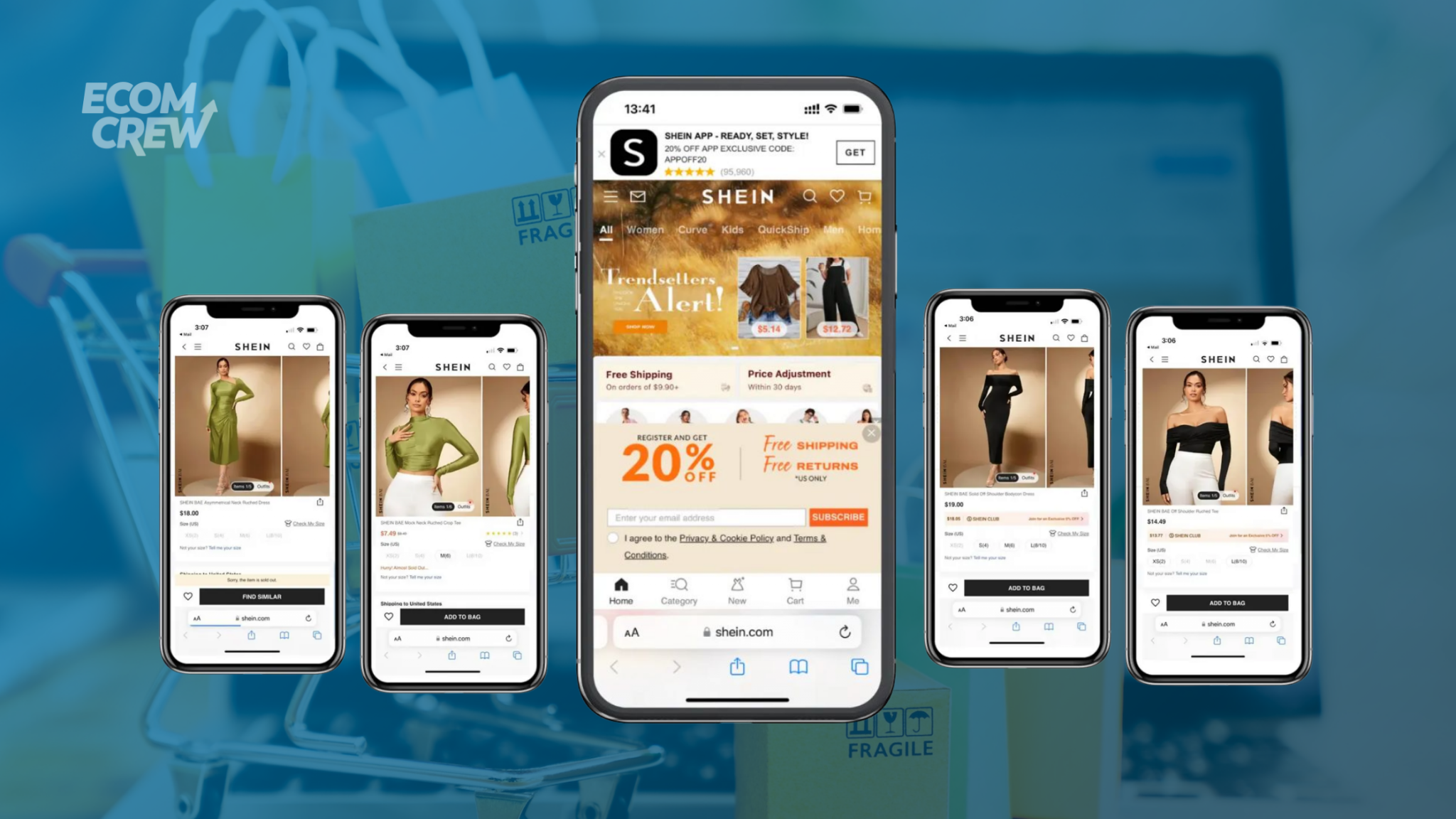
The collision between SHEIN's model and traditional retail was always going to be complicated. SHEIN built its empire on speed, trend-responsiveness, and prices that legacy retailers simply can't match. Its on-demand production methodology means lower inventory risk and the ability to test products at scale before committing to large runs.
Traditional retailers like Eddie Bauer operate on entirely different timelines and economics—longer production cycles, higher overhead, established (and expensive) supply chains, and physical stores that carry high fixed costs.
Integrating these two approaches was never going to be straightforward. While SHEIN could offer digital distribution and potentially help with production efficiency, it couldn't magically erase decades of structural disadvantages that companies like Eddie Bauer face against digitally native competitors.
What This Means for the Partnership
Eddie Bauer's bankruptcy raises questions about the viability of SHEIN's strategy with SPARC Group. If the partnership couldn't stabilize a recognizable American heritage brand, what does that say about the approach?
It's worth noting that not all brands in the portfolio are struggling equally. The partnership's initial emphasis on Forever 21—a brand that already caters to fast-fashion consumers—may prove more compatible with SHEIN's strengths than an outdoor apparel company targeting a different demographic entirely.
Still, the bankruptcy serves as a reminder that digital distribution and operational expertise can't solve every problem in retail. Brand positioning, consumer perception, pricing power, and product-market fit still matter enormously.
The Bigger Picture
SHEIN's move into physical retail and legacy American brands represents a bet that its model can transcend pure e-commerce. The company isn't just trying to sell more clothes online—it's attempting to reshape how American retail brands operate.
But Eddie Bauer's collapse suggests the limits of that ambition. Some retail models may be too far gone, too fundamentally misaligned with consumer expectations, to save—even with the backing of the world's leading fast-fashion e-commerce platform.
For SHEIN, the challenge going forward will be determining which brands in the SPARC portfolio can actually benefit from its expertise, and which are simply fighting battles that no amount of e-commerce integration can win. The company's investors—and customers—will be watching closely to see whether this partnership ultimately creates value or becomes a costly lesson in the difficulties of merging fundamentally different retail philosophies.
As traditional retail continues its painful transformation, SHEIN's experiment with SPARC Group offers a real-time case study in whether digital disruptors can successfully rehabilitate the brick-and-mortar brands they helped displace. Eddie Bauer's bankruptcy suggests the answer may be: not always.