Target Tests Advertising in ChatGPT as OpenAI Launches Ads for Free Users

OpenAI has officially launched advertising inside ChatGPT, introducing sponsored links to free-tier and lower-paid users as the company seeks to monetize its rapidly growing AI assistant. Target is among the first advertisers to test the new ad format, marking a significant shift in how large-scale AI platforms may be funded.
The ads appear for adult users on ChatGPT's free tier and the $8-per-month Go plan, while Plus, Pro, Enterprise, and Education tiers remain ad-free. Target and partners from its Roundel retail media business will show contextual, clearly labeled ads alongside users' shopping conversations.
How the Ads Work
Sponsored links appear beneath ChatGPT responses, visually separated from the AI-generated content. OpenAI says ads do not influence the model's outputs.
For example, a user asking “What are some countertop cooking appliances that make everyday meals more convenient?” might see an ad for an air fryer from a Roundel partner embedded below the response. The ad would be clearly labeled and distinct from ChatGPT's answer.
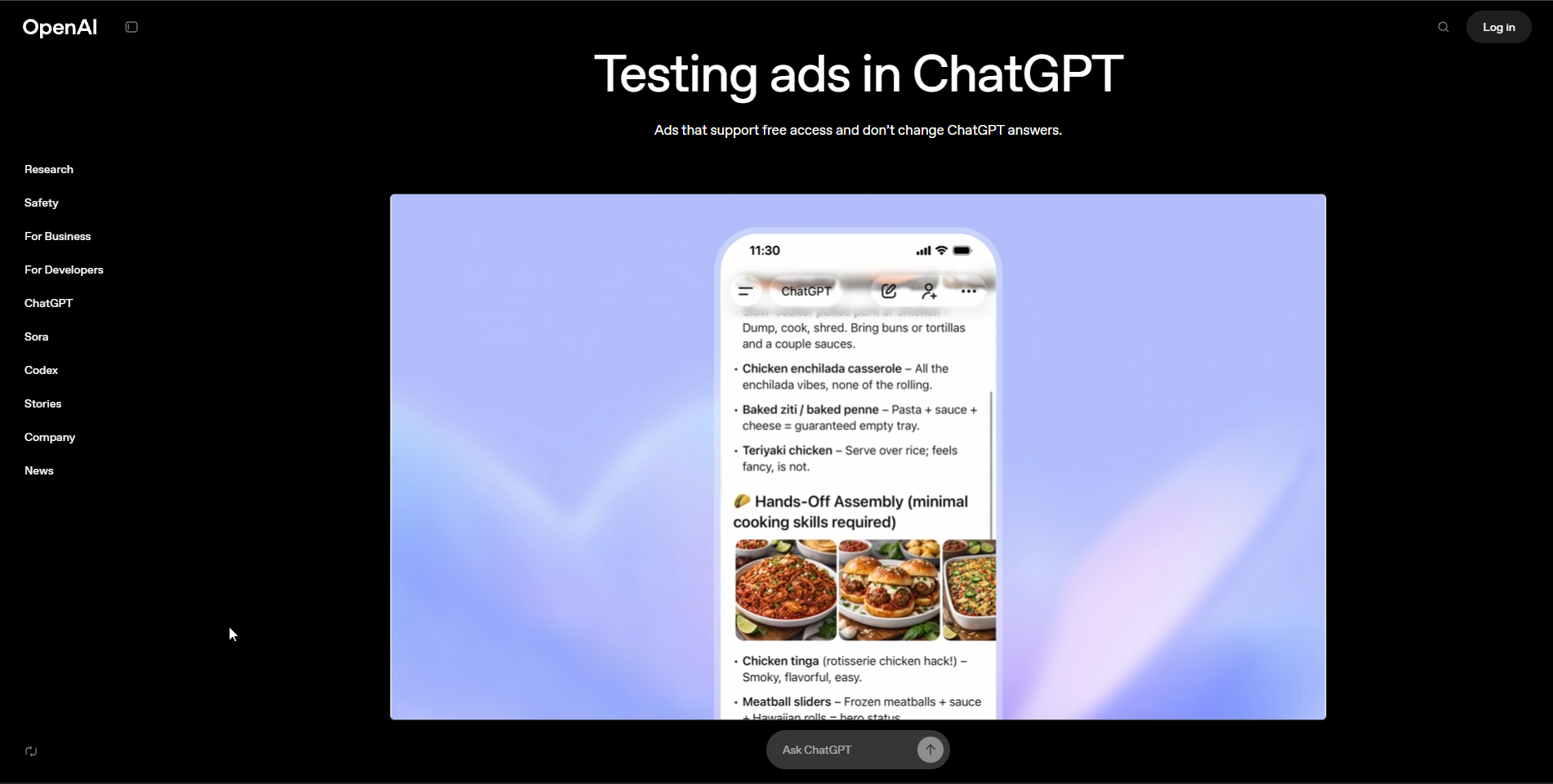
Targeting is based on conversation topics, prior chats, and past ad interactions, though OpenAI says advertisers do not see user conversations or personal data. Users can opt out of ad personalization, dismiss individual ads, or delete ad-related data. Free users can opt out of ads entirely in exchange for accepting fewer daily messages.
Ads will not appear for users under 18 or alongside sensitive topics, including health, mental health, or politics.
Target's Strategic Bet
Target's participation reflects the retailer's broader push into what it calls “agentic commerce”—meeting consumers in AI-powered shopping environments where they're already making decisions.
Traffic from ChatGPT to Target has grown 40% on average each month, according to the company. Target recently launched its app inside ChatGPT and partnered with Google to co-develop the Universal Commerce Protocol, positioning itself at the forefront of conversational commerce.
“We believe ads play an important role in continuing to support broad access to AI,” said Asad Awan, Ads and Monetization lead at OpenAI. “By working closely with partners like Target in this pilot, we're able to thoughtfully test new ad experiences and learn together.”
Target's Roundel retail media business is testing the platform on behalf of brand partners, allowing them to appear in shopping moments beyond traditional media placements.
Why It Matters
The launch signals a shift in how AI assistants may be funded as infrastructure costs rise and usage scales globally. OpenAI has faced mounting pressure to generate revenue commensurate with its massive computing expenses.
Advertiser demand is forming quickly, driven more by potential influence and reach than proven performance metrics. ChatGPT serves millions of users daily, many of whom use it for product research and shopping decisions—making it an attractive new channel for retailers and brands.
The question is whether users will accept ads in AI assistants the way they've accepted them in search engines and social media—or whether sponsored content in conversational interfaces will feel too intrusive, potentially driving adoption of ad-free alternatives.