What Foreign Businesses Actually Need to Sell on WeChat

WeChat has over 1.36 billion monthly active users. For overseas businesses targeting Chinese consumers, no other platform brings together marketing, customer service, and sales in one place. But getting started requires more than signing up. This guide walks you through each step, from confirming your eligibility to launching with your first customers.
Step 1: Confirm Your Eligibility for a WeChat Account
Before you touch WeChat, you need to confirm that your business is even eligible to operate inside the ecosystem. Many foreign sellers fail later because they only discover restrictions after accounts are submitted or money is spent.
At a minimum, confirm that:
- Your company is legally registered outside China
- You can provide official business registration documents
- You have a real individual who can act as an account administrator
- Your product category is not commonly restricted (finance, supplements, medical products, real estate, and financial services face higher rejection rates)
If any of these are unclear, resolve them first. WeChat does not allow partial or “temporary” setups for businesses that fail verification.
Step 2: Register a WeChat Service Account as a Foreign Company
The WeChat Service Account is the foundation of your presence and the only account type Tencent allows overseas businesses to own directly.
There are two types of Official Accounts: Subscription Accounts and Service Accounts.
Overseas companies are not eligible for Subscription Accounts. Foreign entities are only permitted to register Service Accounts, so if you are registering from outside China, the decision is already made for you.
Now, a service account does not sell products by itself. Its role is to:
- Represent your brand publicly inside WeChat
- Collect followers
- Host menus, links, and integrations
- Connect storefronts, Mini Programs, and payments
For the vast majority of foreign sellers, “selling on WeChat” in practice means running a Service Account that links out to a Shopify store or similar. Your followers read your content, tap a link in your menu or post, and land on your storefront to complete the purchase. That is the setup most overseas businesses actually use.
The selling itself happens in a separate layer, either an H5 store (a mobile web page that opens inside WeChat, similar to a Shopify storefront) or a WeChat Mini Program (a more native, app-like experience built to run inside WeChat).
How to register for a service account:
- Register through the WeChat Official Accounts Platform

- Select Service Account (the only option for overseas entities)

- Fill out all necessary fields with business information


- Submit business registration documents and admin identification

- Once your account is created, you will be redirected to a verification page. You can also find this under Settings > WeChat Verification. You'll be asked to submit a few more requirements and pay an admin fee (which is $99 as of this writing).

NOTE: Have all your documents ready before starting the verification process to avoid mistakes that could lead to your application getting denied.
The most important part of this is the verification letter. There will be two types, as indicated in the earlier image. Filled out, it should look something like this:
- After completing the process, wait one to three weeks for WeChat Verification
Important
Avoid using personal WeChat accounts for business operations. Foreign-created personal accounts are frequently restricted, and you will not be able to scale commerce through them.
You can check your verification status in the “Notifications” section of your WeChat dashboard, or you can check your email for any updates.
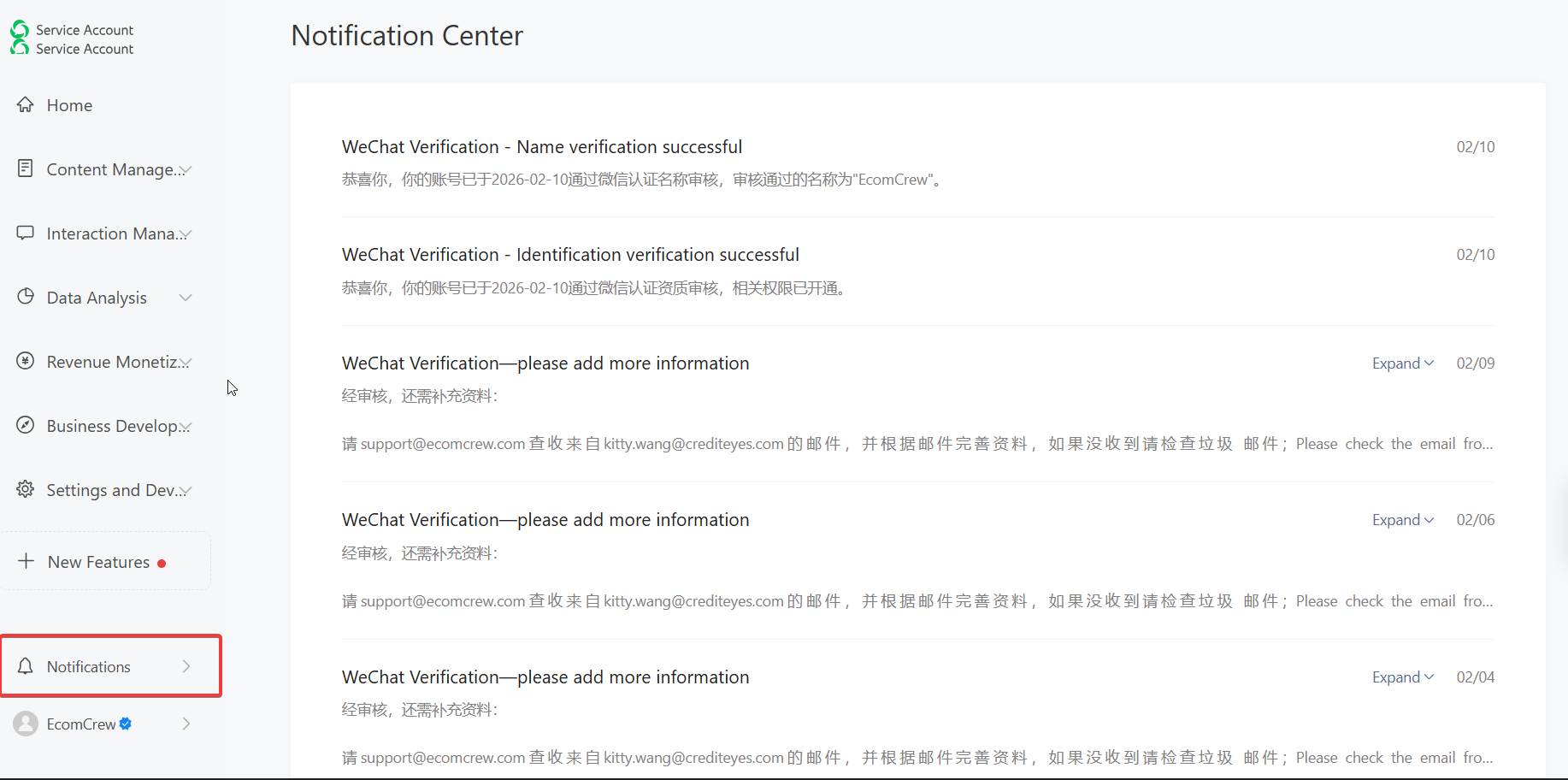
Once verified, your Service Account opens up a range of selling, publishing, follower-building, and advertising options. For a full breakdown of what your account lets you do, check out our companion guide: What Foreign Businesses Can Do With a WeChat Account.
Step 3: Decide Your Storefront Strategy (Mini Program vs H5 Store)
This step determines how customers will actually buy from you. WeChat does not give you a native “seller page.” You must choose how your storefront will exist inside the app.
Foreign sellers typically choose between H5 WeChat stores and WeChat Mini Programs. Both allow you to sell inside WeChat, but they differ significantly in setup, performance, and accessibility for overseas businesses.
The simplest way to think about this decision is intent:
If your goal is testing demand or launching quickly, an H5 WeChat store is usually the right choice. These are mobile web stores that open inside WeChat and integrate well with Shopify or existing systems.
If your goal is long-term growth inside China, a WeChat Mini Program is a better solution. Mini Programs offer:
- Faster performance
- Deeper WeChat integration
- Higher conversion rates
However, foreign sellers should understand that Mini Programs usually require:
- A third-party platform provider, or
- A Chinese partner entity that publishes on your behalf
Trying to custom-build a Mini Program as a foreign company without local support is one of the most common failure points.
Step 4: Select a Third-Party Platform (Most Foreign Sellers Must)
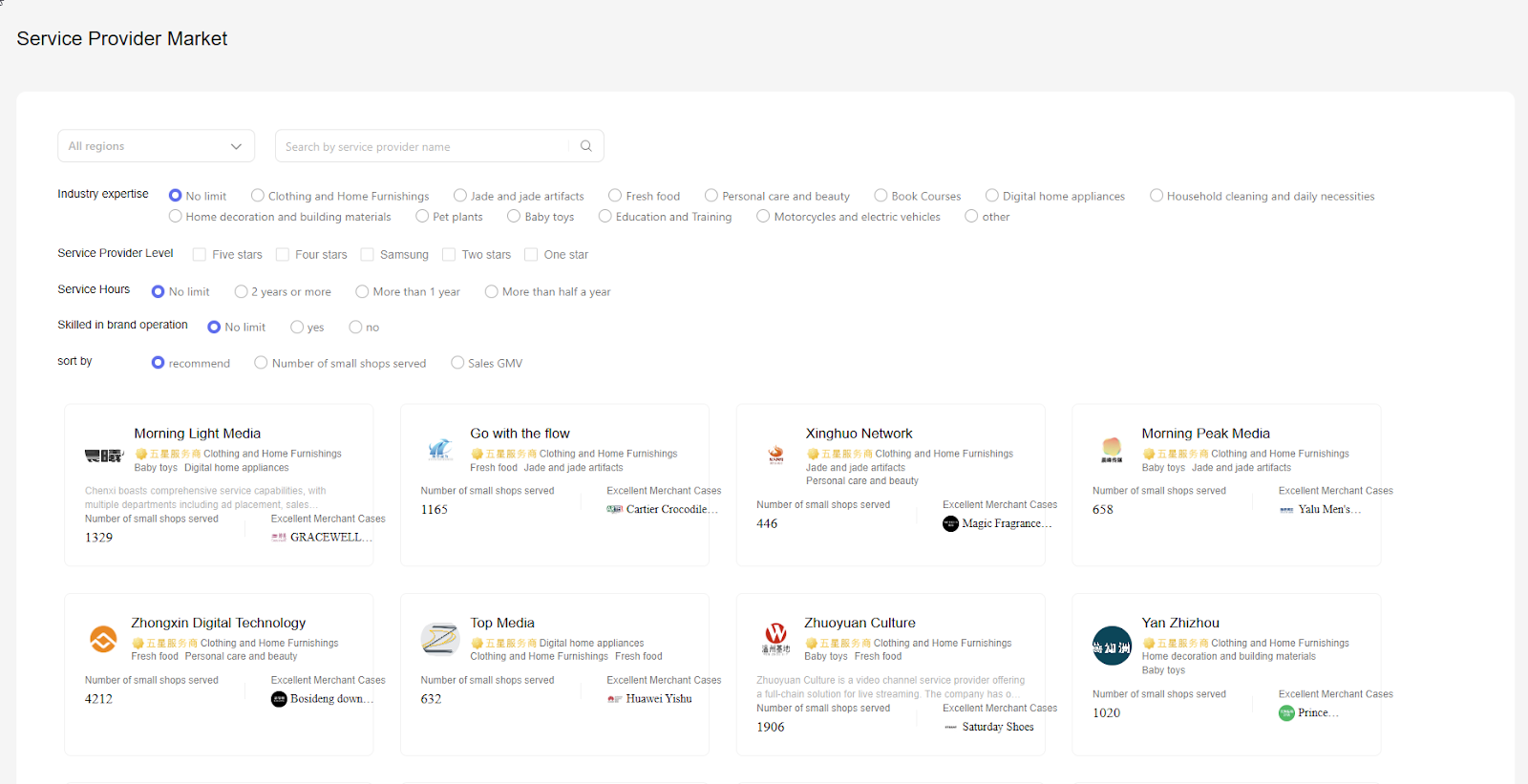
Tencent does not offer a Shopify-style store builder, and most foreign companies are not allowed to directly create or run selling features—such as in-app stores, Mini Programs, or payment checkout—inside WeChat.
So instead of “opening a store,” you do something more indirect. You rent access to WeChat's selling infrastructure through a third-party platform that is already approved to operate inside the ecosystem.
What a third-party platform does:
1. Publish the store on WeChat
The platform (or its Chinese entity) is the one that technically creates and publishes the H5 store or Mini Program inside WeChat. You control products, pricing, and branding—but they are the account holder and publisher.
2. Handles WeChat Pay access
Most foreign sellers cannot directly connect to WeChat Pay. The platform either:
- Uses its own WeChat Pay merchant account, or
- Routes payments through an approved cross-border payment partner
Without this step, customers can browse—but not buy.
3. Hosts and runs the storefront
An H5 store is just a mobile website. The platform provides the infrastructure, including:
- Page templates
- Product and inventory management
- Order processing
- Basic reporting and analytics
You're not building this from scratch.
4. Keeps you inside WeChat's rules
WeChat has strict rules around what can be sold, how payments work, and how promotions are run. Platforms act as a buffer, helping prevent shutdowns caused by rules you didn't know existed.
Step 5: Set Up WeChat Pay or a Cross-Border Payment Route
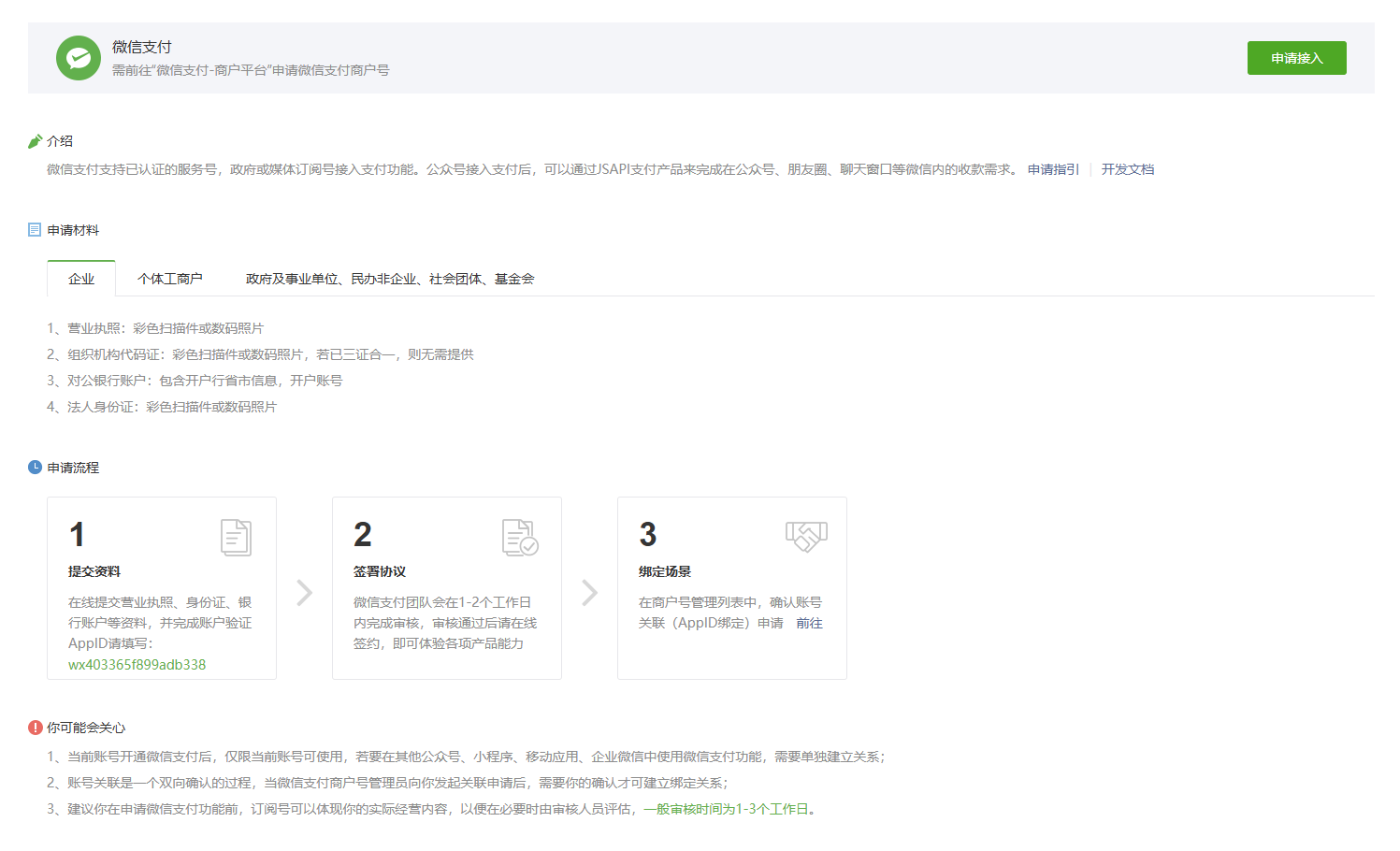
WeChat Pay is essential for selling to Chinese consumers, but overseas businesses usually cannot activate it in the same way as domestic Chinese companies.
Foreign sellers generally choose between:
- Using a Chinese partner to collect RMB and remit funds
- Applying for cross-border WeChat Pay through an approved provider
- Receiving funds into an offshore RMB (CNH) account and converting later
Before you launch, you should clearly understand:
- Where your funds will be settled
- How refunds are handled
- Minimum payout thresholds
- Transaction and conversion fees
Payments should be configured before marketing begins. Traffic without a working checkout is wasted traffic.
It is also important to understand refund handling before launch. Chinese consumers expect refunds to be processed quickly, and delayed responses can negatively affect trust and repeat purchases. Refund logic is usually managed through your payment provider or platform, not directly inside WeChat.
Step 6: Connect Your Store to Your WeChat Service Account
Once your store is live, it should be easy to find from your WeChat Service Account. This is how users move from discovering your brand to actually buying from you.
At a minimum, your store should be linked in your Service Account menu and included in your official posts where relevant. Some sellers also require users to follow the account before accessing the store, which helps turn visitors into followers.
Step 7: Prepare Your Content for a Chinese Audience
Selling on WeChat requires more than translating existing content into Chinese. Chinese consumers expect localized messaging, clear trust signals, and platform-native formats.
At a minimum, foreign sellers should prepare Chinese-language product descriptions, customer service responses, and onboarding content. Poor localization reduces conversion rates far more than low traffic volumes.
Step 8: Launch With Controlled Traffic (Not Ads First)
Foreign sellers often rush into paid advertising before validating the basics. This usually leads to wasted spending.
A safer launch sequence:
- Publish foundational content on your Service Account
- Drive initial visits using QR codes and direct sharing
- Test small influencer or KOL collaborations
- Introduce paid ads only after the checkout flow is proven
WeChat rewards intentional, relationship-driven traffic. Scale works best after trust is established.
Step 9: What to Expect in the First 30–60 Days
For most foreign sellers, the first WeChat sale does not come from search or ads. It usually comes from a controlled source such as a direct share, QR code scan, or influencer post, followed by a short private interaction before checkout.
The first one to two months should be treated as a validation phase. Success is measured by checkout completion, user retention, and operational stability—not by follower count alone.
Focus on:
- Follower growth tied to store access
- Store visits from the Service Account content
- Checkout completion rate
- Repeat users and returning buyers
WeChat commerce is relationship-driven. Foreign sellers should expect greater operational involvement per customer than on marketplaces like Amazon. Questions, confirmations, and post-purchase messages are common, especially early on.
The Bottom Line
Selling on WeChat as a foreign business is entirely achievable, but it rewards preparation over speed. The businesses that get traction are the ones that verify their account properly, choose the right storefront for their stage, and treat the first two months as a learning phase rather than a revenue target.
Each step in this guide builds on the last, so skipping ahead usually means going back. Take it one step at a time, and you will have a working, compliant WeChat presence that is set up to grow.