AliExpress Brings YouTube Shopping Into Its November 1–18 US Sale

AliExpress confirmed on October 29, 2026 that its US 11.11 shopping festival will run November 1–18 and feature product discovery through YouTube Shopping. The announcement gives its October 20 affiliate partnership a specific holiday campaign, alongside promotions for Brand+, its curated branded-product channel.
For sellers, the useful development is the connection between creator content and a defined sales period. The release does not announce new marketplace fees, publish creator-driven sales results or prove that the offers will generate profitable orders. The seller implications below are analysis.
What Changed Since the YouTube Partnership
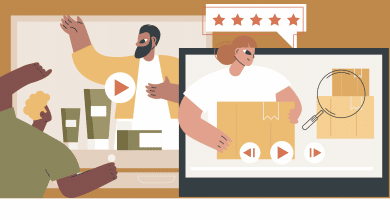
The October 20 partnership announcement covers the United States, Brazil, United Kingdom and Germany. Eligible creators can find AliExpress products in YouTube Studio and tag them in Shorts, long-form videos and livestreams. Viewers follow the product link to AliExpress to complete the purchase.
The October 29 festival announcement confirms that this creator-shopping integration will feature during the US campaign. It does not establish that every AliExpress listing is taggable or that every creator can participate.
Brand+ and community giveaways are established parts of the strategy. EcomCrew’s June coverage of AliExpress’s creator-led summer sale and Reddit activations described several of the same brands now appearing in the holiday promotion. The new distribution mechanism is native YouTube tagging, rather than creator marketing itself.
Amazon products also compete for creator attention through YouTube Shopping. EcomCrew’s explanation of Amazon’s native product tags inside YouTube videos provides background on that competing route. Do not assume Amazon’s eligibility, commissions or reporting rules apply to AliExpress.
The 95% Delivery-Guarantee Claim Is Older
AliExpress says approximately 95% of products offered to US shoppers qualify for its Fast Delivery guarantee. That figure appeared in the company’s August 17 US service announcement, so it should not be presented as an October expansion.
It measures coverage, not performance. It does not mean 95% of orders arrive on time, ship from US warehouses or qualify for two-day delivery.
Compensation also depends on the problem and the order’s terms. A coupon for missing an estimated delivery date is different from a refund for qualifying non-delivery, loss or damage. Sellers comparing their own service with AliExpress should inspect the product’s actual delivery estimate and refund conditions instead of treating “Fast Delivery” as one universal speed promise.
The October release repeats free-shipping and return benefits for eligible Choice and Brand+ purchases. It does not establish that every product receives the same benefits or that sellers’ shipping costs have fallen.
Compare the Delivered Offer, Not the Discount Banner
The promotion names GameSir gaming accessories, Sofirn and Wurkkos lighting, 70mai automotive accessories and other branded products. For competing Amazon or DTC sellers, recognizable brands make a product-level comparison more useful than a broad claim about cheap imports.
Choose comparable models and record the price a shopper can actually obtain. Separate ordinary sale prices from new-customer bundles, payment-specific discounts and limited coupons. Include shipping and any taxes or import charges shown before payment.
Capture the delivery promise and return conditions alongside the price. A lower offer with a different arrival window is a different proposition, particularly for holiday gifts.
Do not infer margin from the advertised discount. The release does not explain how promotional costs are divided among AliExpress, participating brands, merchants and payment partners. Matching a headline percentage without knowing your own contribution margin would be a poor response.
AliExpress Merchants Need a Small, Measurable Test
Before sending samples or paying for content, ask an eligible creator to confirm that the exact SKU is taggable in the target market. Check the product, variant, seller and destination link. Catalog access is a prerequisite, not a promise of exposure.
Then calculate the campaign’s incremental costs: any agreed creator compensation, seller-funded discount, marketplace fees, samples, fulfillment and expected returns. Confirm whether commissions reverse on refunded orders and what reporting you can access before committing a budget.
Products that need demonstrations offer a clearer content brief. Show compatibility, setup, dimensions or a specific use case with accurate claims. Keep the creator’s review independent and require appropriate commercial disclosures.
Compare campaign orders with your normal traffic after cancellations and returns, rather than counting gross sales alone. If video-level attribution is unavailable, document that limitation instead of assigning every sales increase to creator content.
Before November 1, save a baseline of prices, orders, conversion and contribution for the selected SKUs. During the campaign, log tagged videos and offer changes. The next evidence worth reporting is seller-level eligibility and commission documentation, followed by attributable sales and net contribution after the return window. Those results would show whether YouTube adds useful demand beyond an 18-day discount event.