Earn More With the Best Credit Cards for Canadian Ecommerce Businesses

Canadian ecommerce is growing fast. Retail ecommerce sales in Canada are forecast to surpass $130 billion by 2027, and sellers at every level are competing for a share of that. Whether you run a Shopify store from a spare bedroom in Calgary or manage a warehouse operation in Mississauga, the financial decisions you make daily add up over time.
One of those decisions is which credit card sits behind your business spending. The best ecommerce credit cards in Canada do more than process payments. They earn you rewards on advertising, shipping, and supplier costs, and some of them eliminate fees that most sellers do not notice until they add up to hundreds of dollars a year.
This guide covers what to look for, what to avoid, and which five cards are worth your attention as a Canadian online seller.
Related reading: Earn More With the Best Credit Cards for Ecommerce Businesses in the US
What Is an Ecommerce Business Credit Card?
The best ecommerce credit cards in Canada share a few features in common. They are designed to serve the financial reality of selling online, not just the needs of a traditional brick-and-mortar business. At their best, they help you manage cash flow between when money goes out and when revenue comes in, earn rewards on your actual operating costs, and give you controls to manage spending across a team.
What sets these cards apart from a standard personal card or a generic small business card comes down to a few things. Business cards typically offer higher credit limits, expense tracking tools, and rewards structures that at least partially align with what online sellers spend. Some newer fintech options go further with features like virtual cards for individual ad platforms, real-time transaction visibility, and accounting software integrations that make month-end reconciliation faster.
Why Canadian Ecommerce Sellers Need a Dedicated Business Credit Card

Running an ecommerce business in Canada comes with financial pressures that most generic business cards are not built for. The challenges are specific, and the card you choose should address them directly.
The Foreign Transaction Fee Problem
The majority of Canadian business credit cards charge a 2.5% foreign transaction fee on purchases made in foreign currencies. For a seller spending $3,000 per month on Google Ads billed in USD, that fee quietly adds $75 to your costs every single month. Over a year, that is $900 in fees with no benefit attached.
International supplier payments face the same issue. If you source products from overseas manufacturers or pay for US-based tools and platforms, the 2.5% markup adds up faster than most sellers realize until they look at a year-end statement.
Inventory Timing Creates Cash Flow Gaps
Unlike a service business that bills upon delivery, ecommerce sellers regularly pay for inventory weeks or months before it generates any revenue. You place a purchase order, pay your supplier, wait for shipping, receive the goods, list them, and then wait for sales to come in. A credit card with meaningful credit room gives you a buffer to keep restocking without draining your operating account.
Ad Spend Runs Every Day
Paid advertising on Meta, Google, TikTok, and other platforms does not pause for your cash flow situation. The charges go through daily or weekly regardless of when your last batch of orders settled. A card with a high limit and clear spend visibility helps you stay on top of advertising costs without surprises.
Your Team Needs Cards Too
As your operation grows, you will likely have team members making purchases. Shipping supplies, packaging materials, freelance tool subscriptions, and platform fees all need to be paid. A card program that lets you issue employee cards with individual limits and track spending in real time saves time and reduces the risk of unauthorized or miscategorized spend.
What to Look for in a Credit Card as a Canadian Ecommerce Seller

Not every business card works equally well for an online seller. Before you apply, weigh each card against these criteria with your own spending habits in mind.
Foreign Transaction Fees First
Given how common international spending is for Canadian ecommerce businesses, this feature should be near the top of your list. A card with no foreign transaction fees protects your margins on every US-dollar or foreign-currency purchase. It is one of the clearest ways a credit card adds direct financial value to your business.
Reward Categories That Reflect Your Actual Spending
Most Canadian business cards reward categories like gas and office supplies. Those are useful for some businesses, but ecommerce sellers often spend more on digital advertising, shipping, and software subscriptions. Look carefully at which categories earn bonus rates and ask honestly whether those match your monthly spending patterns.
Cash Back vs. Points: What Works for You
There are two main reward structures to choose between, and neither is universally better. Here is how they differ in practice:
- Cash back cards deposit a percentage of your spend directly back to you. The value is predictable, easy to calculate, and requires no strategy. A seller spending $10,000 per month on a 1.5% cash back card earns $150 back each month with no further effort.
- Points cards earn currency you redeem for travel, merchandise, or statement credits. Points programs offer higher potential value per dollar if you actively use them, particularly for flights through loyalty programs. The tradeoff is that extracting the best value takes more involvement.
If you want simplicity and immediate financial benefit, cash back wins. If you travel for trade shows, supplier visits, or sourcing trips and are willing to learn the points system, a travel rewards card offers more upside.
Other Features Worth Checking
Beyond rewards and fees, these features make a real difference for ecommerce operations specifically:
- Credit limit flexibility: Online sellers often have variable monthly spend driven by inventory cycles and seasonal campaigns. A card that grows with your volume matters more than one with a fixed, low ceiling.
- Employee card options: Confirm how many additional cards are available, what they cost, and whether you can set individual spend limits.
- Accounting integrations: Cards that connect directly to QuickBooks, Xero, or Sage reduce the time your bookkeeper spends on reconciliation each month.
- No personal guarantee options: Some newer corporate card programs do not require a personal guarantee, meaning your personal credit and assets are not tied to business card debt. This is worth knowing, especially for incorporated businesses.
The Best Credit Cards for Canadian Ecommerce Businesses, Compared
Finding the best ecommerce credit cards in Canada means looking past the welcome bonus and evaluating how each card performs against your actual monthly spend. The five cards below cover a range of budgets, business sizes, and spending priorities, and each one addresses a real need for Canadian online sellers.
🥇Scotiabank Passport Visa Infinite Business: Best for International Purchases
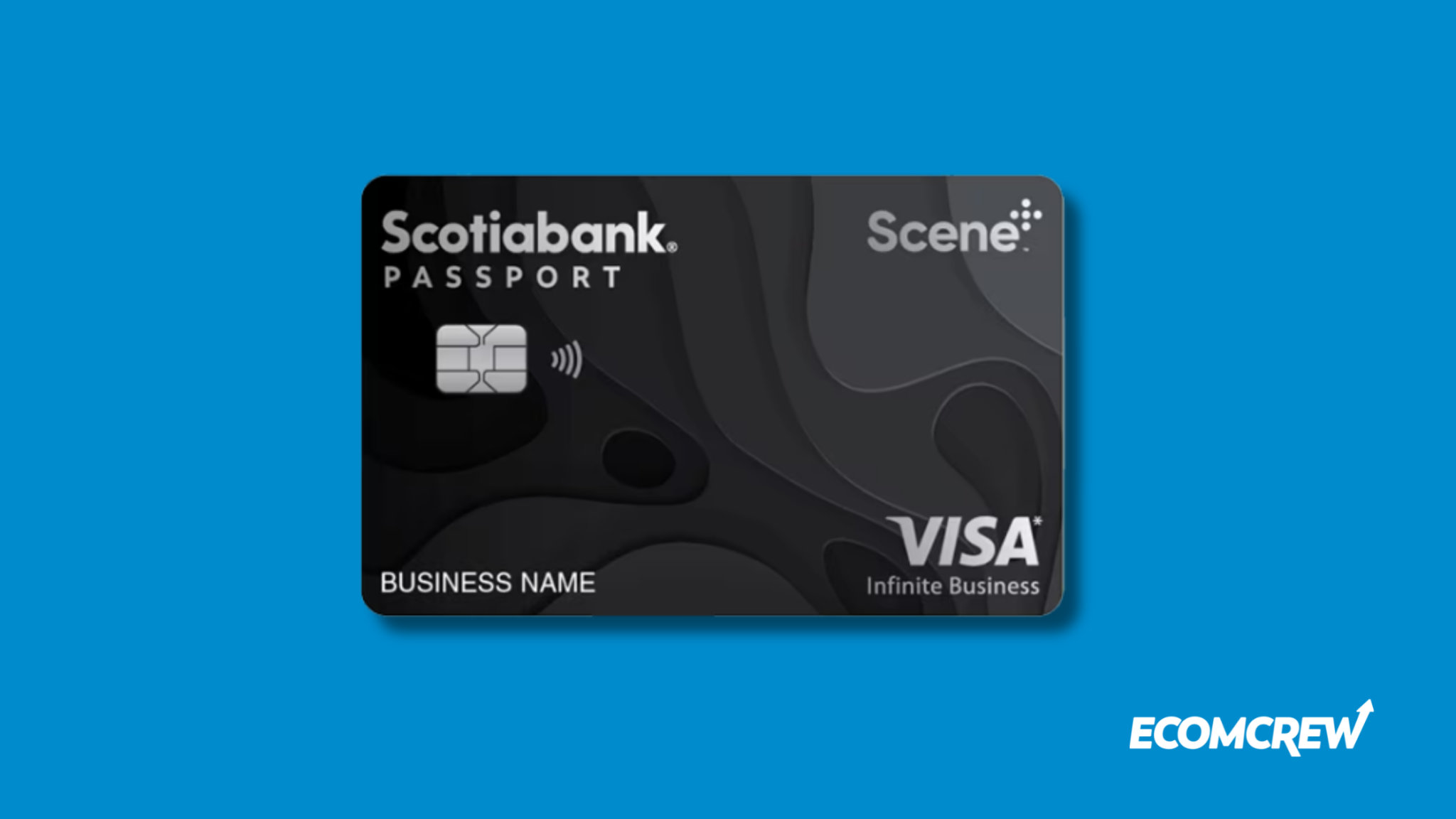
For Canadian ecommerce sellers who regularly spend in US dollars or pay overseas suppliers, this card solves the single biggest fee problem in Canadian business banking. It charges no foreign transaction fees on any foreign currency purchase, which is a genuine rarity among Canadian business credit cards. The annual fee is $199, waived in the first year.
Here is what you get with this card:
- 1.5 Scene+ points for every $1 spent on all business purchases, with no category restrictions
- No foreign transaction fees on purchases in any foreign currency, online or abroad
- Up to 40,000 bonus Scene+ points as a welcome offer
- Six complimentary airport lounge visits per year through the Visa Airport Companion Program
- Direct integration with QuickBooks, Xero, and Sage through Visa Spend Clarity for Business
- First supplementary card at no cost, additional cards at $50 each
Scene+ points redeem at one cent per point toward travel, statement credits, gift cards, and groceries at Sobeys-affiliated stores. The flat 1.5% effective return on all spending is one of the strongest flat rates on any Canadian business card, and the FX savings for international spenders often cover the annual fee on their own.
The one drawback to watch: eligibility requirements are specific. You need at least $60,000 in personal income, $100,000 in household income, $500,000 in business sales revenue, or $250,000 in assets under management with Scotiabank.
Best for: Sellers who pay international suppliers, run USD-billed ad platforms, or use global software tools regularly.
🥈American Express Business Gold Rewards Card: Best for Membership Rewards Points
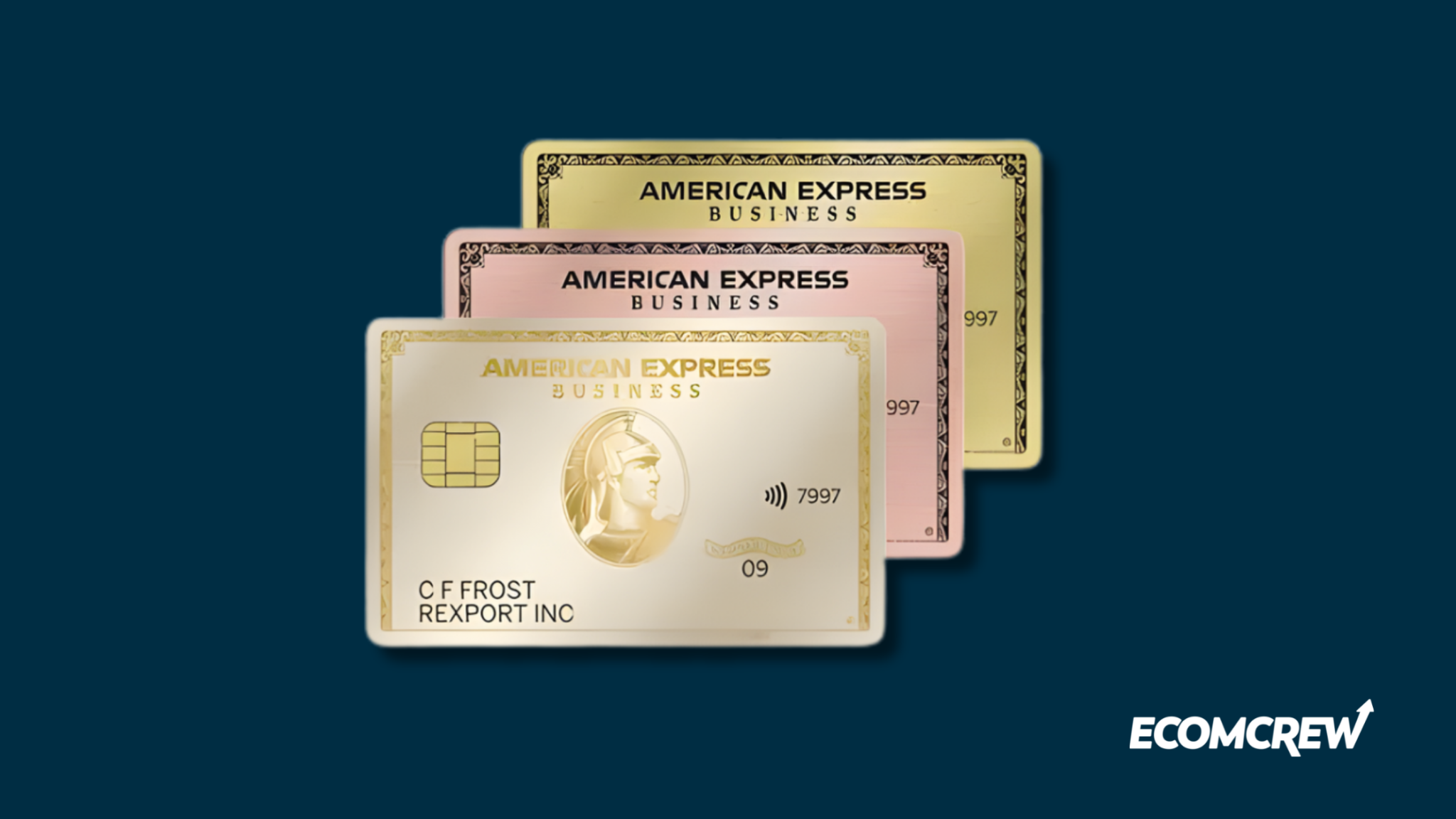
The Canadian version of this card operates differently from its US counterpart. Rather than a category-based bonus system, it earns a flat 1 Membership Rewards point per $1 on all purchases, with a quarterly bonus that rewards high-volume spenders. The annual fee is $199.
Key features at a glance:
- 1 Membership Rewards point per $1 on all purchases with no category tracking required
- 10,000 bonus Membership Rewards points when you spend $20,000 in any calendar quarter, for up to 40,000 additional points per year
- Welcome offer of up to 70,000 Membership Rewards points in the first year
- No preset spending limit, with a flexible payment option for carrying some balance
- Transfer points to Air Canada Aeroplan, British Airways Avios, and other airline and hotel partners
- Purchase protection, extended warranty, and mobile device insurance included
The quarterly bonus structure makes this card increasingly valuable as your monthly spend grows. A seller consistently spending $20,000 or more per month gets a meaningful additional return on top of the base earn rate.
The important caveat: this card charges a 2.5% foreign transaction fee on purchases in foreign currencies. For sellers with significant international spending, the Scotiabank Passport card addresses that cost more directly.
Best for: Established sellers with high monthly volume who want a flexible Membership Rewards balance they can transfer to travel partners.
🥉Float Corporate Card: Best for Teams and Spend Controls
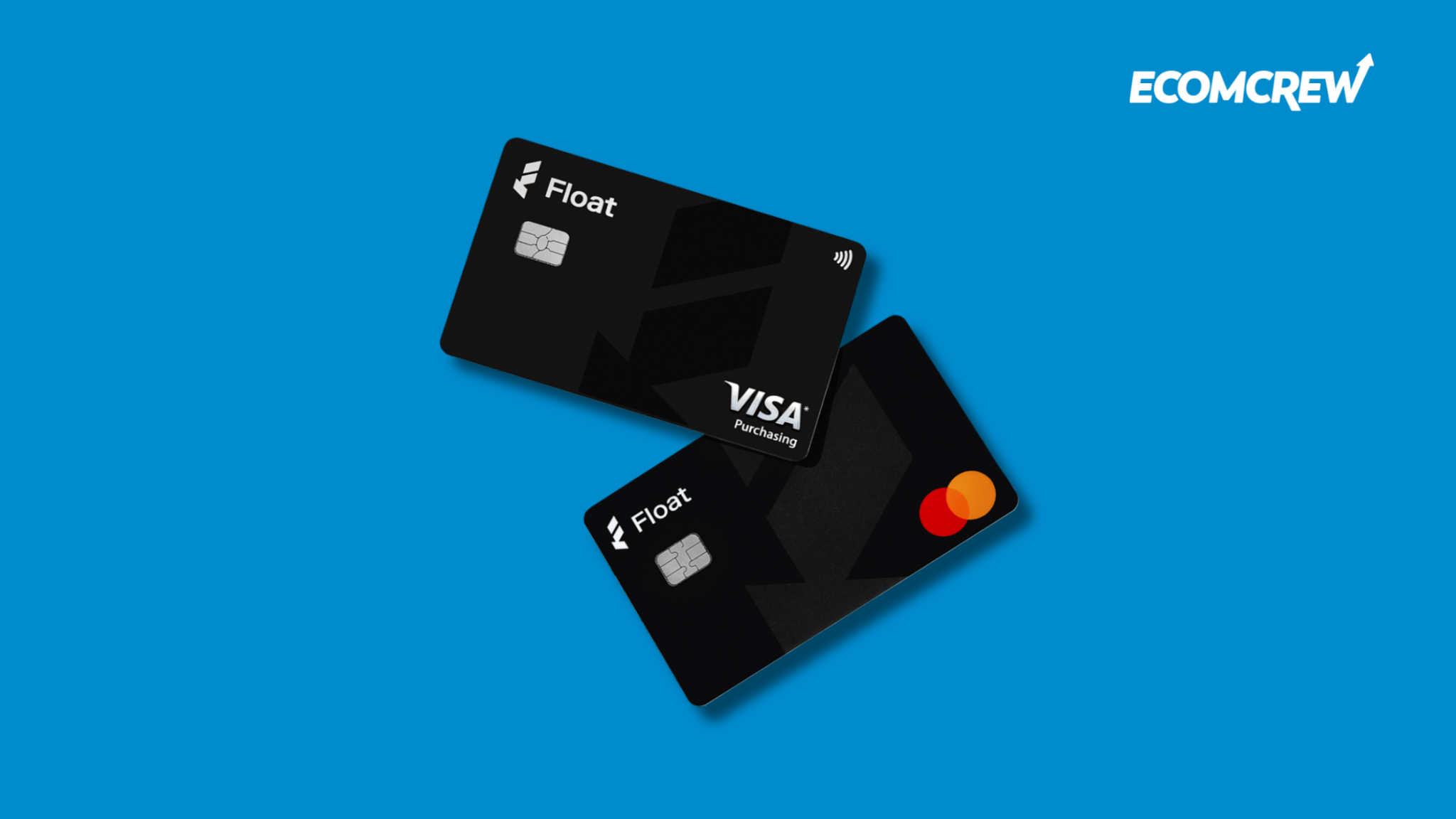
Float is not a traditional bank credit card. It is a Canadian-built corporate spend management platform that issues Visa and Mastercard cards to Canadian businesses, and for ecommerce teams that need control over how money is spent, it does things that no bank card currently matches. The Essentials plan is free, with no annual fee and no charge per card.
Here is what Float brings to ecommerce operations:
- 1% cashback on all spending above $25,000 per month, in both CAD and USD
- No personal guarantee and no personal credit check required
- Unlimited virtual cards, which you can lock to specific vendors or ad platforms
- CAD and USD corporate cards available, with low FX conversion fees through Float FX
- Real-time transaction visibility and per-card spend limits
- Direct integrations with QuickBooks and Xero for automated bookkeeping
- Up to $3 million in unsecured credit available for qualified businesses
The virtual card feature is worth highlighting for ecommerce specifically. Assigning a dedicated virtual card to each ad platform means you always know exactly how much you are spending on Meta versus Google, and a compromised card number on one platform does not affect the others.
Two things to note before applying: the 1% cashback only kicks in above $25,000 in monthly spend, so lower-volume sellers will not earn rewards. The card also operates on a charge model, meaning balances are paid in full at the end of each term.
Best for: Growing ecommerce businesses with teams, high monthly spend, or a need for granular control over advertising and vendor payments.
BMO CashBack Business Mastercard: Best No-Fee Option
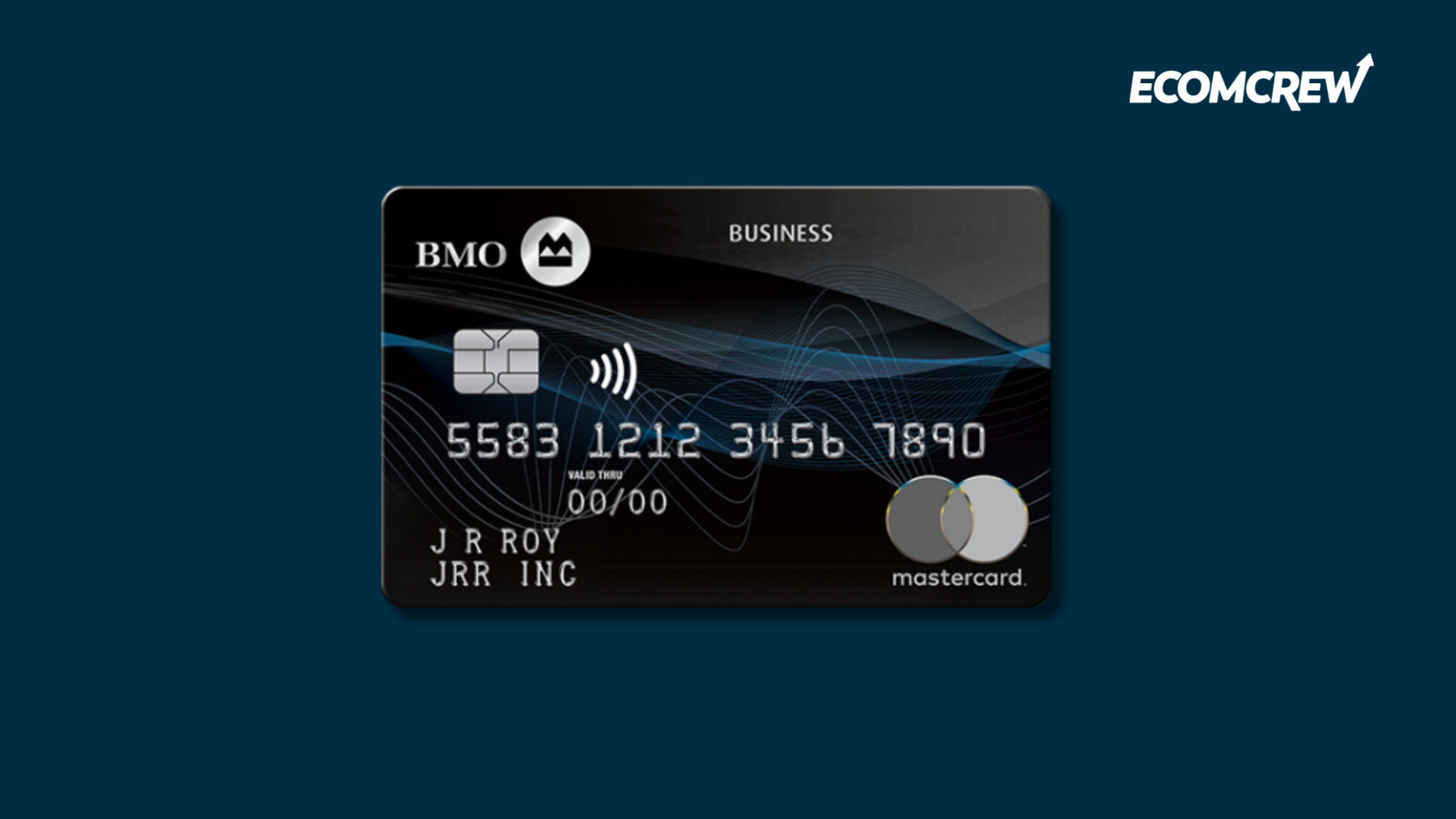
The BMO CashBack Business Mastercard is the most accessible card on this list. There is no annual fee, no complex eligibility threshold to clear, and you can add up to 22 employee cards to the account. For a seller who is just starting out or who wants a reliable secondary card with no ongoing cost, this card delivers consistent value.
Key features at a glance:
- 1.75% cash back on purchases at Shell gas stations
- 1.5% cash back on gas, office supplies, and recurring cellphone and internet bill payments
- 0.75% cash back on all other purchases
- No annual fee
- Up to 22 employee cards available
- Welcome offer of up to $150 cash back in the first three months
- Purchase protection and extended warranty coverage included
The earn rates on SaaS subscriptions and internet bills are relevant for ecommerce sellers who pay for Shopify, email platforms, and other recurring tools. Those expenses flow into the 1.5% category, which is a decent return for a no-fee card.
The limitations are real: the 0.75% base rate on most purchases is low, and the card charges a 2.5% foreign transaction fee. For a seller spending heavily in USD, those fees will outweigh the cash back on affected purchases. This card works best as a no-cost domestic spending card, not as your primary card for international transactions.
Best for: New sellers, sole proprietors, or established businesses looking for a zero-cost card for domestic spending and recurring subscriptions.
RBC Avion Visa Infinite Business: Best for Travel Rewards
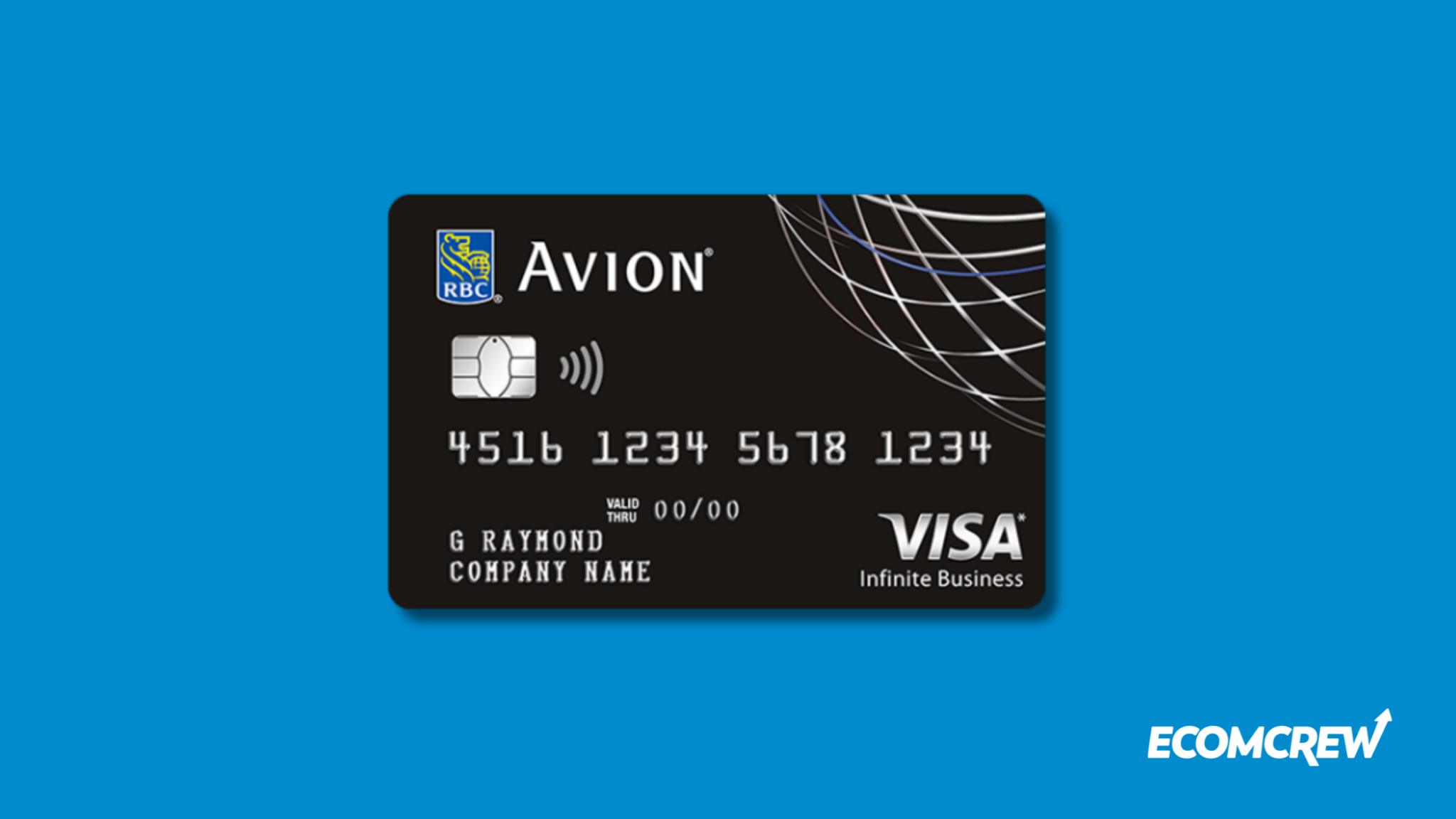
The RBC Avion Visa Infinite Business card earns Avion points on all business purchases and gives you access to one of the more flexible travel rewards programs available through a Canadian bank. The annual fee is $175.
Key features at a glance:
- 1.25 Avion points per $1 on all purchases up to $75,000 per year, then 1 point per $1
- Transfer points to WestJet Rewards, British Airways Avios, Cathay Pacific Asia Miles, and American Airlines AAdvantage
- Redeem points for flights on any airline using the Air Travel Redemption Schedule
- Visa Airport Companion DragonPass membership included, though lounge visits cost $32 USD each
- Comprehensive travel insurance, including emergency medical, trip cancellation, and rental car coverage
- Visa Spend Clarity for Business is included for expense reporting
- 2.5% foreign transaction fee applies
The transfer partners are a genuine strength. Moving Avion points into British Airways Avios or Cathay Pacific Asia Miles at a 1:1 ratio opens up international flight redemptions that go well beyond what most Canadian bank programs offer. For ecommerce founders who travel to trade shows, manufacturing visits, or sourcing trips, that flexibility adds real value over time.
One important note: the DragonPass membership does not include free lounge visits. Each visit costs $32 USD, so factor that into your expectations before applying.
Best for: Ecommerce sellers who travel regularly for their business and want to convert spending into flexible points with strong airline transfer options.
Credit Card Comparison Table
Here is how the best ecommerce credit cards in Canada stack up across the factors that matter most for online sellers.
| Card | Annual Fee | Reward Rate | Best For | Foreign Transaction Fee |
|---|---|---|---|---|
| Scotiabank Passport Visa Infinite Business | $199 (waived year 1) | 1.5x Scene+ on all purchases | International purchases | None |
| Amex Business Gold Rewards | $199 | 1x MR + quarterly bonuses | High-volume MR earners | 2.5% |
| Float Corporate Card | $0 (Essentials) | 1% cashback above $25K/month | Teams and spend controls | None with USD card |
| BMO CashBack Business Mastercard | $0 | 1.5% on select categories, 0.75% other | New sellers, domestic spending | 2.5% |
| RBC Avion Visa Infinite Business | $175 | 1.25 Avion points per $1 | Travel rewards | 2.5% |
NOTE: Four of the five cards charge a 2.5% foreign transaction fee. If a significant portion of your spending is in foreign currencies, the Scotiabank Passport card or a Float USD card addresses that cost directly and should be weighted accordingly.
How to Pick the Right Card for Your Canadian Ecommerce Store

Start by looking at the last three months of your business spending and sorting it into two buckets: Canadian dollar purchases and foreign currency purchases. The size of that second bucket tells you a lot about which card belongs in your wallet.
- Your foreign currency spend is significant: The Scotiabank Passport Visa Infinite Business should be your primary card. The FX savings alone likely cover the annual fee within the first few months, and the flat 1.5% earn rate on everything else is competitive.
- You spend primarily in CAD and want cash back with no fees: The BMO CashBack Business Mastercard covers your recurring tools and domestic purchases without costing anything annually.
- You want to build a Membership Rewards balance for travel: The American Express Business Gold Rewards Card gives you a transferrable points currency with real flexibility, and the quarterly bonus structure rewards higher monthly spend.
- You manage a team and need visibility and control: Float is built specifically for this scenario. The virtual card controls, real-time tracking, and accounting integrations solve problems that traditional cards do not address.
- You travel regularly for your business: The RBC Avion Visa Infinite Business converts your spending into flexible points you can move to airline programs, including Air Canada Aeroplan partners and international carriers.
Should You Use More Than One Card for Your Canadian Ecommerce Business?
Using two cards strategically is something many experienced Canadian ecommerce operators do, and the logic is straightforward. A single card rarely covers every spending scenario at its best rate.
Two pairings work well for ecommerce sellers specifically:
- Scotiabank Passport Visa Infinite Business + BMO CashBack Business Mastercard: Use the Passport card for all foreign currency purchases and online transactions billed in USD, then use the BMO card for domestic recurring expenses. You eliminate FX fees on international spend and keep a no-fee card working in the background for everything else.
- Float Corporate Card + RBC Avion Visa Infinite Business: Float handles team spending, ad platforms, and vendor payments with granular controls and USD card options. The RBC Avion card accumulates travel rewards on larger business purchases made by the primary cardholder, feeding a points balance you can redeem for business travel.
The goal is not to carry five cards. It is to make sure your highest-spend categories are covered by a card that rewards them appropriately, with a reliable second option for everything else.
The Bottom Line
When it comes to the best ecommerce credit cards in Canada, the right answer depends entirely on how your business spends. A seller paying overseas suppliers every month has different priorities than a domestic-only operation focused on SaaS tools and shipping labels. Both need a card built around their actual costs, not a generic rewards program aimed at restaurant meals and airline upgrades.
The Scotiabank Passport Visa Infinite Business stands out as the strongest all-around choice for most Canadian online sellers, specifically because of the no-FX-fee feature that so few Canadian business cards offer.
Sellers chasing Membership Rewards points will find the American Express Business Gold Rewards Card worthwhile at higher spending volumes. Teams that need spend controls and accounting integrations should look closely at Float. And sellers who are just getting started will do well with the BMO CashBack Business Mastercard as a no-cost entry point.