Earn More With the Best Credit Cards for Ecommerce Businesses in the US

Running an ecommerce business means money moves fast. You pay for ads before a single order comes in. You stock inventory weeks before a seasonal rush. You pay international suppliers in currencies that aren't yours. All of that spending adds up, and the credit card sitting in your wallet should work as hard as you do.
The best ecommerce credit cards give you rewards on the exact things you spend money on every day. The wrong one gives you points on restaurant meals and nothing else.
This guide covers what an ecommerce business credit card is, what features actually matter, and the top picks for sellers at every stage, whether you're launching your first Shopify store or running a seven-figure operation.
Related reading: Earn More With the Best Credit Cards for Canadian Ecommerce Businesses
What Is an Ecommerce Business Credit Card?

An ecommerce business credit card is a credit card built around the spending habits of online sellers. Unlike a standard business card or personal card, these cards reward the categories where ecommerce businesses spend the most.
The key spending categories they target include:
- Digital advertising on platforms like Google, Meta, and TikTok
- Shipping and fulfillment costs
- SaaS tools and software subscriptions
- Inventory purchases and supplier payments
Some cards in this category are traditional credit cards issued by major banks. Others are corporate charge cards designed specifically for digital businesses. What separates a good ecommerce credit card from a generic one is the combination of relevant reward categories, flexible credit limits, and features like real-time expense tracking and accounting software integrations.
For beginner sellers, these ecommerce credit cards also serve a practical purpose beyond rewards. They keep your business spending separate from your personal finances, which makes bookkeeping cleaner and tax season far less painful.
Why Ecommerce Sellers Need a Dedicated Business Credit Card

Most ecommerce businesses don't spend like traditional brick-and-mortar shops. A restaurant needs a card with great dining rewards. A construction company needs fuel rewards. You need something different, and here's why.
Your Biggest Costs Are Categories Most Cards Ignore
Digital advertising often makes up 10% to 20% of an ecommerce seller's revenue. Add shipping costs, platform fees, inventory purchases, and SaaS tools subscriptions, and you're looking at significant monthly spend across categories that generic cards rarely reward at a premium rate. A card that gives you 3x to 4x points on advertising alone repays its annual fee within the first few months for most active sellers.
Cash Flow Gaps Are Part of the Business
You pay your suppliers before your customers pay you. That gap creates pressure on your bank account. A credit card with a meaningful credit limit gives you a buffer to keep operations moving without dipping into reserves or taking out a loan. Some cards, particularly corporate charge cards like Ramp, offer credit limits based on your revenue rather than a fixed number, which means your spending room grows as your business grows.
International Supplier Payments Add Up
If you source products from overseas suppliers, foreign transaction fees of up to 3% on every purchase eat into your margins with nothing to show for it. Over a year of regular supplier payments, that adds up to a real cost. Cards with no foreign transaction fees protect those margins from the start.
Expense Visibility Becomes Critical at Scale
When you're managing ad spend across multiple platforms, paying multiple vendors, and issuing cards to team members, you need to see where money is going in real time. Many business credit cards now include dashboards and spend controls that give you that visibility without waiting for a monthly statement.
What to Look for in a Credit Card as an Ecommerce Seller

Not all business credit cards deserve a spot in your wallet. Before you apply, evaluate cards across these key criteria.
Reward Categories That Match Your Spending
The most important feature is whether the card rewards you in the categories where you actually spend money. A card offering 5x points on travel does nothing for a seller who never leaves their home office. Look specifically for bonus rates on:
- Paid digital advertising
- Shipping and fulfillment
- Software and SaaS subscriptions
- Online purchases and supplier payments
Cash Back vs. Points: Which Is Right for You?
Both reward types have real value, and the right choice depends on how much time you want to spend managing rewards. Here's the quick breakdown:
- Cash back cards return a percentage of your spending as money back into your account. They're simple, predictable, and require no strategy.
- Points cards accumulate rewards you redeem for travel, statement credits, or other benefits. They offer higher potential value, but only if you actively redeem them well.
If you want simplicity and a clear dollar value on your rewards, choose cash back. If you're willing to learn the rewards system and want to get outsized value through travel redemptions, a points card gives you more upside.
Other Features Worth Evaluating
Beyond rewards, the following features make a meaningful difference for ecommerce businesses specifically:
- Credit limit flexibility: Look for cards with high starting limits, revenue-based adjustments, or charge card structures with no preset spending limits.
- Foreign transaction fees: If you pay international suppliers, this is non-negotiable. Choose a card that charges none.
- Tech stack integrations: Cards that connect directly to QuickBooks, Xero, or your ecommerce platform save time and reduce manual data entry.
- Annual fee vs. rewards value: A card with a $95 annual fee that earns you $800 in rewards beats a no-fee card that earns you $200. Run the numbers before you decide.
The Best Ecommerce Credit Cards
The cards below cover a range of business types, spending levels, and reward preferences. Each one earns a place on this list because it addresses real ecommerce spending categories, not generic ones.
Our Top 3 Picks
🥇Chase Ink Business Preferred: Best Overall

The Chase Ink Business Preferred earns 3 points per dollar on the first $150,000 spent per year across several categories that directly align with ecommerce operations. The annual fee is $95.
Key features at a glance:
- 3x points on social media and search engine advertising, shipping, internet and phone services, and travel
- 100,000 point welcome bonus after spending $8,000 in the first three months (worth $1,250 in travel or $1,000 cash back)
- Points transfer to airline and hotel partners, including United, Southwest, Hyatt, and Marriott
- No foreign transaction fees
The one drawback to watch is the $150,000 annual cap on bonus category spending. High-volume sellers who exceed that threshold earn only 1x on additional spend, which makes a second card worth considering at that stage.
Best for: Most ecommerce sellers who spend heavily on paid advertising and shipping.
🥈American Express Business Gold: Best for Ad-Heavy Sellers

The American Express Business Gold automatically earns 4x points in your top two spending categories each billing cycle. The card adjusts month to month, so your rewards follow your actual spending patterns without any manual effort on your part. The annual fee is $375.
Key features at a glance:
- 4x points on your top two eligible categories each month, including online advertising and shipping
- Bonus rate applies to the first $150,000 in combined purchases across those two categories per year
- Points transfer to a wide range of airline and hotel loyalty programs
- No foreign transaction fees
Now, there are a few things to know before anything else. The card caps out at $150,000, which can be problematic for people who spend more. The $375 annual fee is also significant.
The card pays for itself quickly for sellers spending $3,000 or more per month on advertising and shipping combined, but it's a harder case for sellers with lower monthly volumes.
Best for: Established sellers running consistent paid advertising campaigns across multiple platforms.
🥉Capital One Spark Cash Plus: Best for Simplicity
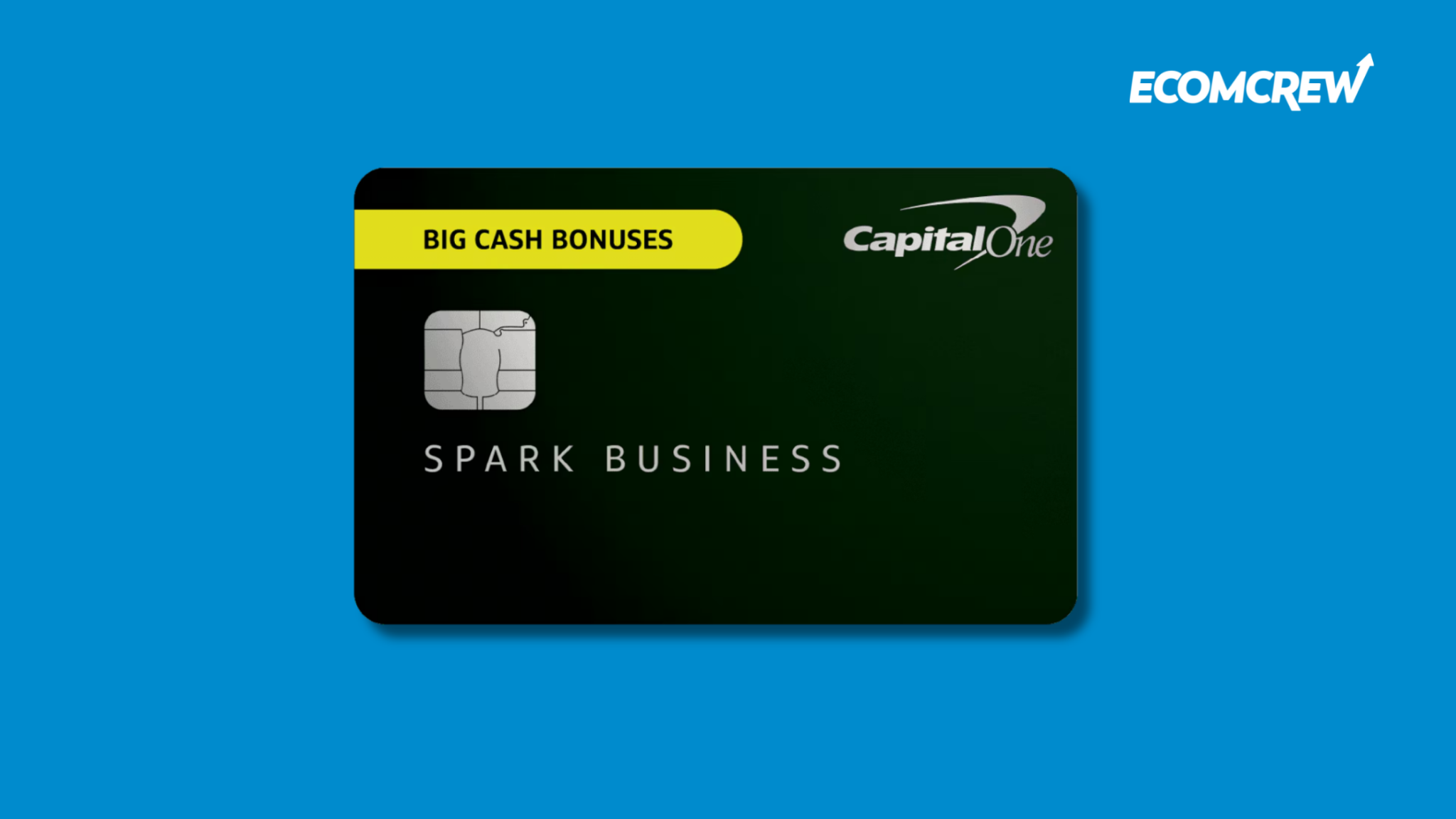
The Capital One Spark Cash Plus earns 2% cash back on every purchase, full stop. There are no categories to track, no bonus limits to manage, and no point systems to study. The annual fee is $150, and Capital One refunds it if you spend $150,000 or more in a calendar year.
Key features at a glance:
- Unlimited 2% cash back on all purchases
- No preset spending limit, with spending capacity that adjusts based on your payment history and business activity
- Annual fee refunded at $150,000 in annual spend
- No foreign transaction fees
One important note: this is a charge card, meaning you pay the balance in full each month. You cannot carry a revolving balance.
Best for: Sellers who want a reliable, straightforward cash back rate without managing a rewards strategy.
Honorable Mentions
Chase Ink Business Unlimited: Best No-Annual-Fee Option
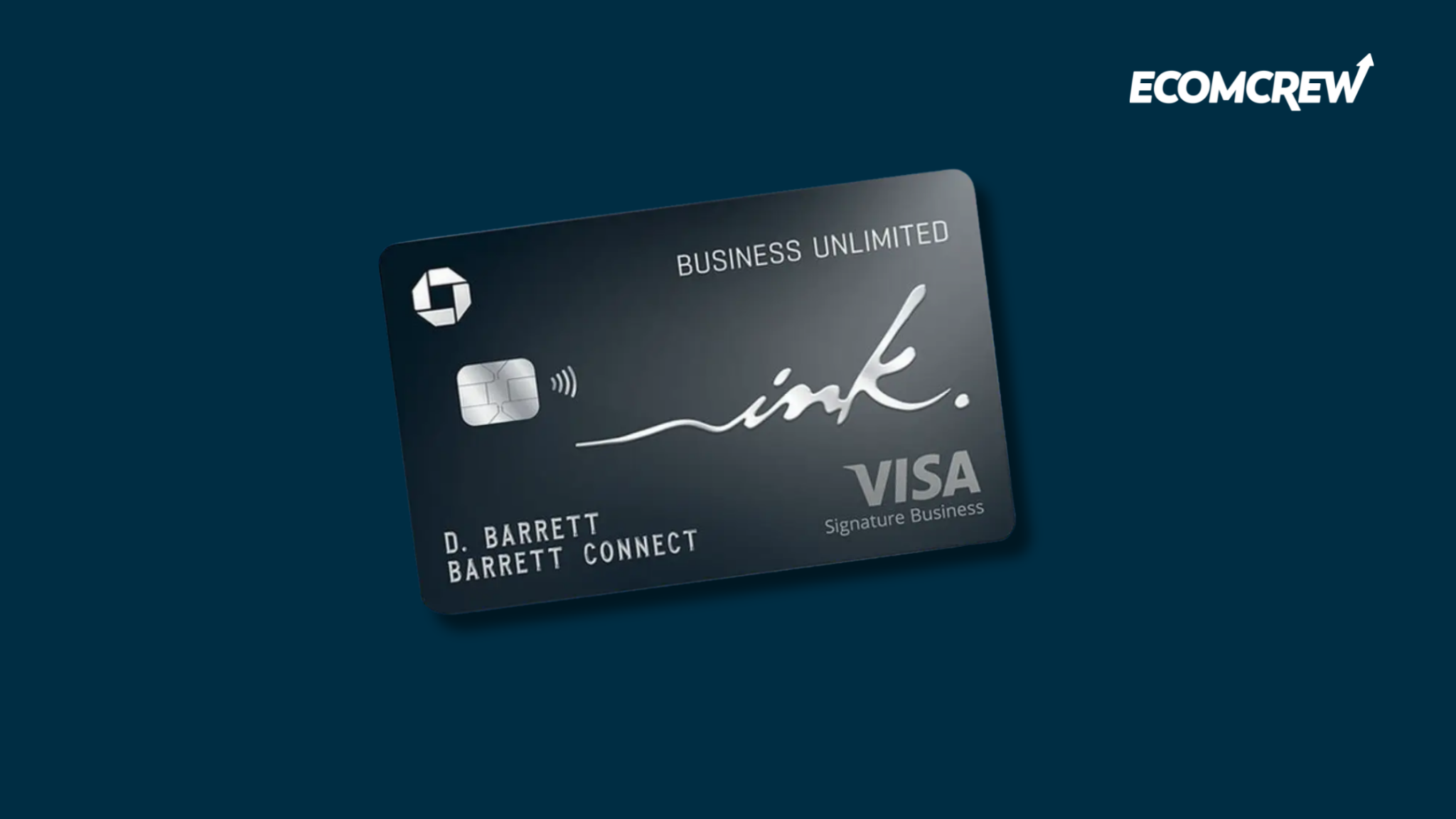
The Chase Ink Business Unlimited earns 1.5% cash back on all purchases with no annual fee. For a seller just getting started, or one looking for a flat-rate card to pair with a more specialized option, this card delivers consistent value without any cost.
Key features at a glance:
- Unlimited 1.5% cash back on every purchase
- $750 cash back welcome bonus after spending $6,000 in the first three months
- Cash back converts into full Chase Ultimate Rewards points when paired with the Ink Business Preferred
- No foreign transaction fees
That last point is worth emphasizing. If you already hold, or plan to get, the Ink Business Preferred, pairing it with the Unlimited turns a simple flat-rate cash-back card into a points-earning machine with no additional annual fee.
Best for: New sellers, budget-conscious operators, or existing Chase cardholders looking to stack rewards.
American Express Blue Business Cash: Best for Smaller Operations

The American Express Blue Business Cash earns 2% cash back on the first $50,000 in eligible purchases per calendar year, then 1% after that. It carries no annual fee and includes an introductory 0% APR period on purchases.
Key features at a glance:
- 2% cash back on up to $50,000 in annual purchases, then 1%
- No annual fee
- Introductory 0% APR on purchases, useful for early inventory investments
- Expanded Buying Power feature lets you spend beyond your credit limit when needed, with the overage due in full the following month
- No foreign transaction fees
Best for: New or smaller ecommerce sellers who want a no-fee card with a solid flat-rate reward and an introductory APR buffer.
Ramp Card: Best for Teams and Spend Controls
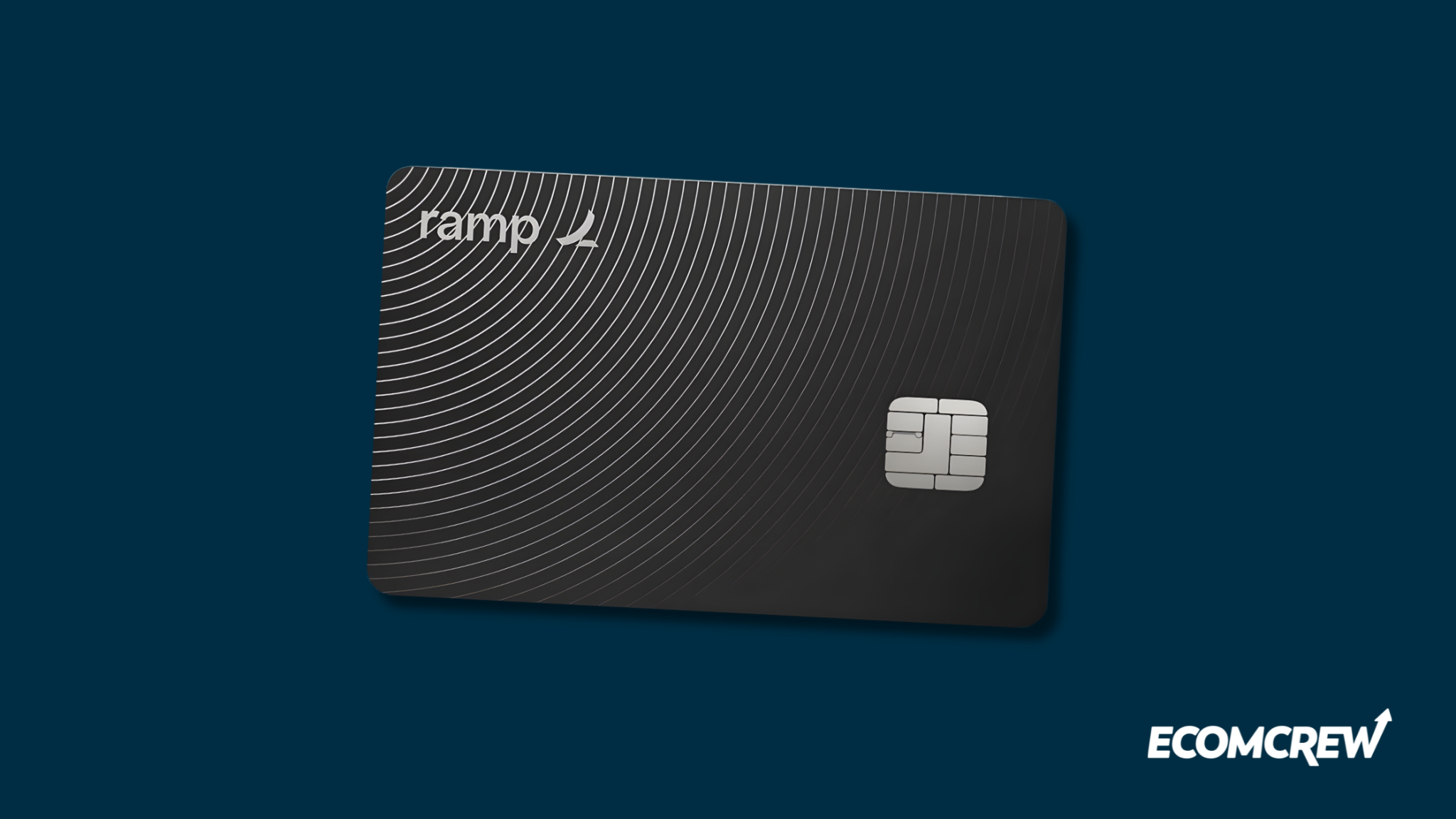
The Ramp Card is a corporate charge card built for businesses that need tight control over team spending. It earns 1.5% cash back on all purchases, charges no annual fee, and requires no personal guarantee.
Key features at a glance:
- 1.5% cash back on all purchases
- No annual fee and no personal guarantee required
- Per-employee card controls and real-time spend tracking
- Vendor price monitoring that flags when you're overpaying for SaaS tools
- Direct integrations with QuickBooks and Xero
- No foreign transaction fees
The qualification requirements are stricter than most cards on this list. You need to spend more than $10,000 per month on corporate cards and maintain at least $75,000 in a US bank account. Sole proprietors are not eligible.
Best for: Established ecommerce businesses with teams, multiple cardholders, and a need for granular expense management.
Brex Card: Best for Scaling Operations
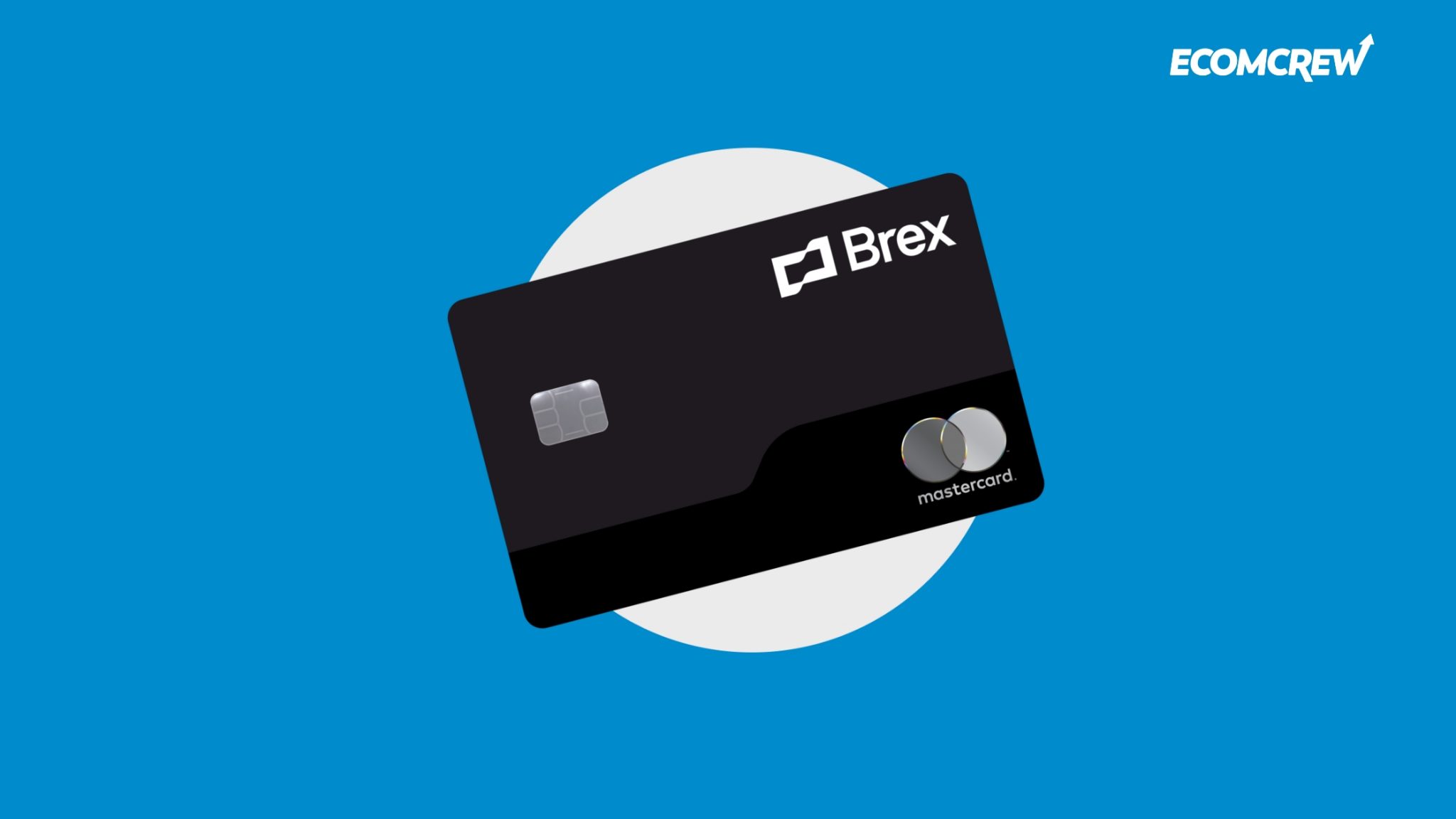
Brex offers a corporate charge card built for ecommerce companies moving past the startup stage. Founders pay the balance in full each billing cycle, and underwriting relies on company financials rather than a personal guarantee, so business owners avoid personal liability tied to daily spending.
Key features at a glance:
- Credit limits adjust with company cash flow, so spending capacity grows alongside revenue
- Real-time spend controls let finance teams set budgets by employee, vendor, or category before a purchase happens
- Connections to more than 1,000 ERP and accounting platforms, including QuickBooks, NetSuite, and Sage, remove manual data entry from expense tracking
- Support for payments across 120-plus countries helps sellers managing suppliers in multiple currencies
- No annual fee and no personal guarantee required
Brex asks for stronger financials than a typical small business card, so newer sellers often find Ramp or a traditional bank card easier to qualify for. For ecommerce companies with a finance team, multiple cardholders, and supplier payments spanning several currencies, Brex gives the spend control and integration depth needed to keep the books clean as volume grows.
Best for: Growing ecommerce companies with finance teams managing multiple currencies and vendors.
Best Ecommerce Credit Cards Comparison
Here's how all six cards stack up across the metrics that matter most for ecommerce sellers.
| Card | Annual Fee | Reward Rate | Best For | Foreign Transaction Fee |
|---|---|---|---|---|
| Chase Ink Business Preferred | $95 | 3x on ads, shipping, software | Most sellers | None |
| Amex Business Gold | $375 | 4x on top 2 categories | Ad-heavy sellers | None |
| Capital One Spark Cash Plus | $150 (refundable) | 2% flat cash back | Simplicity seekers | None |
| Chase Ink Business Unlimited | $0 | 1.5% flat cash back | New/budget sellers | None |
| Amex Blue Business Cash | $0 | 2% up to $50k/year | Smaller operations | None |
| Ramp Card | $0 | 1.5% flat cash back | Teams and spend control | None |
All six cards charge no foreign transaction fees, making them solid choices for sellers who work with international suppliers.
How to Pick the Right Credit Card for Your Ecommerce Store
The best card for your business depends on where your money actually goes each month. Start by looking at your last three months of business expenses and identifying where the majority of your spending lands. Then match it to the option below that fits best.
- You spend heavily on paid advertising: The American Express Business Gold or Chase Ink Business Preferred will generate the most reward value. Both offer strong bonus rates on ad spend and connect to points programs with high-value transfer partners.
- You want cash back and no strategy: The Capital One Spark Cash Plus gives you a clean 2% on everything. At high volume, the annual fee refund makes it even more attractive.
- You're just starting out or working with a limited budget: The Chase Ink Business Unlimited or American Express Blue Business Cash both deliver solid rewards with no annual fee. The Blue Business Cash also gives you a 0% intro APR window that newer sellers will appreciate.
- You run a team and need spend controls: Ramp is in a category of its own. The real-time tracking, per-employee controls, and accounting integrations make it the most operationally useful card on this list for growing teams, as long as you meet the eligibility requirements.
Should You Use More Than One Credit Card for Your Ecommerce Business?

Many experienced ecommerce sellers use more than one card, and it's worth considering once your monthly spend grows beyond a few thousand dollars. The strategy is straightforward: use a specialized card for your highest-spend categories and a flat-rate card for everything else.
Two pairings work particularly well for ecommerce sellers:
- Chase Ink Business Preferred + Chase Ink Business Unlimited: The Preferred earns 3x on ads and shipping. The Unlimited earns 1.5% on everything else. Because both cards earn Chase Ultimate Rewards points, your combined pool grows faster and you redeem everything in one place.
- American Express Business Gold + American Express Blue Business Plus: The Gold handles your top two bonus categories at 4x. The Blue Business Plus covers the rest at 2x Membership Rewards points on the first $50,000 in annual purchases, with no annual fee.
Both setups give you better returns across all your spending without adding much complexity to manage.
The Bottom Line
Your credit card is one of the few financial tools you use every single day in your ecommerce business. Choosing the right one means getting rewarded for spending you were going to make anyway.
For most sellers, the Chase Ink Business Preferred is the strongest all-around option. It rewards your biggest cost categories, carries a low annual fee, and connects to one of the most flexible points ecosystems available.
Ad-heavy sellers will get more out of the American Express Business Gold. Sellers who want zero complexity will do well with the Capital One Spark Cash Plus. Teams that need spend control and reporting should take a close look at Ramp.
Look at your last three months of business expenses, identify where the majority of your spending lands, and match it to the card that rewards those categories best. That single step will tell you exactly which card belongs in your wallet.