2026 World Cup E-Commerce: Why Chasing the Obvious Trend Can Backfire

Every major cultural event creates the same temptation for online sellers. Search interest starts climbing, a few products take off, and suddenly everyone wants to know whether there is still time to get in.
The 2026 FIFA World Cup made the answer fairly clear.
Fans were buying jerseys well before kickoff. TVs and projectors got a lift. Adidas increased inventory and marketing around the event. Amazon even moved Prime Day into June as the World Cup crowded an already busy summer shopping calendar.
By the time the trend looked obvious, much of the preparation behind the biggest retail wins had already happened.
World Cup Shopping Started Before the World Cup
In the month before kickoff, online sales of England shirts were 765% above normal levels, while U.S. Men's National Team shirt sales were up 682%, according to Adobe's pre-tournament ecommerce data.
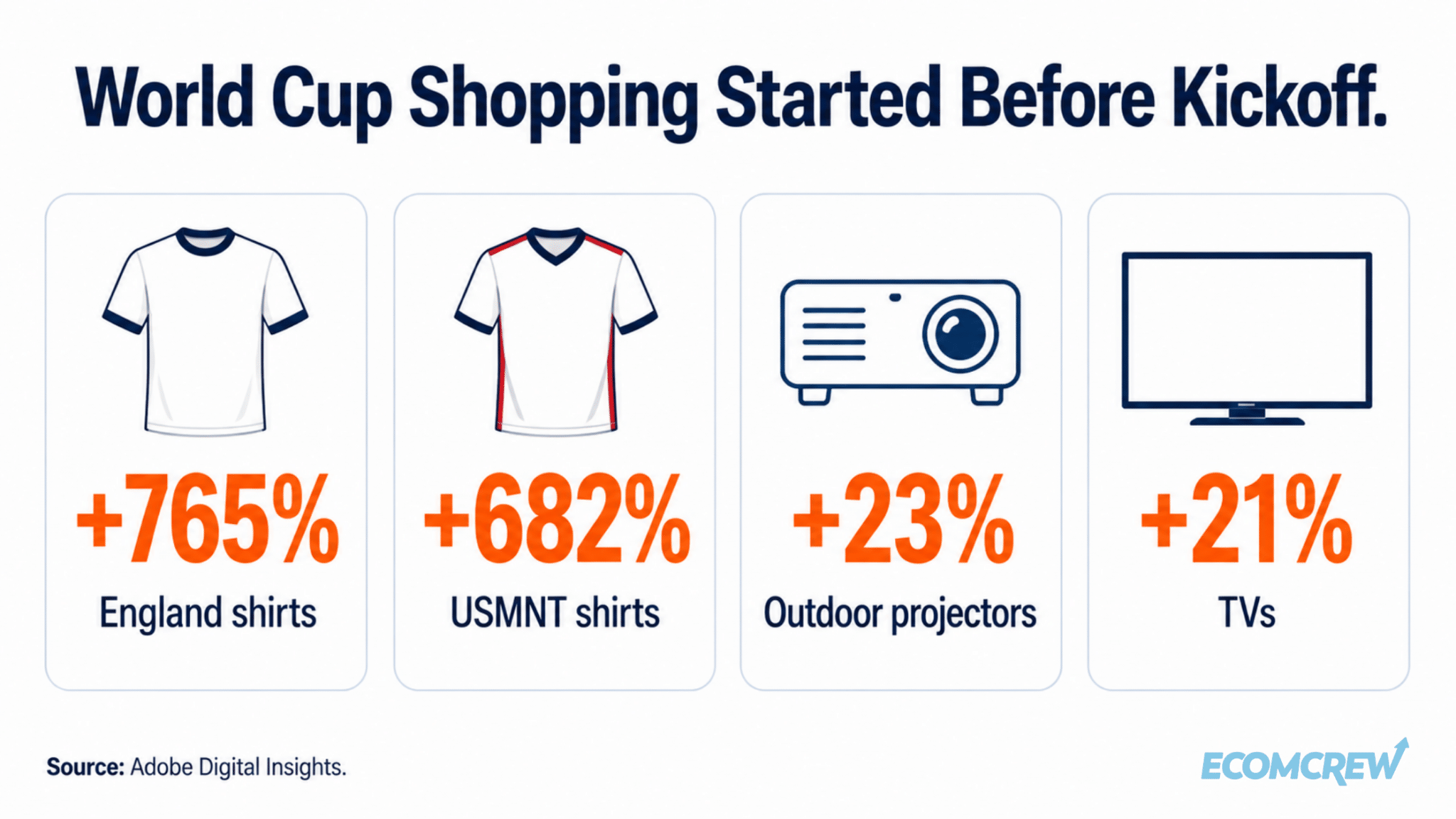
The lift wasn't limited to team apparel. UK spending on outdoor projectors increased 23%, while spending on TVs rose 21% as fans prepared to watch matches at home.
Adidas was seeing the same early movement. Consumer spending on its apparel rose 70% year over year in May, helped by jersey demand. The company entered the tournament sponsoring 14 national teams, compared with Nike's 12, while also supplying the official match ball.
For anyone sourcing from overseas, that timeline gets tight quickly.
A 45-day manufacturing schedule followed by freight, customs, warehouse receiving, and Amazon check-in does not leave much room to react to a June spike. By then, inventory already on the water has an advantage over inventory still sitting in a supplier quote.
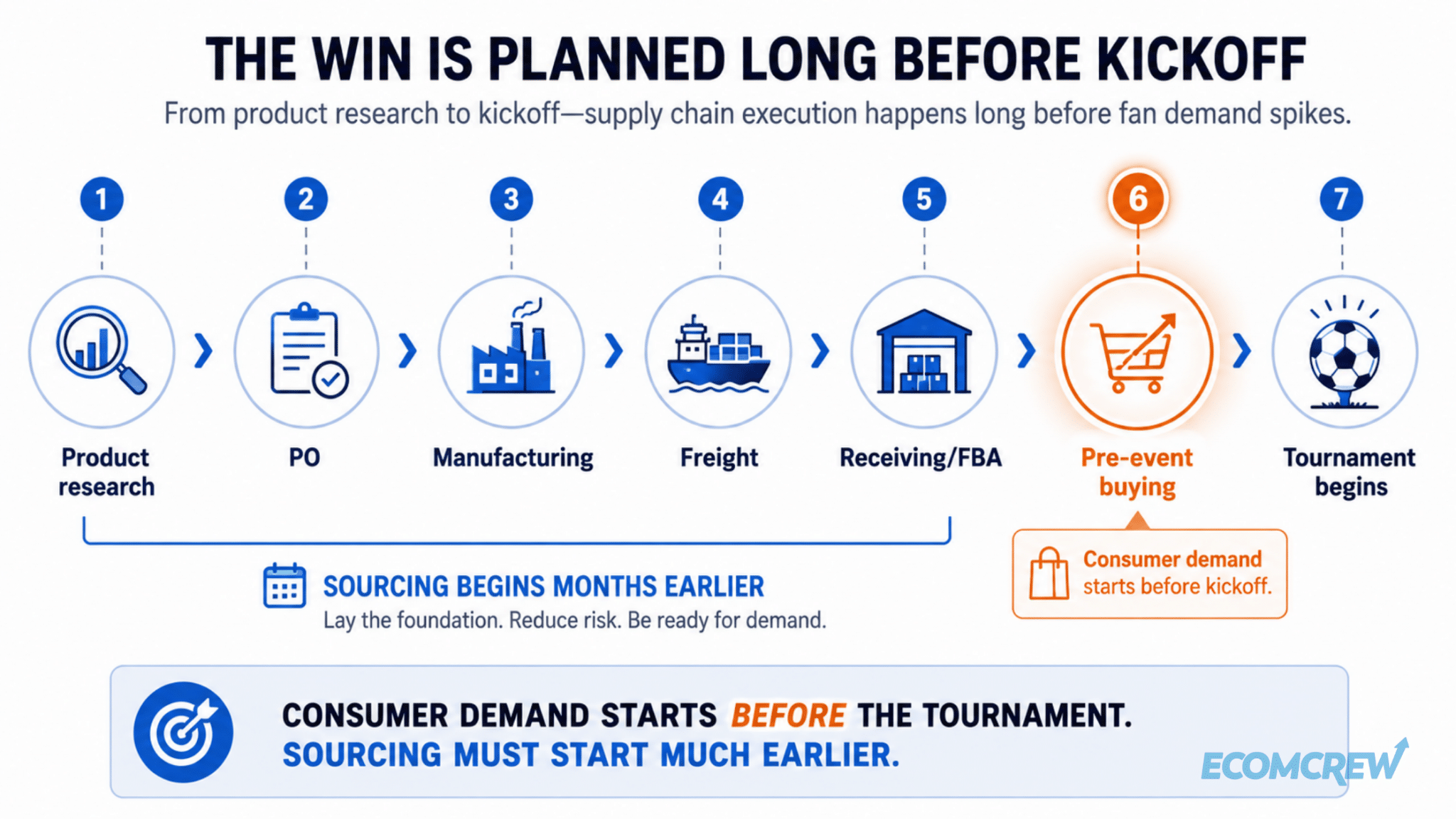
Planning around seasonality and supplier lead times starts looking a lot more relevant when the selling window has a fixed end date.
Adidas Could Afford to Go Big
Adidas entered the World Cup with the sort of setup most marketplace sellers will never have: licensing, sponsorships, global distribution, physical retail, wholesale partners, and a huge marketing budget.
Its second-quarter results reflected that scale.

Adidas reported record net sales of €6.7 billion, while its Performance business grew 39%, led by Football and Running. Ecommerce revenue increased 27% during the quarter. The company also spent €212 million more on marketing than a year earlier, including major World Cup campaigns and activations.
Its inventories were also 13% higher at the end of June.
That wasn't accidental. Adidas said the increase reflected a decision to prioritize product availability, particularly around the World Cup, over short-term inventory optimization.
Adidas was willing to carry more product because running out during one of the biggest sporting events in the world presented its own cost.
A smaller seller making the same bet is tying up working capital without the same number of places to move whatever is left afterward.
Nike Took the Other Side of the Inventory Bet
Nike's World Cup numbers looked different.
Early in the tournament, 28% of Nike's World Cup merchandise had sold out, compared with 7% of Adidas's assortment. Adidas carried a broader range of products, so the percentages aren't a straight performance comparison.
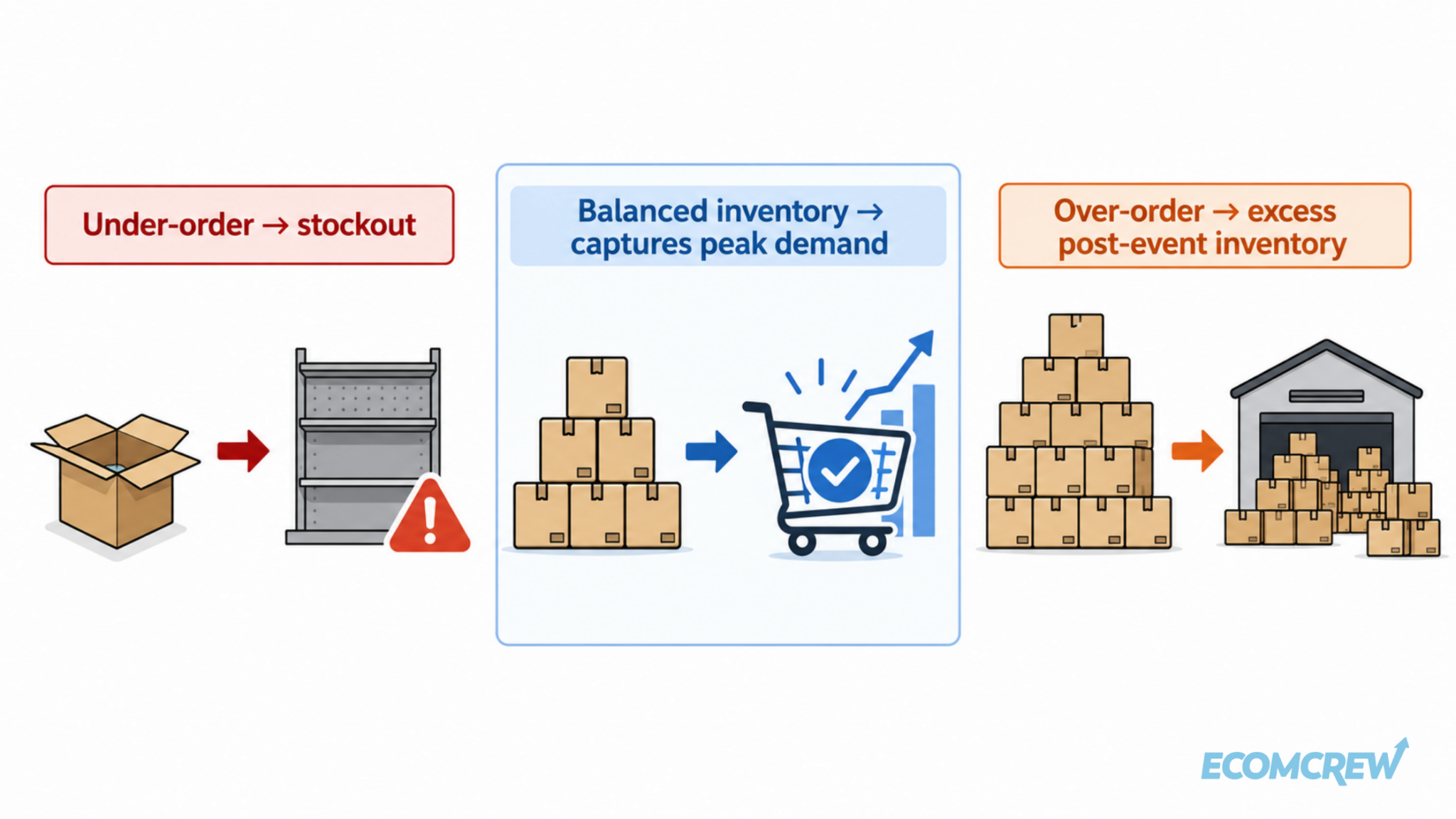
Still, the contrast is familiar.
More inventory means more room to capture demand. Less inventory limits the downside but increases the chance of running out while customers are still buying.
A sellout looks excellent in a headline. It can also mean there were customers ready to buy products that no longer existed.
The same tension shows up with highly seasonal inventory, where a few strong weeks can be followed by months of excess stock if the purchase order gets too ambitious.
Neither outcome looks especially dramatic until you're the one paying for it.
Amazon Didn't Ignore the World Cup Either
Prime Day moved from its usual July window to June 23 through June 26 in 2026.
Amazon Prime executive Jamil Ghani told Reuters that the company considers major events when choosing its dates and specifically referenced the World Cup and the 250th anniversary of U.S. independence when discussing the move.
Amazon also promoted “summer of soccer” products alongside outdoor entertaining, travel, electronics, back-to-school merchandise, and other summer categories in its Prime Day announcement.
Prime Day went on to generate more than $26.4 billion in U.S. online spending over four days, according to Adobe data reported by Reuters.
So even sellers with nothing remotely soccer-related were operating inside a retail calendar being shaped by the tournament.
Consumers only have so many weekends, vacations, paychecks, and credit-card limits to go around.

The More Interesting Products Didn't Need a World Cup Logo
Official merchandise was the most visible part of the World Cup retail boom, but some of the more accessible opportunities sat outside it.
The projector data is a good example.
People weren't buying outdoor projectors because they were officially licensed World Cup products. They were buying them because watching soccer gave them a reason to want one.
The same effect can show up across outdoor entertaining, party supplies, travel accessories, soccer equipment, TV accessories, portable seating, coolers, and other products tied to what people do around a major event.

That also avoids a fairly obvious complication.
FIFA protects World Cup names, logos, trophy imagery, emblems, and other intellectual property, and says it monitors marketplaces and social platforms for unauthorized commercial use.
A rising keyword doesn't automatically make it usable in a listing. Trademark and copyright rules on Amazon still apply when search volume gets interesting.
Projectors, outdoor furniture, soccer goals, and party supplies have another advantage: none of them stop making sense on July 20.
Then Everyone Goes Home
The World Cup final was held on July 19.
The following morning, any seller still holding event-driven inventory had a different market than the one they had a few weeks earlier.
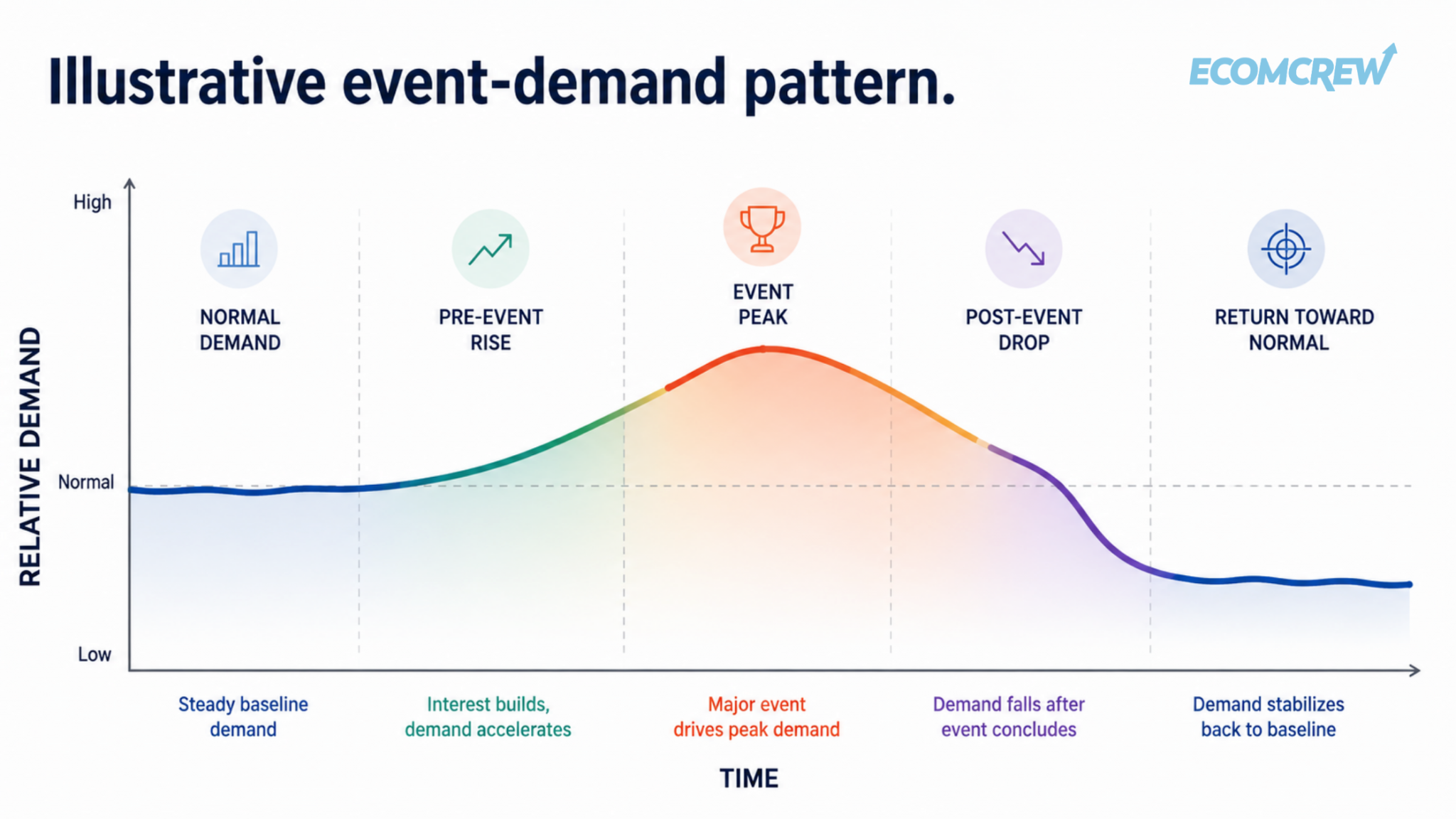
A projector still works for movies, gaming, presentations, and other sporting events. Soccer equipment still has a customer base. Hosting products still have birthdays and barbecues.
A product whose entire pitch was “World Cup 2026” has fewer options.
That gap matters when a temporary sales spike starts creeping into purchasing decisions.
A SKU that normally sells 300 units per month and suddenly moves 1,000 during an event hasn't necessarily become a 1,000-unit-per-month product. It had an unusual month.
Order the next PO as if the unusual month is the new baseline and the warehouse eventually gets to settle the argument.
Some Trends Are Better From the Sidelines
The World Cup produced obvious retail winners.
Adidas went into the tournament with product, licenses, marketing, and extra inventory. Nike had merchandise ready before demand peaked. Amazon rearranged Prime Day. Fans were spending on jerseys and viewing equipment before the first match.
There was plenty to sell.
The harder part was getting there early enough without being stuck there afterward.
Products already supported by year-round demand had room to benefit from the temporary surge and keep selling once the tournament ended. Products created purely for the moment were operating on a much shorter clock.
The next World Cup, Olympics, viral craze, or cultural event will create the same rush toward whatever product suddenly looks obvious.
The less obvious products around it may be where things get more interesting.