How Gen Alpha Influences What Parents Buy Online

A child wants the headphones. A parent wants to know whether they’ll survive being stuffed into a school bag, work with the right device, and justify the price.
Your product page has to handle both conversations.
That’s the useful part of the Gen Alpha shopping story for e-commerce sellers. A product can earn a place on a child’s wish list and still lose the sale when the adult opens the link. Excitement got someone to your listing. What happens there deserves just as much attention.
With holiday shopping approaching, this is a good time to review products you already sell. Can a young shopper recognize what they want, and can the parent quickly understand what they’re buying?
What Do We Mean by Gen Alpha?
McCrindle defines Generation Alpha as people born between 2010 and 2024. Under that definition, the oldest turn 16 in 2026.
That’s a broad range for a marketing plan. A preschooler and a teenager aren’t evaluating the same products, even if a presentation puts them in the same demographic bucket.
For this article, the useful focus is school-age children and younger teens who can express product preferences while adults remain involved in buying. The research below covers specific age groups, so its findings shouldn’t be stretched to describe every child.
How Gen Alpha Gets Products Into the Family Cart
PwC’s 2026 Gen Alpha survey surveyed 1,004 U.S. children ages 7–14 and a separate group of 1,009 parents between January 29 and February 13, 2026. Among the children:
- 61% said they put desired products on birthday or holiday wish lists.
- 52% said they added items to shared online shopping carts for parental review.
- 60% said an adult paid when they bought something.
These percentages describe respondents, not shares of purchases or spending. They show reported ways children participate in buying; they don’t tell us how many requests turn into orders. The findings cover U.S. children in the surveyed age range.
For sellers, the practical implication is worth testing: treat your product page as something one family member may send to another.
Imagine a child sharing a link to blue headphones. The parent opens it later and lands on the black version, with several models in a dropdown and no clear compatibility information. Now the parent has to reconstruct the request before deciding whether to buy.
Try that journey on your own store. Select a variant, copy the link, and open it on another device. Check whether the selection survives. Make model names easy to distinguish, and show the selected color consistently in the product title or option label and images.
This is a small fix with a clear purpose: help the person paying buy the product that was actually requested.
Parents Help Shape the Wish List, Too
It’s tempting to picture children discovering everything online while parents serve as a payment terminal with opinions.
The research is more interesting than that.
In the HarrisX and Allison Worldwide study released in August 2026, 80% of surveyed teens ages 13–16 said their parents influenced the brands they liked. The study was conducted in the United States from May 4–12, 2026. That measures reported brand influence, not parents’ share of checkout decisions.
Our read: sellers should give adults a reason to introduce or recommend the product themselves.
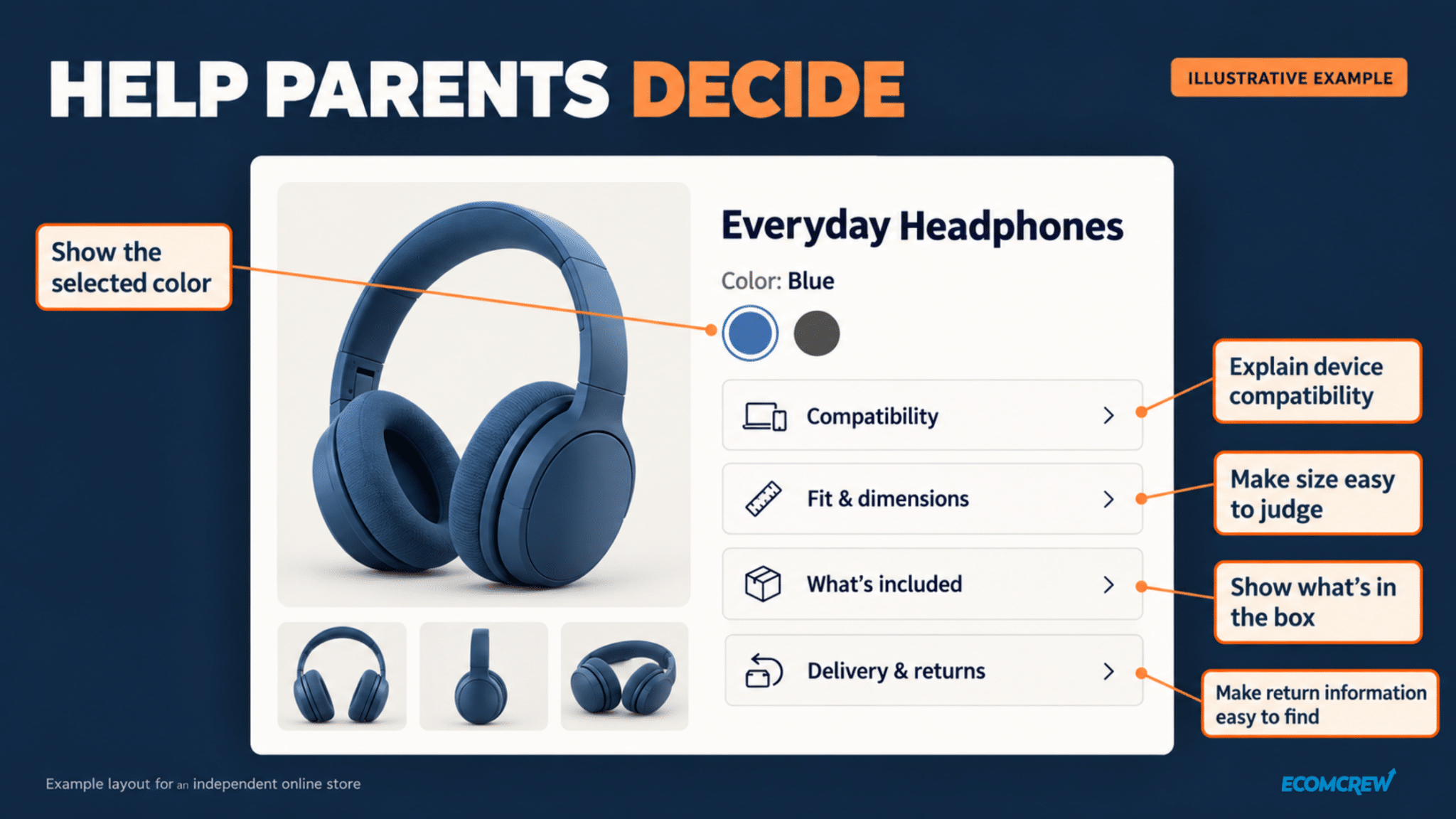
For headphones, a parent-facing demonstration could explain device compatibility, show the controls, and make the size easy to judge. A gift guide could compare models by intended use and budget. Those are useful pieces of content even when the child hasn’t already requested your brand.
Start by reviewing the questions adults send your customer support team. If several ask whether a cable is included, answering that clearly is a better first move than commissioning a campaign about the future of youth culture.
Build a Listing That Helps Both People Decide
You don’t need two separate product pages. You need to show what’s appealing about the product and answer the questions that could stop the purchase.
For an illustrative headphone page on your own store, here’s how that might look:
| Purchase question | What the listing should show |
|---|---|
| Is this the style or color I wanted? | Accurate photos of each variant, with recognizable names. |
| Will it work with the device we own? | Specific connection requirements and verified compatibility. |
| Will it fit? | Useful dimensions, adjustment details, and a photo that shows scale. |
| What will arrive in the box? | The actual contents, with optional accessories clearly identified. |
| Is the higher price justified? | Demonstrable differences between models, rather than a row of “premium” badges. |
| What happens if it isn’t suitable? | Easy-to-find information about the applicable return process. |
Use only claims you can substantiate. “Built for kids” doesn’t explain fit, durability, or suitability by itself. If a feature matters enough to advertise, show what it does and describe its limits accurately.
For Amazon listings, adapt the product information to the image and content areas available to your product within the platform’s rules. If eligible, Amazon A+ Content offers enhanced images, text, and product-comparison charts. The own-store example above isn’t an Amazon page template. On your own store, you can also place comparison information or an FAQ near the buying controls.
The point is to remove an unanswered question while the parent is still considering the purchase.
Make Holiday Gift Pages Specific Enough to Be Useful
For Q4, start with products already suited to the recipient and ready to sell. Then build gift content around the decision an adult needs to make.
“Gifts for kids” gives you plenty of room to display products, but very little direction. Consider narrower pages such as gifts for a young artist, starter supplies for a particular hobby, or options within a clear budget. Include age guidance where appropriate and supported by the product’s specifications.
Explain why each item belongs on the page. For an art kit, that might mean showing the materials included, the kind of project it supports, and what the buyer would need to purchase separately. For headphones, explain which device connection the recipient needs.
A bundle deserves the same scrutiny. If you pair headphones with a case, show that they fit inside it. State what each option costs and what the bundle includes. A second item earns its place by being useful to the buyer.
As the holiday gets closer, check stock availability and delivery information against what you can actually fulfill. Don’t leave a gift guide promoting an unavailable color without a clear explanation on the product page.
Test the Message Before You Order More Inventory
A generational survey can suggest a merchandising test. It can’t forecast demand for your particular SKU.
Start with one product that already has a plausible use for children or teens. Review its recent customer questions, return reasons, and sales history. Choose a specific problem to address, such as unclear compatibility or uncertainty about what’s included.
For a first advertising test, we’d focus on adult gift buyers with a message that helps them evaluate the product. That gives the campaign a clear audience and a concrete job.
Where your tools and traffic allow, compare two versions at the same time with similar audiences, offers, and budgets. For example, test your existing adult-facing creative against a demonstration that answers the most common buying question. Keep the landing page consistent during that creative test.
If you change the creative, price, page, and discount together, you may get more orders without learning which change helped. Before-and-after comparisons during holiday shopping are especially hard to interpret because demand and promotions may also be changing.
Judge the result beyond clicks. Look at purchases and contribution after product costs, fulfillment, fees, advertising, and a realistic allowance for returns. A promising order spike deserves a second look once refunds and return reasons become visible.
Use your own sales evidence and replenishment timing for demand forecasting. We explored a similar inventory problem in our article on chasing World Cup shopping trends: interest in a moment can become a much longer commitment once you place a purchase order.
Which Sellers Should Pay Attention?
This angle is most useful when children or teens use the product and adults help choose or pay for it. Think about your actual customers before changing your marketing.
If you sell hobby supplies, for example, look for questions about beginner suitability, gift purchases, or materials needed for a first project. Those clues give you something specific to work with. A product sold mainly to professional buyers may have no meaningful connection to this article, and that’s fine.
For your next listing review, open the page as if a child had just sent you the link. Can you identify the exact item, understand why it suits the recipient, and see the full purchase cost without asking someone else?
Fix the first question you can’t answer. That’s a useful place to start before paying for the next click.